Coworking vs. Owning: Why Owning an Office is Better Than Being Amongst the Crowd
Every fast-growing company has a phase where speed matters more than permanence. A phase where desks are booked by the month, teams grow faster than floor plans, and the office is simply a place to plug in and get moving.
Coworking spaces were built for this moment - and for many organisations, they were exactly what was needed. But growth has a way of changing questions.
Suddenly, the office isn’t just where work happens. It’s where culture forms. Where trust is built. Where clients decide whether you feel credible. And where employees decide whether they belong.
This is usually the point where leaders pause and ask a different question - not “Where can we sit?” but “What should our workplace say about who we’ve become?”
That question sits at the heart of the coworking space vs. owning an office conversation.
When Flexibility Stops Feeling Free
Coworking environments are designed for motion. Short stays, changing teams, constant flux. This fluidity works in the early stages of growth. Over time, however, it introduces friction. As headcount increases and work becomes more complex, organisations need privacy for strategic and sensitive conversations, consistency in how teams collaborate, and stability to build culture and shared norms.
Research indicates that employees with a strong sense of belonging are significantly more engaged and less likely to leave. Yet belonging is difficult to cultivate in environments designed to be temporary.
At scale, flexibility without control becomes a constraint.
The Financial Reality Leaders Eventually Confront
Coworking is often framed as a cost-efficient alternative to traditional offices because it avoids upfront capital expenditure. But this framing becomes less convincing as organisations grow.
For mid-sized and large teams, per-seat coworking costs can be 30 to 50 percent higher over a seven to ten year horizon compared to owned or purpose-built offices, once escalation clauses, premium meeting spaces, storage, and expansion limitations are accounted for. What initially appears agile begins to erode financial predictability.
Owning an office fundamentally changes the financial equation. Workplace costs become forecastable. Payments contribute to long-term asset value rather than recurring expense. Real estate decisions align with balance-sheet and capital planning strategies.
For CFOs and founders, this shift matters. Ownership introduces discipline, predictability, and long-term value creation. These are qualities coworking models are not designed to deliver.
Ownership Unlocks Strategic Workplace Design
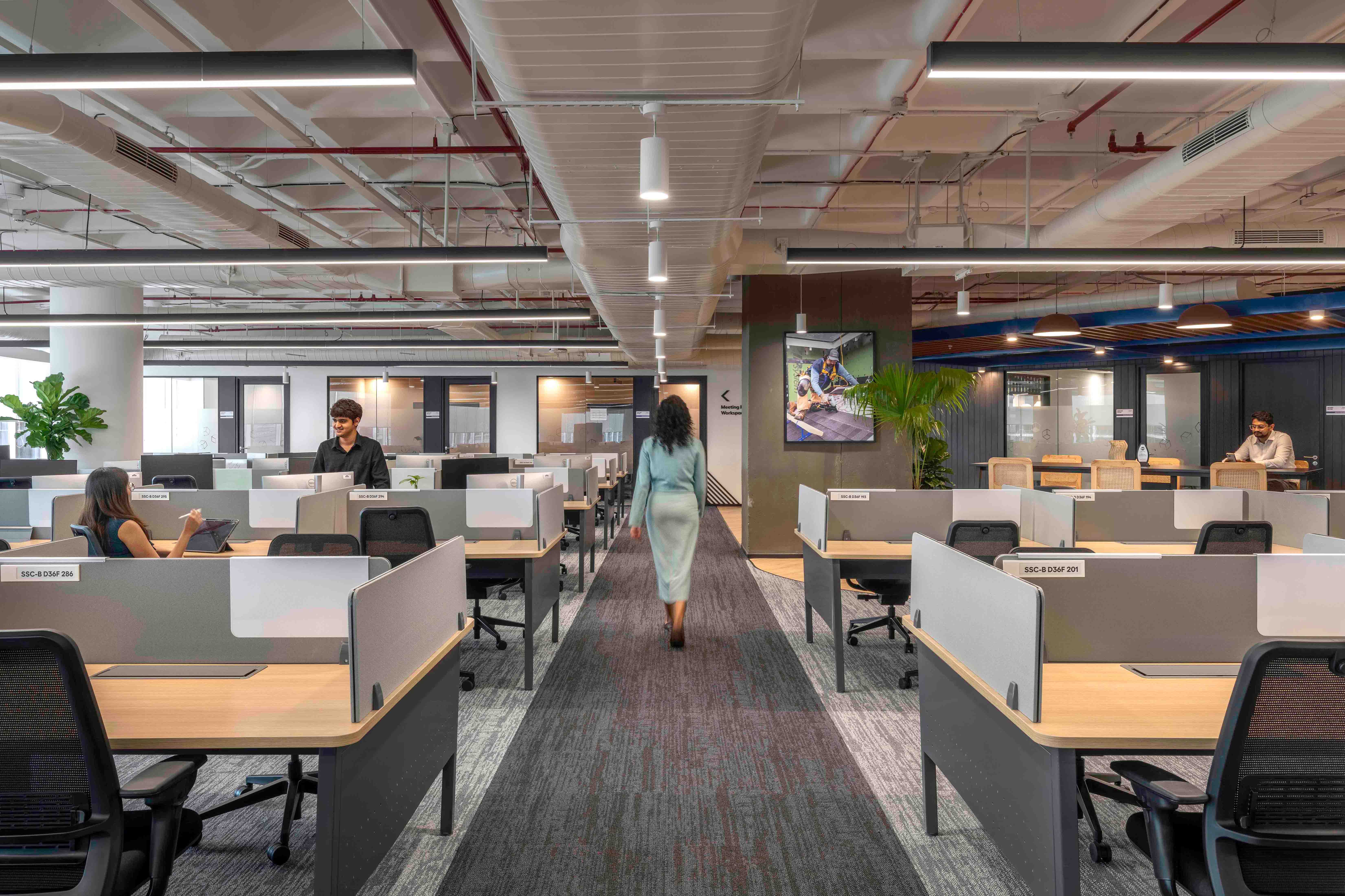
This is where the distinction between coworking and owning becomes unmistakable. Coworking spaces are optimised for general use. Owned offices are optimised for organisational performance. Ownership allows leaders to design workplaces around how teams actually work, hybrid patterns that require both collaboration and focus, and business functions that demand adjacency, privacy, or speed.
Studies show that thoughtful office design ideas can drive up to a 20 percent improvement in productivity. More importantly, the workplace becomes an operational tool. It shapes behaviour, accelerates decision-making, and reinforces priorities.
In owned offices, design stops being cosmetic. It becomes functional infrastructure.
Privacy, Security, and Operational Control
As organisations mature, particularly in sectors such as technology, BFSI, consulting, and legal services, privacy is no longer a preference. It is a requirement. Shared environments are not built to support sensitive client discussions, intellectual property protection, or controlled access and data security.
Owning an office gives organisations full control over how information flows, who enters the space, and where critical conversations take place. Beyond compliance, this control builds trust.
Employees perform better when they feel secure. Clients engage more confidently when discretion is assured. Ownership makes both possible.
Flexibility Designed for the Long Term
One of the most persistent misconceptions is that owning an office reduces flexibility. In reality, the opposite is true. Modern owned offices are designed with modular layouts, scalable infrastructure, and technology-ready environments that adapt to hybrid work. Flexibility is embedded into the design rather than dictated by availability or policy.
Unlike coworking spaces, owned offices allow organisations to plan for change on their own terms. This enables leaders to design not just for the next year, but for the next decade.
The Client and Brand Advantage Coworking Cannot Replicate
There is a clear difference in how organisations are perceived when they operate from owned workplaces. Purpose-built client lounges, experience centres, innovation labs, and executive spaces signal maturity, stability, and confidence. These environments communicate scale and credibility without explanation.
In a business landscape where physical interactions are fewer but more meaningful, owned offices function as brand environments. They support complex conversations, build trust, and strengthen long-term relationships.
One global technology infrastructure company reached this turning point when it decided to establish its first headquarters in Singapore. Until then, its teams had operated remotely or from coworking spaces across multiple locations. These environments supported daily operations, but they never fully expressed the organisation’s identity or brought its people together in a meaningful way.
Creating a headquarters was not simply a real estate decision. It was an opportunity to define what the company looked and felt like as a unified organisation.
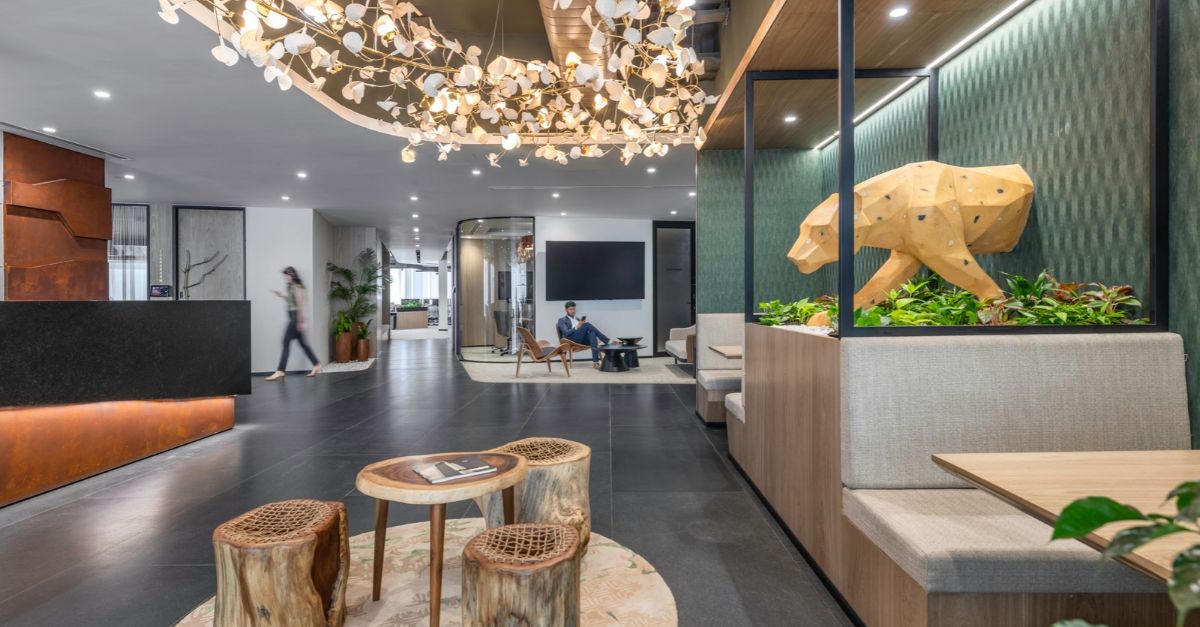
The workplace was designed to translate the company’s core business into spatial experience. Inspired by the modular architecture of data centres, geometric forms and structured patterns appeared throughout the office, turning technical precision into visual storytelling.
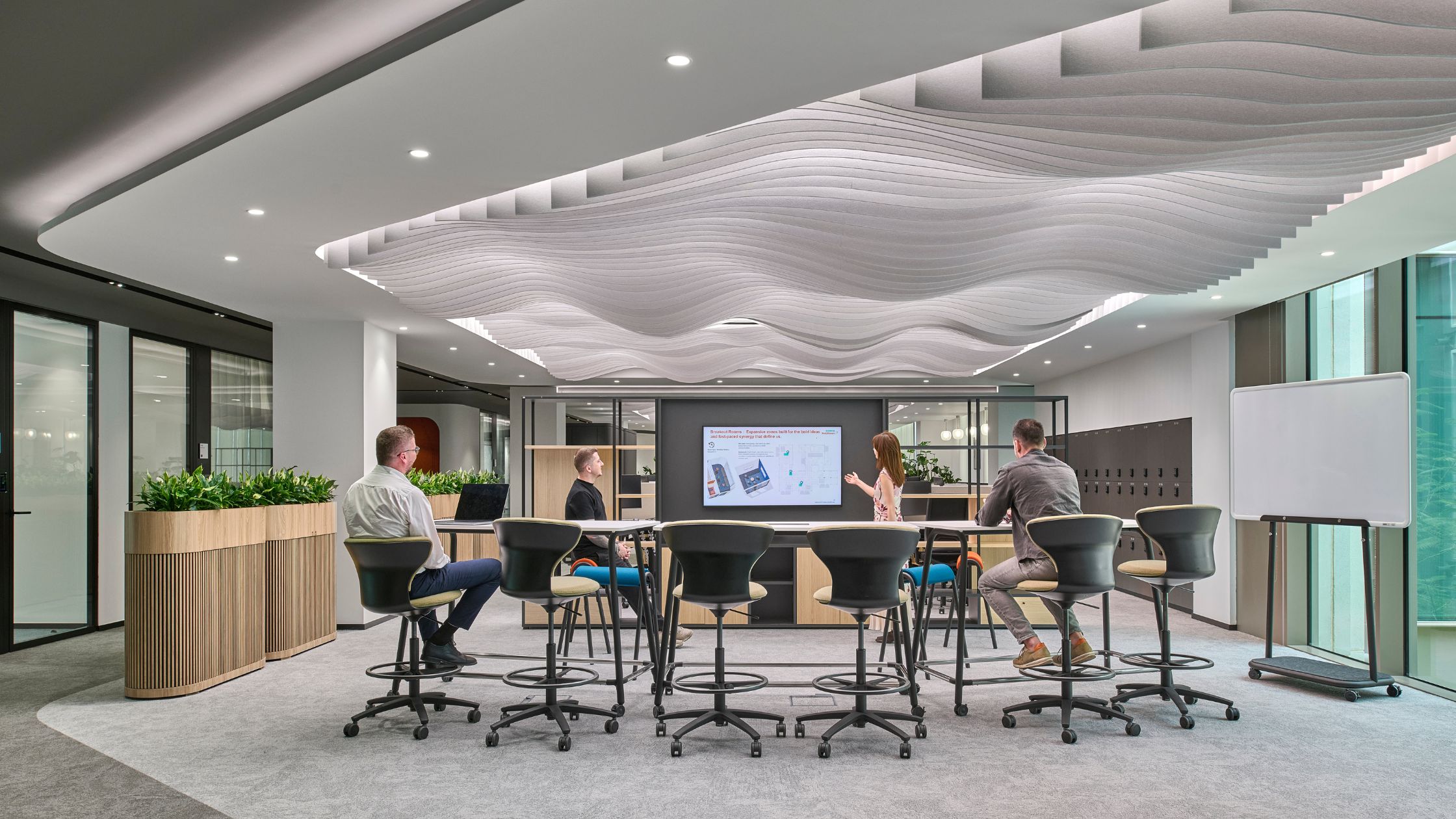
Technology supported the way teams worked, including digital tools that converted handwritten ideas into shareable content in real time. At the same time, familiar elements such as traditional whiteboards ensured the environment remained intuitive and human.
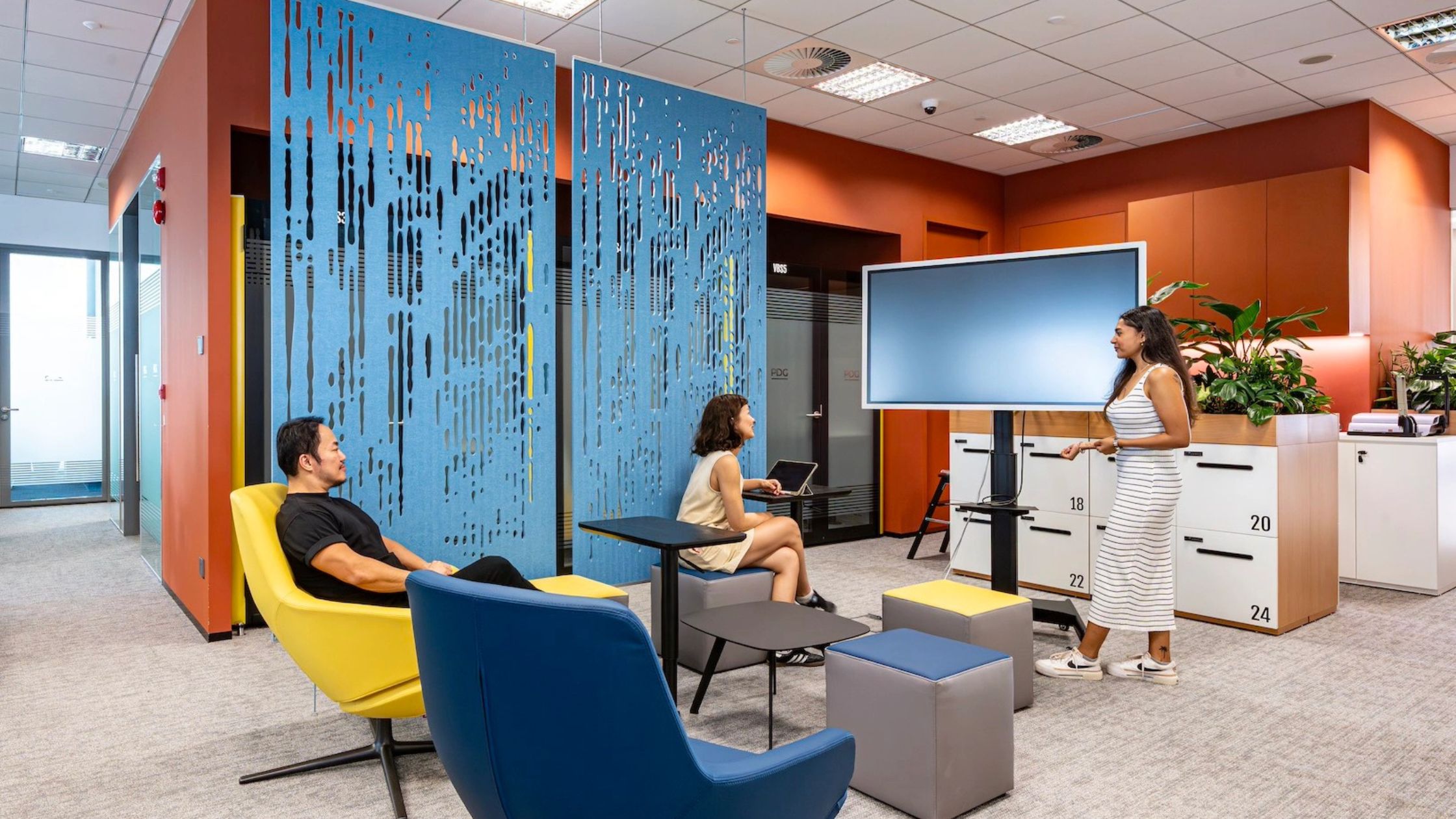
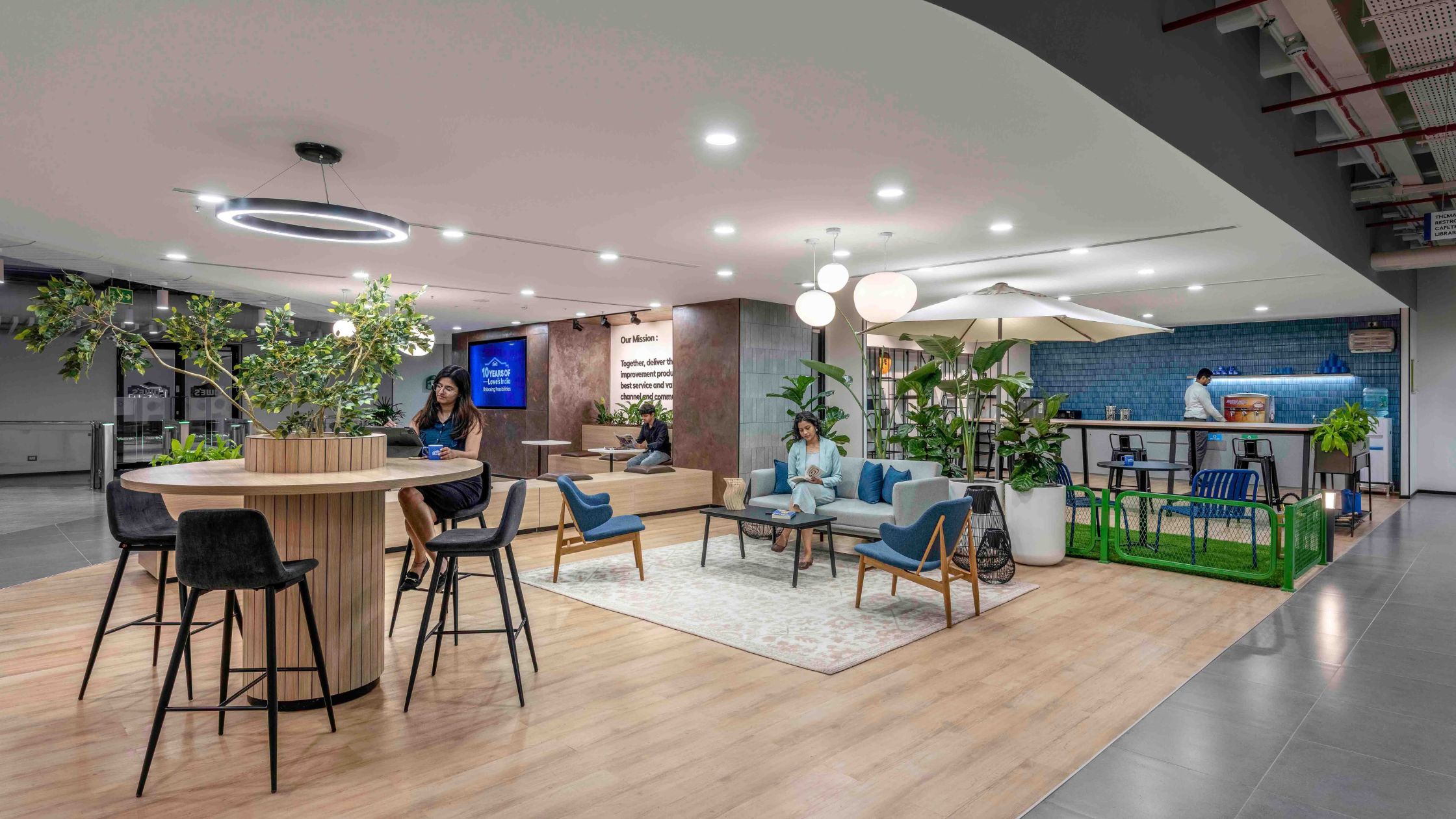
Just as importantly, the workplace was designed around different work styles. Quiet booths allowed focused thinking. Open collaboration areas encouraged spontaneous exchange. Wellness spaces offered moments of restoration within demanding workdays.
The headquarters ultimately became more than a place to work. It became a tangible expression of the company’s identity. A space where clients could experience the organisation’s capabilities firsthand. And a shared environment where employees could finally feel part of the same story.
This is something coworking environments rarely achieve. Because they were never designed to.
Ownership as a Strategic Signal
The decision to own an office is rarely just about space. It signals commitment to people, to culture, and to long-term growth. It reflects confidence in the organisation’s trajectory and clarity about its future direction. Coworking continues to serve an important purpose as a launchpad and short-term solution. But for organisations entering their next phase of maturity, ownership is not a retreat from flexibility. It is an evolution toward control, resilience, and strategic intent.
In the coworking space vs. owning an office conversation, ownership prevails when leaders move beyond convenience and begin designing for longevity.
At that point, the office stops being a shared resource and becomes a competitive advantage.
Ashish Jain
Managing Director - Client Solutions
Ashish Jain is the Managing Director of Client Solutions at Space Matrix. A seasoned architect with a deep understanding of business, he is instrumental in driving client success through innovative workplace solutions. By bridging the gap between design and business strategy, Ashish delivers transformative spaces that address clients' most pressing challenges. His focus on creating high-performance work environments has been pivotal to Space Matrix's and its clients' shared success. As a collaborative leader, Ashish inspires teams to achieve extraordinary results.
When not immersed in the world of workplace design, Ashish can be found exploring new cultures through travel, perfecting his tennis serve, or jamming on the drums. A connoisseur of both wine and whiskey, Ashish believes there's always time for a good experience.
We use cookies to enhance your experience on our website, provide personalized content, and analyze site traffic.
By clicking "Accept All", you consent to our use of cookies. You can also choose "Preferred Cookies"
to select specific types of cookies that align with your preferences.
Essential cookies are always enabled to ensure website functionality.
You can choose to have only Essential cookies if you prefer minimal tracking.
Your choice regarding cookies on this site
Please choose whether this site may use Functional and/or Personalization cookies, as described below.
By selecting Required cookies only, you are requesting us not to sell or share your personal information.