By: Space MatrixLast updated on: February 10, 2026
Save
Share
Email
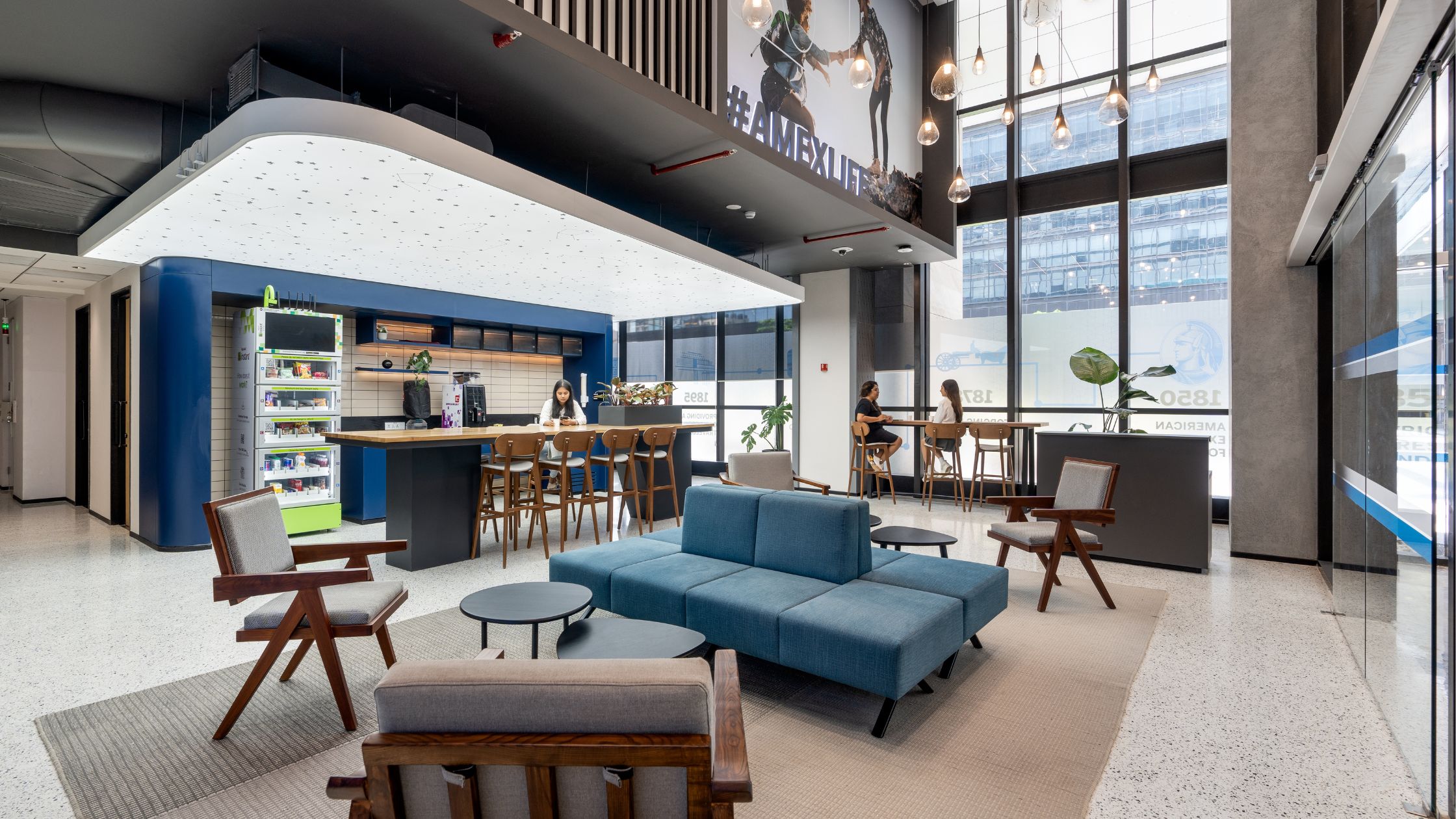
Why BFSI Offices Are Becoming Multi-Purpose Experience Hubs
Gone are the days of financial workplaces being a back-office floor of cubicles and compliance checklists. Today, they have become the frontline of trust, innovation, and client experience. In 2026, BFSI leaders face a decisive moment as clients expect premium, human-centered spaces. At the same time, employees demand hybrid-ready collaboration zones and regulators insist on airtight security. The tension is real. Risk cannot be compromised, yet reinvention cannot be delayed.
Offices must now operate as multi-purpose experience hubs, capable of hosting confidential advisory sessions in the morning, innovation labs in the afternoon, and client showcases in the evening. Institutions that fail to evolve risk losing talent and client trust. Those who embrace experience-led, multi-layered design will get a new era of resilience and growth. And this transformation is already reshaping how workplaces are designed, utilized, and experienced, setting the stage for a new blueprint of BFSI offices that this article will explore in depth.
Why Financial Workplaces Are Changing Now
Financial offices are being redefined as the very nature of banking shifts from transactional efficiency to advisory-led experiences. Clients no longer walk into branches for routine deposits. They arrive expecting premium, human-centered environments where complex financial decisions feel supported. Digital adoption has raised the bar. If mobile apps deliver seamless journeys, physical offices must now mirror that same clarity and trust. This means spaces must be designed as immersive touchpoints that reinforce credibility through privacy and hospitality cues.
At the same time, the workforce inside BFSI institutions has transformed. Financial specialists now sit shoulder-to-shoulder with data scientists, cybersecurity experts, and digital transformation squads, demanding environments that balance confidentiality with collaboration. With relentless pressure from fintech competitors, many leaders are asking, “What does workplace flexibility really mean for modern financial institutions?” It means enabling a single floor to host secure compliance reviews in one zone, innovation sprints in another, and client showcases in yet another without ever compromising trust.
The Modern BFSI Workflow: High-Trust, High-Security & High-Touch
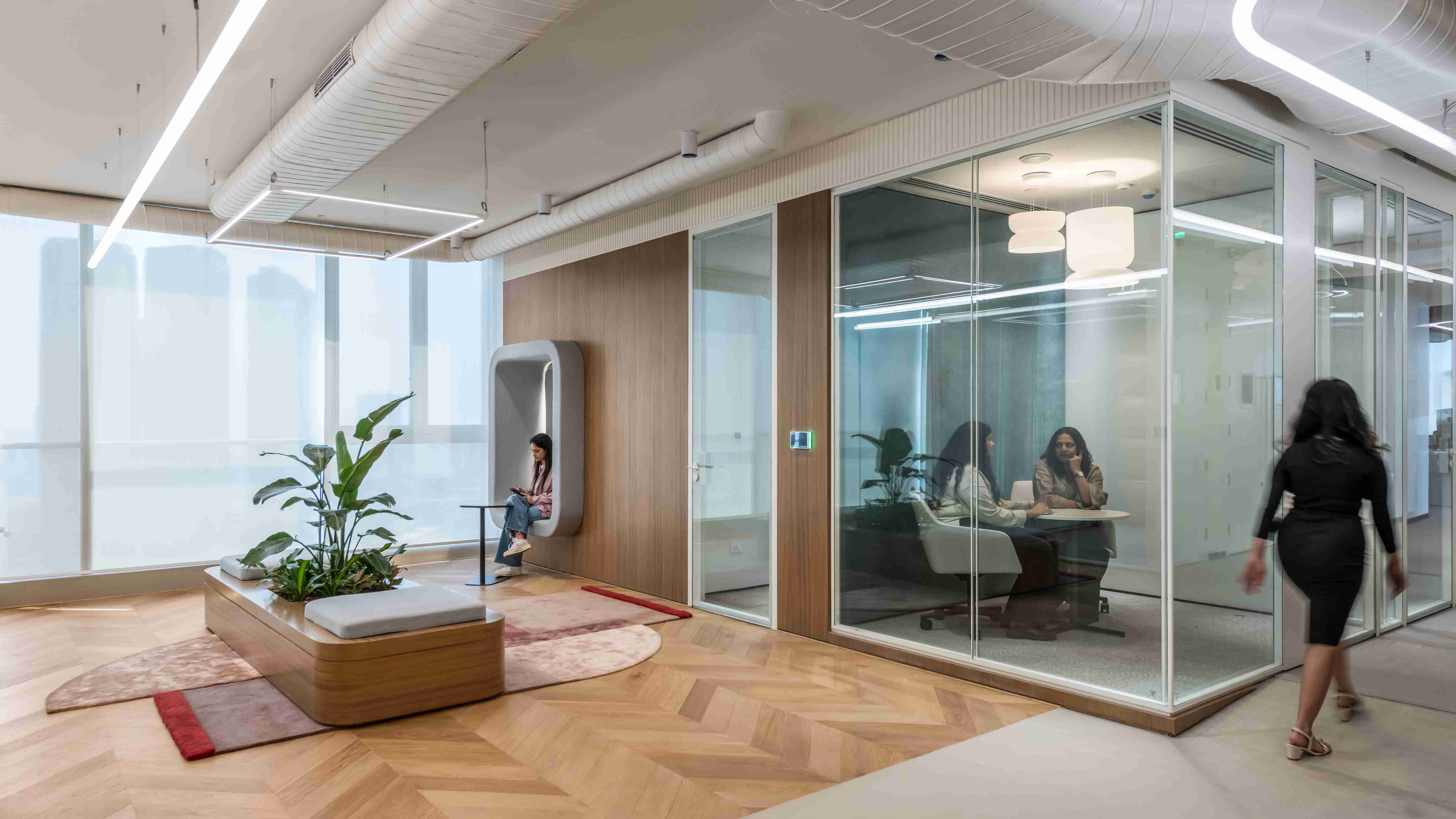
Modern organisations are increasingly asking, “What defines an effective financial workplace in today’s BFSI landscape?” The answer lies in creating layered ecosystems that mirror the complexity of current workflows. Advisory teams require environments that feel emotionally safe, with soundproofing and privacy pods to make high-stakes decisions without distraction. Corporate banking, wealth management, and institutional teams thrive on high-touch, in-person interactions and demand premium spaces that signal credibility and discretion. Meanwhile, risk, audit, compliance, and fraud squads operate in highly restricted zones where access is tightly controlled and confidentiality is non-negotiable. Each of these functions carries distinct spatial requirements, and the financial workplace must reconcile them without compromise.
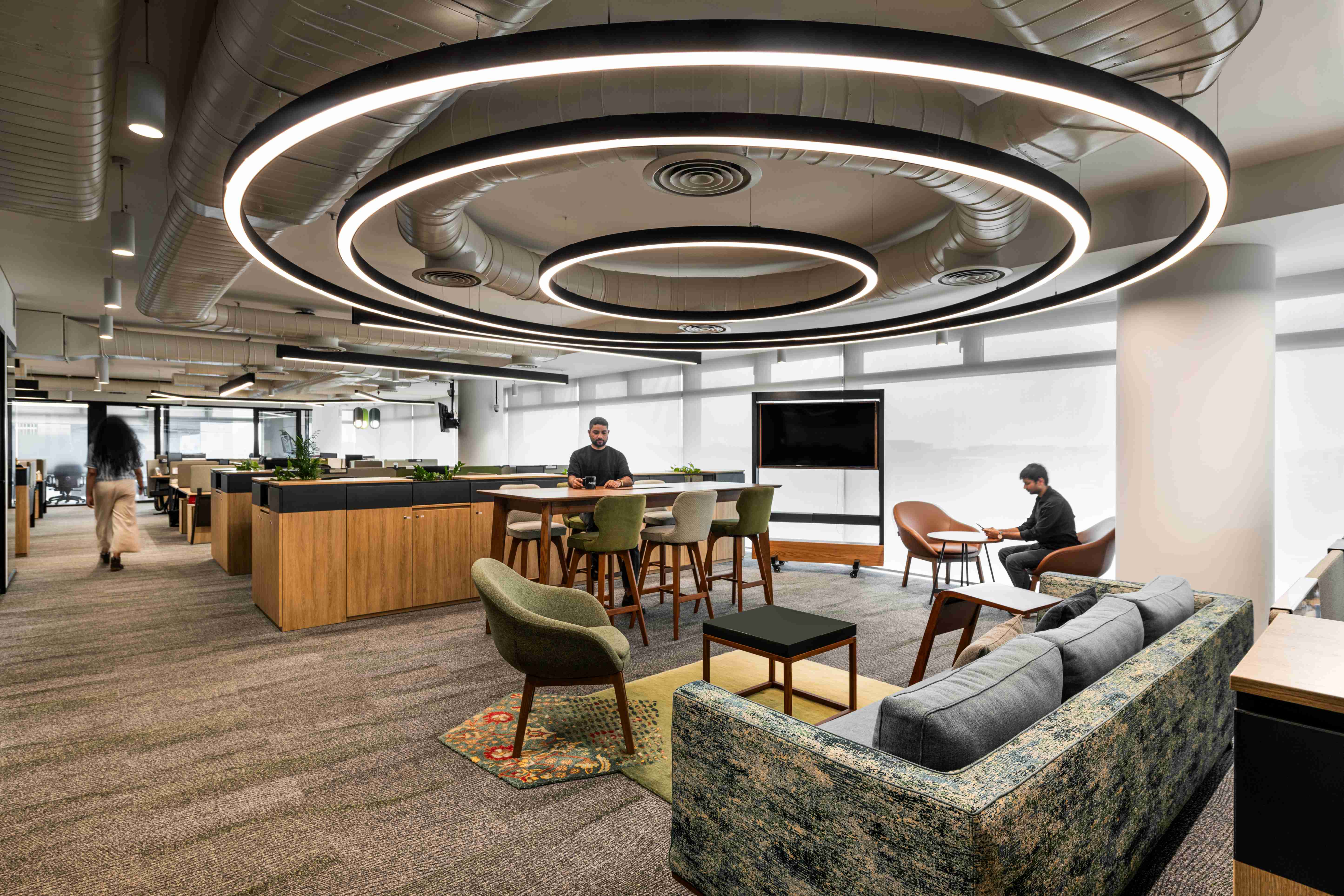
This is where flexibility becomes mission-critical. Operations and digital transformation teams need hybrid-ready collaboration zones that can pivot between physical and virtual engagement, while innovation pods demand openness and agility. Yet these sit alongside secure, closed environments where risk teams must remain insulated from exposure. The contradiction is stark. BFSI institutions must design spaces that are simultaneously open and restricted, collaborative and confidential. A multi-layered design is the only way forward. This can be achieved by zoning floors through risk classification and enabling instant transitions between advisory suites, compliance reviews, and digital collaboration hubs.
Hybrid clients expect BFSI offices to be dynamic experience hubs that seamlessly bridge digital and physical journeys. A single workplace must now host advisory conversations in the morning, portfolio reviews by noon, and SME pitch days or partner workshops in the evening. This multi-purpose demand is about credibility and brand differentiation. When branches and corporate offices can instantly shift, they maximize asset utilization and elevate client trust. The data is clear. 65–75% of projects report small meeting rooms as the most in-demand spaces, highlighting how hybrid workstyles require environments that can flex between confidentiality and collaboration without friction.
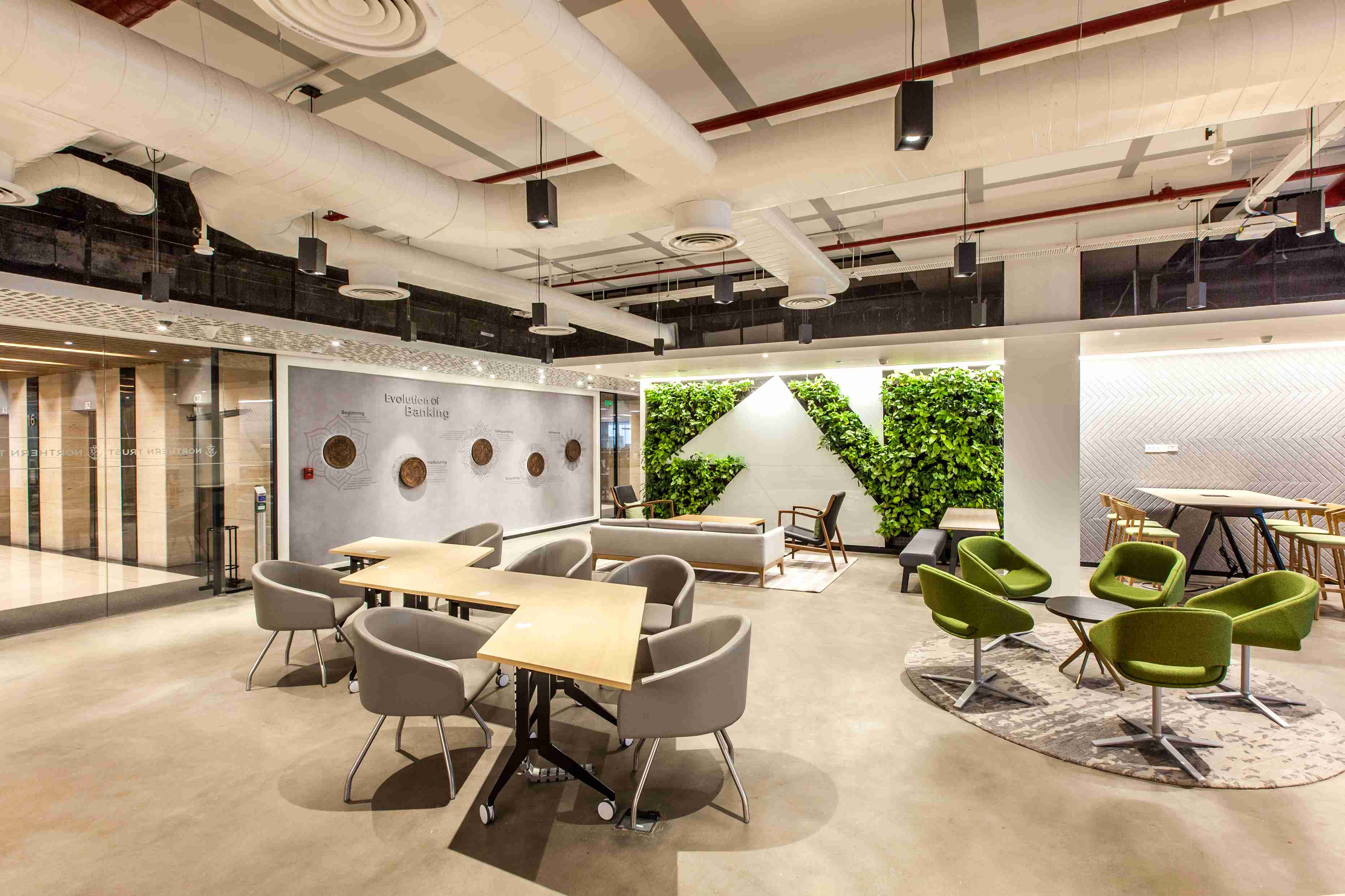
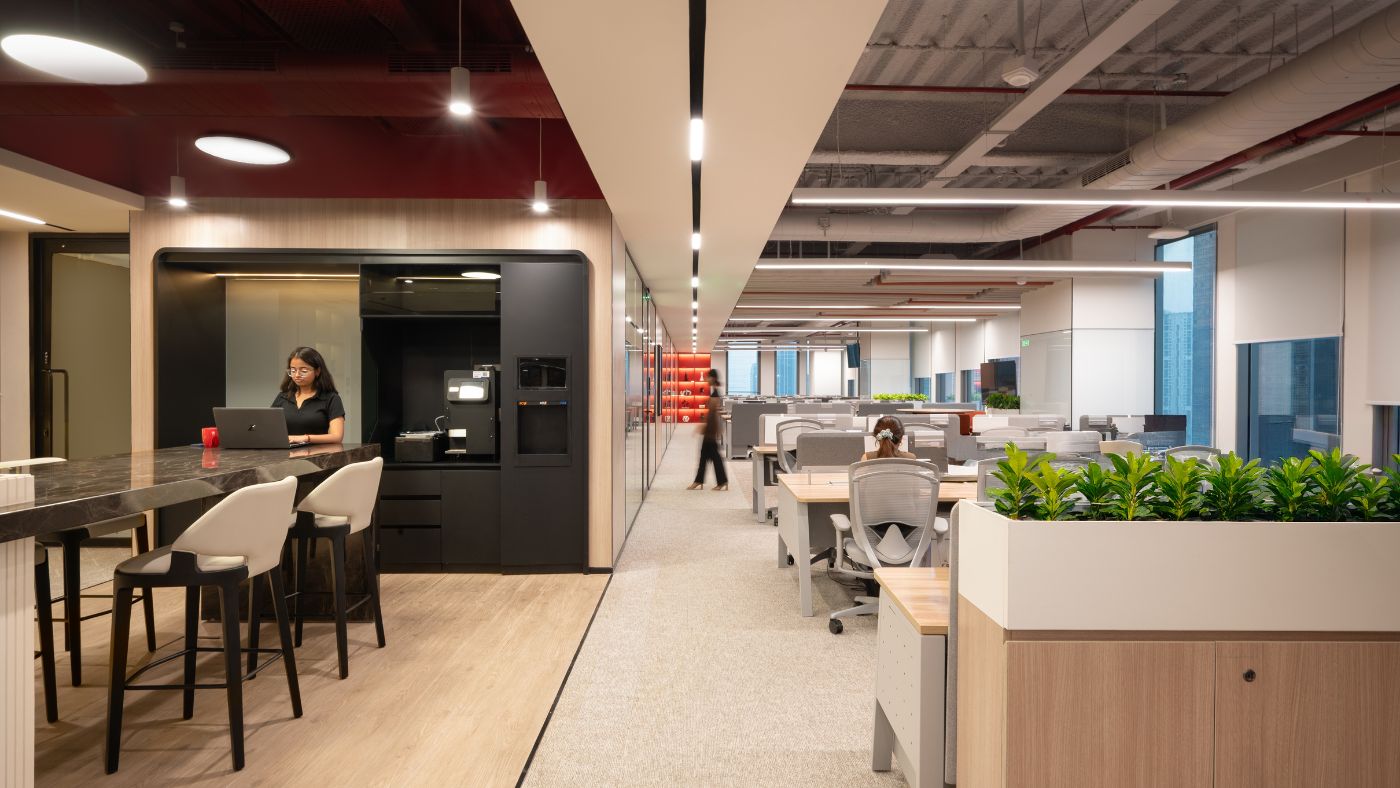
Our partnership with Northern Trust in Pune illustrates how flexibility becomes a strategic lever for client experience and talent retention. Faced with a diverse workforce and the need to unify culture under a single brand identity, Northern Trust embraced a design ethos that blended inclusivity, sensory engagement, and agile collaboration. Swing zones, innovation labs, and experiential HR spaces helped the office evolve into a multi-layered environment where employees and clients alike could move fluidly between advisory, collaboration, and innovation. The result is a workplace that supports hybrid sessions and reinforces brand credibility.
How Experience-Led Design Elevates Trust and Client Relationships
Financial discussions are rarely neutral. They carry weight, emotion, and consequence. A financial workplace that feels cold or transactional erodes confidence, while one that feels human, premium, and discreet elevates trust. Lighting that softens tension, materiality that signals credibility, and spatial layouts that reduce cognitive load all shape how clients perceive the institution. Hospitality-inspired cues transform advisory conversations into experiences where clients feel valued and secure. The data reinforces this. 57% of projects observed a 2x increase in visitor experience scores, with some rising as high as 9–10x, proving that design directly impacts how clients measure credibility and care.
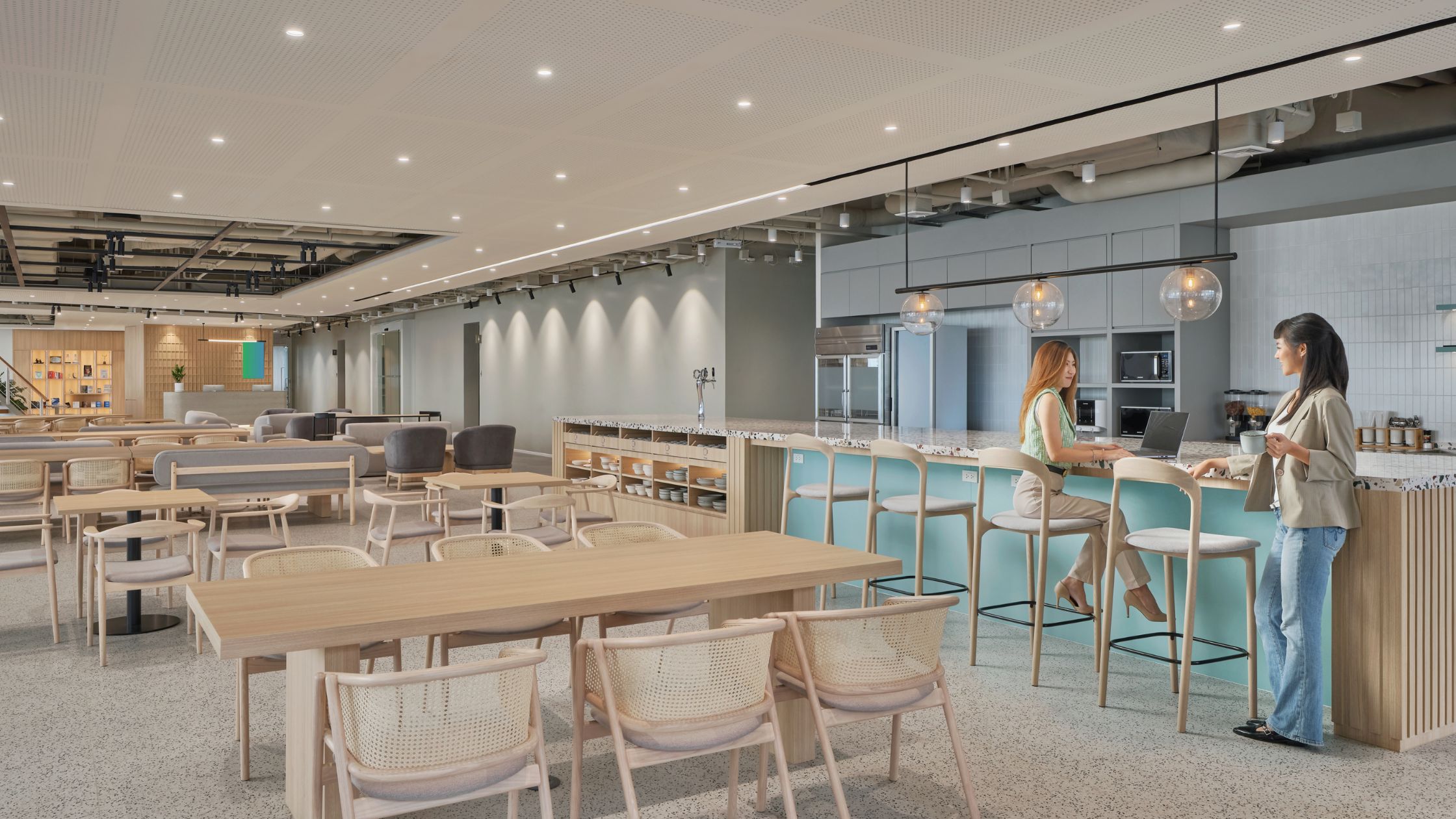
Prudential exemplifies how flexibility can be harnessed to build trust and deepen relationships. Merging creativity, collaboration, and wellness into a single environment helped Prudential create a workplace that nurtures both employees and clients. Serene, nature-inspired retreats offer emotional safety, while vibrant collaborative areas encourage innovation and transparency. This balance of discretion and openness allows clients to experience the brand as both professional and empathetic. The result is a space where trust is tangible and sustained through design choices that elevate every conversation.
What BFSI Offices Need to Enable Innovation & Transformation
Innovation in BFSI must be embedded into the very architecture of the workplace. Digital, data, AI, and cybersecurity teams thrive in flexible, tech-enabled environments. Cross-functional pods allow transformation agendas to move from concept to execution without friction. Yet regulation looms large. Every collaborative environment must be secure, and every innovation lab must protect sensitive information. The tension is clear. BFSI institutions want the energy of a tech company but must operate under the strictest regulatory frameworks. Design is the reconciler, creating secure yet open spaces where innovation can flourish without compromising trust.
The numbers prove the impact of this balance. Our study reveals that 63% of projects report a 1.2x–5x increase in employee motivation and satisfaction scores when workplaces integrate multisensory wellness anchors and flexible collaboration zones. This is strategic. Talent now expects workplace flexibility that mirrors the agility of startups while retaining the credibility of financial institutions. Meeting rooms optimized for hybrid collaboration and innovation labs with embedded technology are the new BFSI standard. Institutions that design for both regulation and reinvention will accelerate transformation and attract and retain the next generation of financial talent.
Designing BFSI Workplaces for Risk, Reputation & Experience
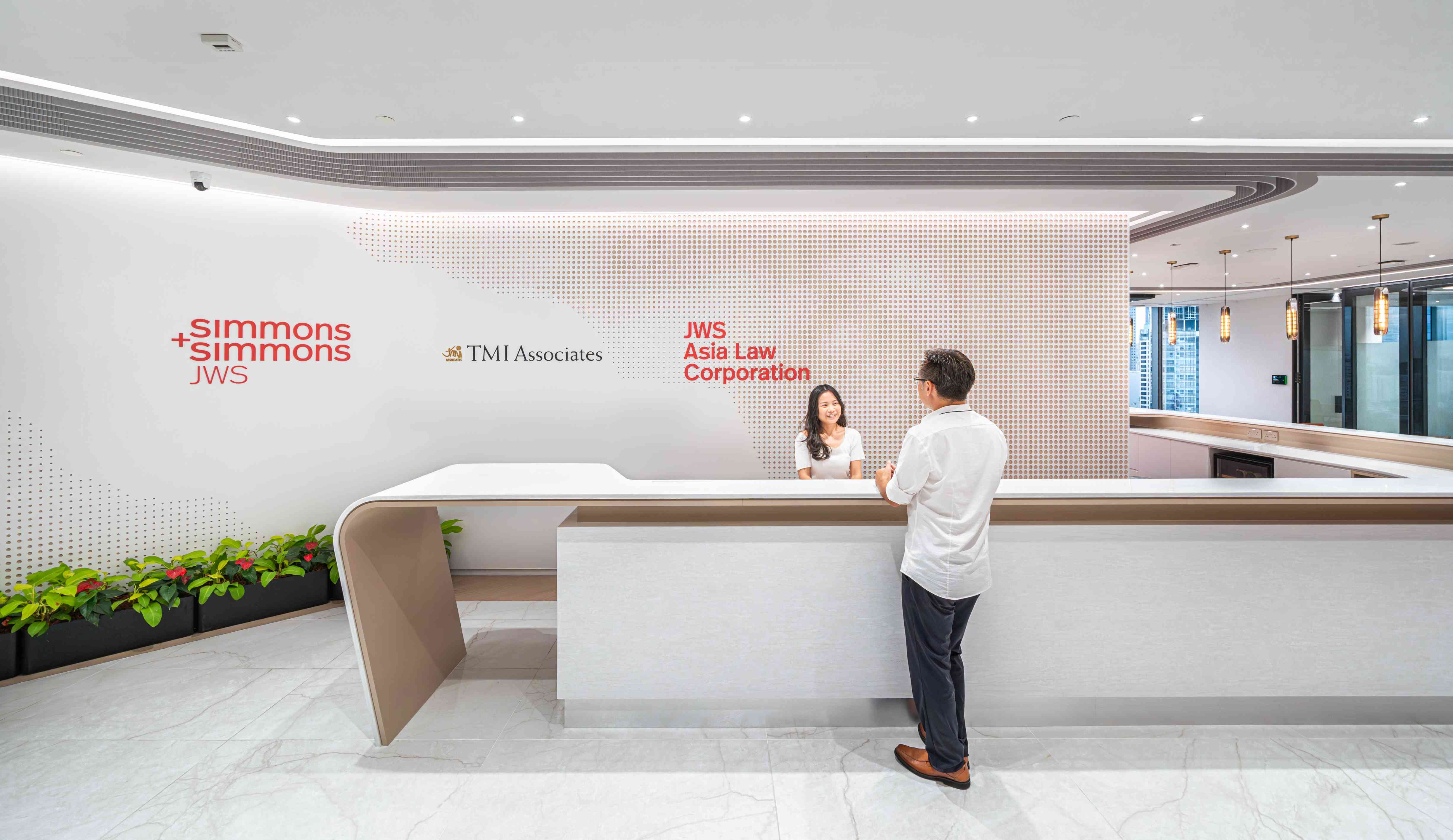
Financial workplace are a layered ecosystem where every square foot is engineered for adaptability and experience. Secure zones coexist with advisory suites, collaboration neighborhoods, innovation labs, and multi-use event spaces. Each is calibrated to balance high security, high flexibility, and high trust. Material choices, circulation paths, and spatial zoning are strategic levers that reconcile the contradictions of BFSI work. Designing environments that elevate brand credibility and accelerate transformation helps us position BFSI offices as reputational assets as much as operational ones.
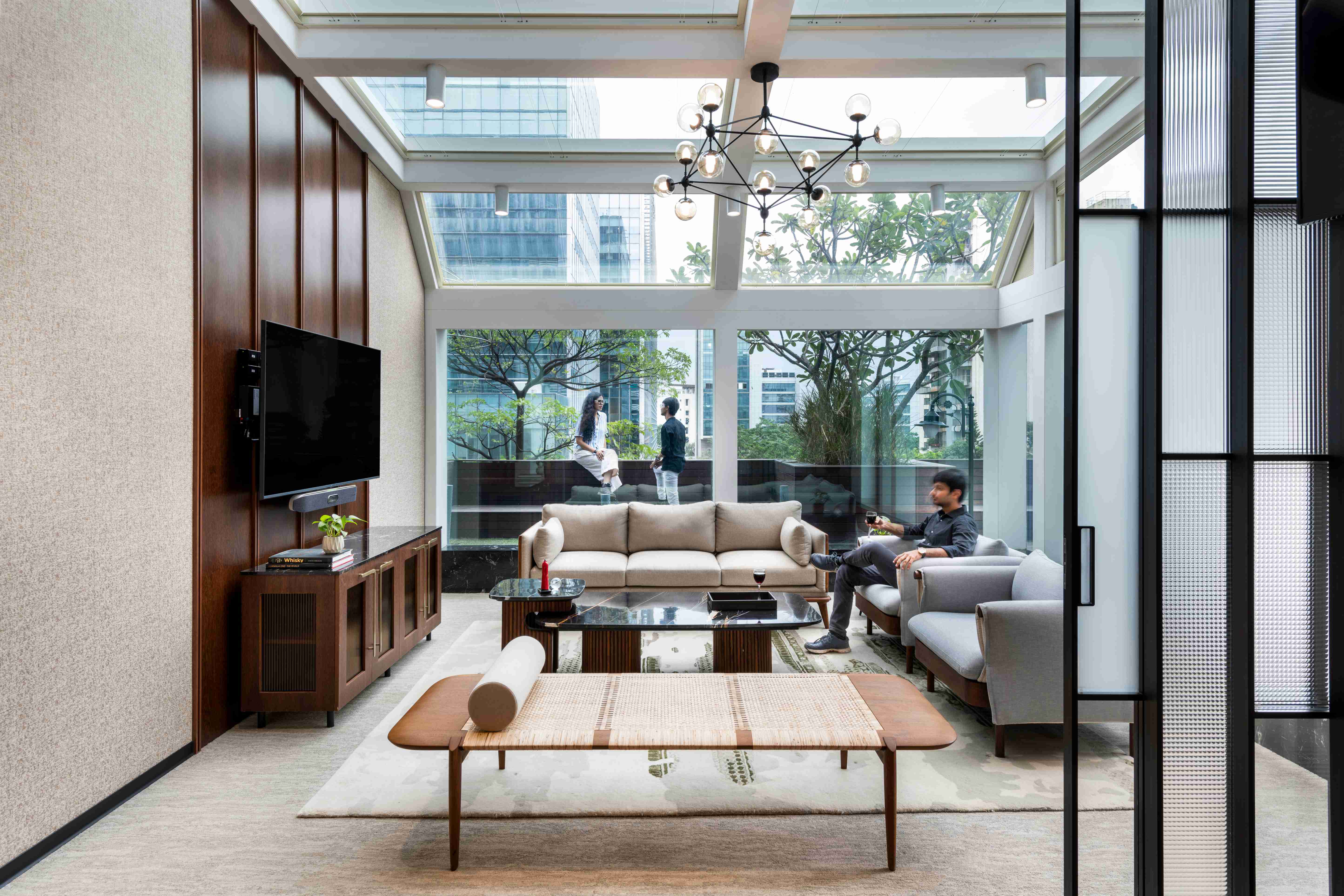
The Avendus case demonstrates this philosophy in action. Faced with the challenge of unifying seven distinct business units under one brand identity, we deployed design thinking to create an experience-first environment. Luxurious materials signal credibility, while terraces and retractable ceilings introduce openness and dynamism. Privacy and collaboration are seamlessly integrated, ensuring both employees and clients feel the brand’s culture at every touchpoint. The result is a workplace that embodies flexibility.
The Strategic Takeaway
The BFSI industry is entering a new era in which a single workplace must seamlessly serve as an advisory suite, a collaboration zone, an innovation lab, and a trust-building environment in a single day. Designing such ecosystems requires mastery of regulated workflows, high-value advisory psychology, and the dynamics of digital transformation. We stand as a partner that is helping BFSI institutions thrive in a future where trust and transformation are inseparable. If your organization is ready to reimagine its workplace as a multi-purpose experience hub, get in touch with us to explore how design intelligence can elevate innovation and long-term growth.
We use cookies to enhance your experience on our website, provide personalized content, and analyze site traffic.
By clicking "Accept All", you consent to our use of cookies. You can also choose "Preferred Cookies"
to select specific types of cookies that align with your preferences.
Essential cookies are always enabled to ensure website functionality.
You can choose to have only Essential cookies if you prefer minimal tracking.
Your choice regarding cookies on this site
Please choose whether this site may use Functional and/or Personalization cookies, as described below.
By selecting Required cookies only, you are requesting us not to sell or share your personal information.