Why Brand-Driven Workplace Design is Vital for Purpose-Built Workplaces
For years, offices followed a predictable formula of standard layouts and spaces designed to offend no one and inspire even fewer. That era is quickly fading. Organisations are rethinking what the workplace is meant to do.
They are moving away from one-size-fits-all environments toward spaces that feel expressive. As work becomes more choice-driven, the office must give people a reason to be there and a clear sense of what the organisation stands for.
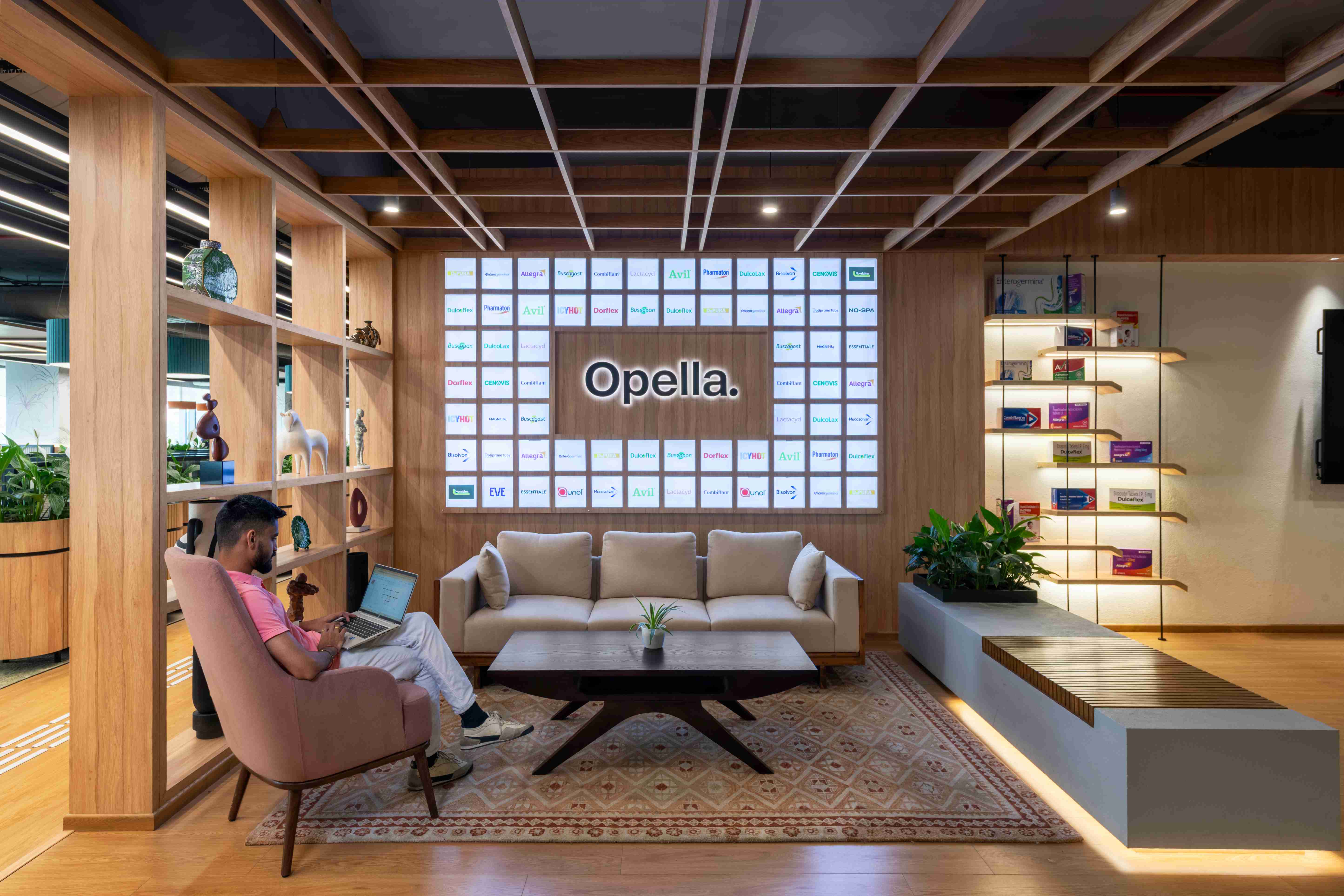
This is where generic workplaces fall short. When a space lacks identity, it struggles to create emotional connection or reinforce culture. It leaves employees disconnected from the organisation's purpose. A truly purpose-built workplace begins with a brand that deeply understands its values and ambition. When brand identity shapes the workplace experience, space becomes a strategic tool that strengthens culture and brings the organisation's purpose to life in ways no generic office ever could.
The Business Case: Why Brand-Driven Design Matters
Brand-aligned workplaces build trust and signal consistency in ways people immediately sense. When employees and clients walk into a space that clearly reflects the organisation's values, credibility follows naturally. People today expect authenticity and purpose, not polished surfaces with no substance. This often leads leaders to ask, "What is brand-driven workplace design? It involves shaping the space around strategic intent so the workplace reinforces priorities and direction rather than working against them. When space aligns with brand, it quietly but powerfully supports how decisions get made and how work actually happens.
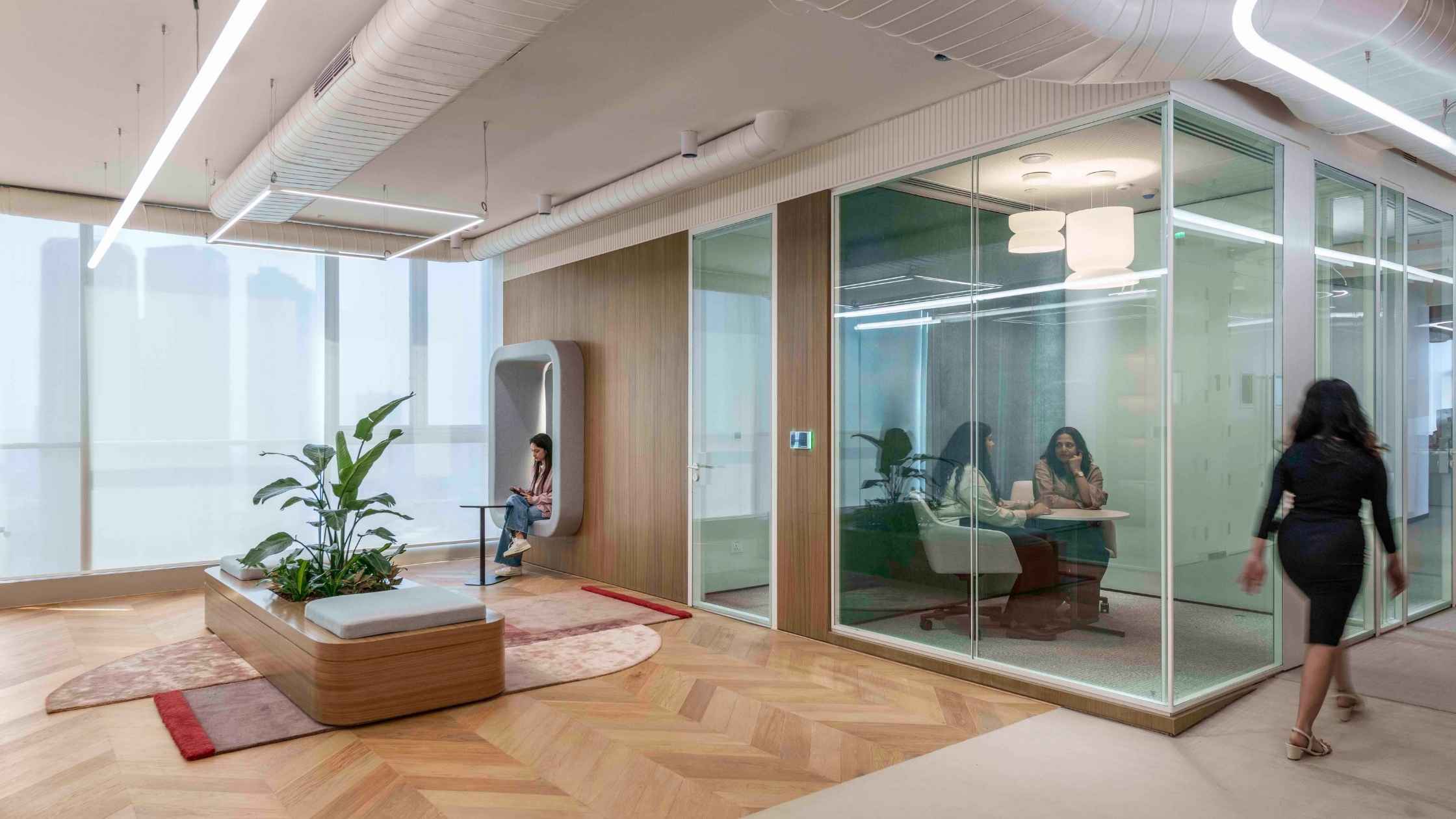
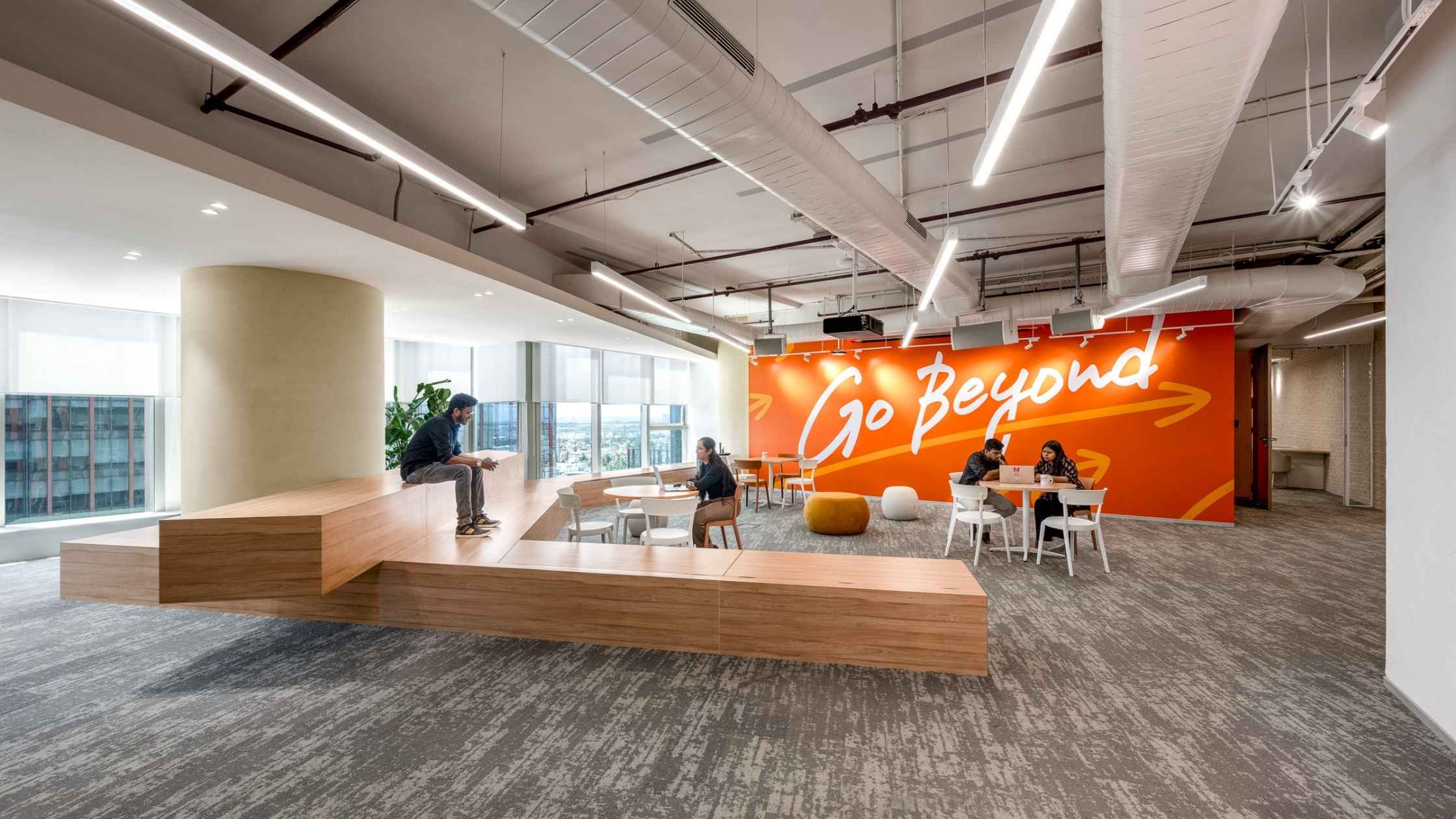
The impact becomes especially clear when organisations move away from generic layouts and start designing around real needs. The workspace for Money Forward in Chennai is a strong example of how thoughtful space planning can shape performance and perception. Recognising that the original office was functional but uninspiring, the design introduced open, high-energy zones for rapid team collaboration alongside quiet focus areas for deep, uninterrupted problem-solving. This mix reduces friction and provides teams with clarity about where different types of work belong. Beyond efficiency, design choices actively influence behavior, demonstrating how employee experience design can translate brand values into everyday actions rather than mere abstract statements.
What truly sets the Money Forward workplace apart is how customisation supports both culture and identity. Traditional materials such as raw timber were paired with vibrant accent colours to visually express the company's identity in Chennai: deeply Japanese, boldly future-facing, with a touch of Indian culture. Smart lighting, modular systems, and sustainable materials created a space that could flex as the organisation grew. Every design decision laddered back to a clear challenge: converting innovation from a brand pillar into a lived, spatial experience for the India team. By designing the office around how employees actually work and interact, the workplace strengthens brand identity while supporting a design that promotes employee belonging.
The Experience Advantage: Turning Brand Purpose into Everyday Moments
Experience is where the brand stops being an idea and starts shaping everyday behavior. The spaces people move through influence how they collaborate and how connected they feel to the organisation. This is why brand-driven workplace design goes far beyond visual identity. When design decisions translate purpose into materials and layouts, the workplace starts telling a story people can sense without reading a single word. That emotional layer creates pride and a sense of ownership, turning the office into a place people want to be part of rather than just show up to.
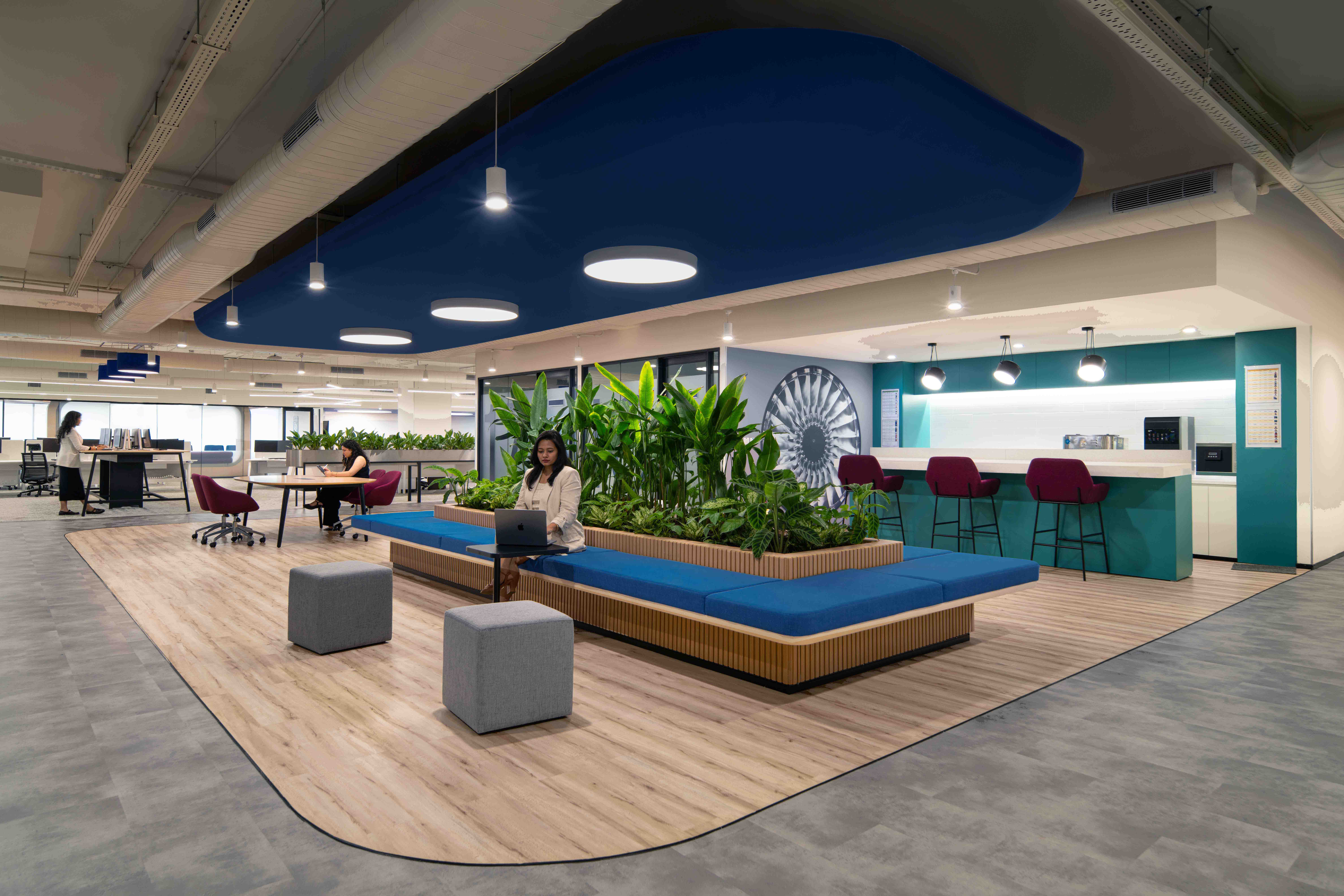
Rolls-Royce's Global Capability and Innovation Centre in Bangalore shows how powerful this translation can be when experience and intent align. The design draws directly on the company's brand values - precision, innovation, and global excellence - weaving them into the spatial narrative from the moment of arrival. The arrival experience establishes an immediate first impression: a refined, purpose-driven environment that balances sophistication with warmth, signalling a culture that values both technical excellence and people. Transition zones act as psychological thresholds, guiding employees from arrival into focused work environments through industrial cues and brand colours such as magenta, blue, and turquoise. Somewhere in the middle of conversations around space, leaders often ask, "What is employee experience design?" It's about creating environments that let people live the brand through daily interactions, not just hear about it in presentations.
Purpose-led brands continue to outperform their peers because they align experience with intent, and the workplace plays a central role in that equation. When people see their organisation's values reflected in how space works and feels, connection deepens naturally. At Rolls-Royce Bangalore, the cafeteria was envisioned as the social and cultural anchor of the office - a destination for connection and exchange that drives informal networks and cross-functional conversations. That kind of intentional design builds emotional connection and supports design for employee belonging, proving that when purpose shows up in everyday moments, the workplace becomes a lasting advantage rather than a silent backdrop.
Ready to turn your brand into a spatial experience?
The Human Factor: Culture, Belonging & Identity at Work
Culture doesn't live in values decks or town halls alone. It shows up in how space supports people every day. The workplace plays a quiet but powerful role in shaping shared identity, especially in hybrid and global organisations where teams don't always sit together. When environments reflect how people actually work, they send clear signals about "who we are" and "how we work." This is where brand-driven workplace design becomes a human tool, not a branding exercise. It creates consistency across locations while still allowing flexibility, helping people feel grounded in the same culture even when their work patterns differ.
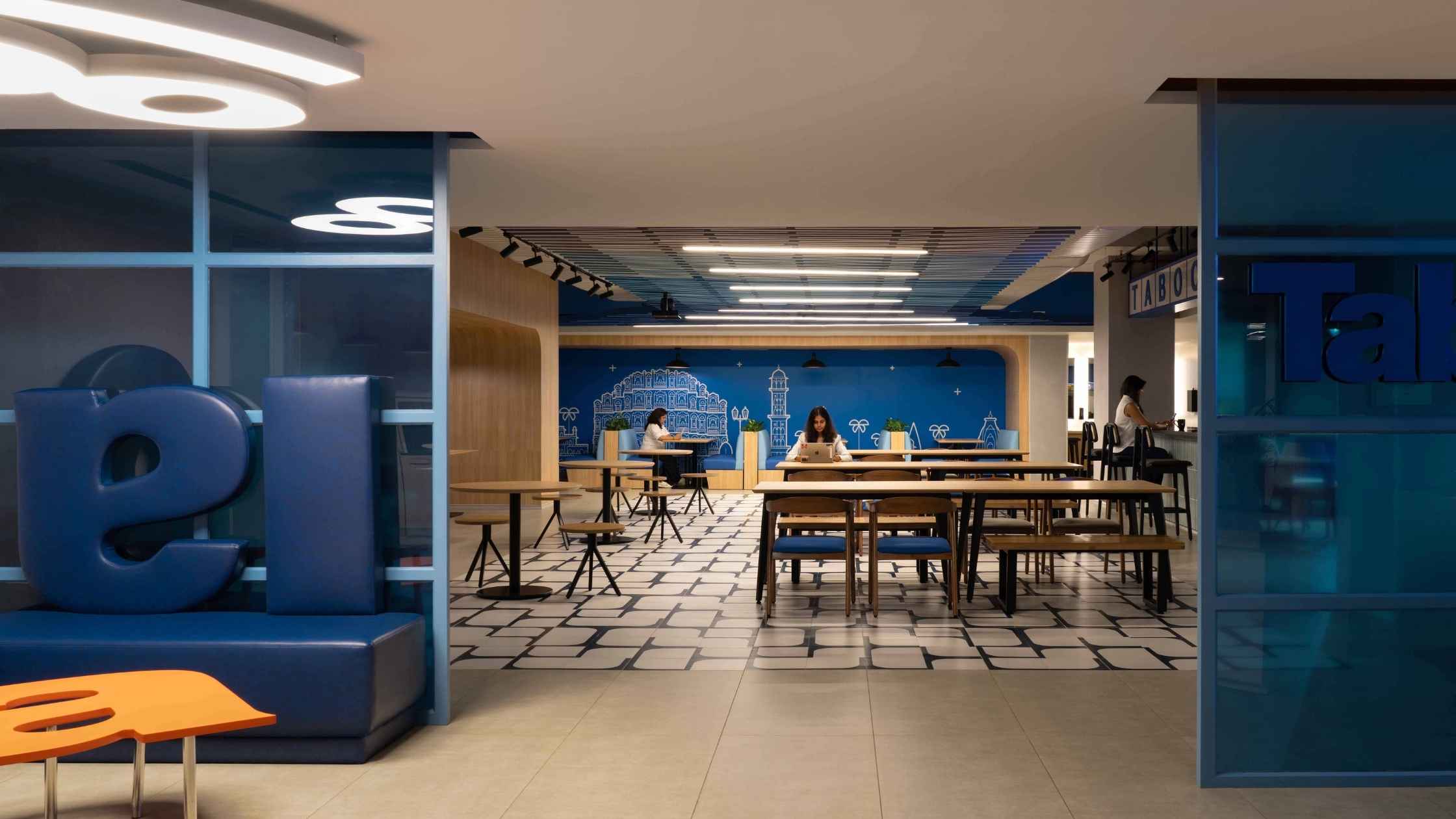
Taboola's India Headquarters in Gurgaon brings this idea to life through a neighborhood and hub planning model that considers different personas and work modes. Instead of a single large, open floor, the office is organised around a vibrant central cafeteria that doubles as a high-tech town hall space, with focused work neighborhoods radiating from it. Some zones feel calm and controlled, supporting deep work and private conversations, while the social hub carries collective energy in one defined, inviting area. A 1:7 meeting-to-workstation ratio ensures every neighborhood has immediate access to huddle rooms and collaboration spaces, minimising unnecessary movement and preventing conversations from disrupting larger areas of the office. It's a strong example of employee experience design that respects diversity in roles without fragmenting the overall culture.
As organisations encourage people to return to the workplace, expectations have changed. Employees look for spaces that support psychological safety, inclusion, and well-being, alongside clarity in how work happens. Taboola's approach blends material and architectural interventions - double-glazed partitions, sound-deadening membranes, eco-acoustic panels, and ceiling clouds - with thoughtful zoning logic to create a sensory-balanced environment. In the middle of these conversations, leaders often ask, "What is design for employee belonging?" It's the practice of creating environments where people feel seen, supported, and connected to a shared purpose. When organisations commit to testing and refining their workplace strategy, space stops being static and starts driving satisfaction and long-term growth.
The Design & Build Perspective: Designing Purpose-Built, Brand-Led Workplaces
At Space Matrix, we don't start with layouts or finishes; we start with questions. We take time to understand what the brand stands for and how people actually work, because space only succeeds when it reflects real behaviors and ambitions. Our teams dive deep into brand purpose and workplace culture, then translate those insights into environments that feel intentional rather than imposed. That's how brand-driven workplace design becomes a strategic process, showing how every decision connects back to the business direction rather than surface-level trends.
From there, we focus on turning strategy into experience. Spatial storytelling helps bring the brand to life through everyday movement, while experience zoning supports different work modes without creating friction. Teams need areas that encourage collaboration and spaces that support focus, and both must feel like they belong to the same story. Material choices, environmental cues, and graphic layers reinforce identity in subtle but consistent ways. This approach allows employee experience design to feel natural, shaping how people interact with the workplace rather than telling them how to behave.
The real measure of success shows up in outcomes. When space aligns with purpose, culture grows stronger and teams gain clarity on how they work together. The workplace stops feeling generic and starts offering a differentiated experience that employees recognise as their own. That's the power of design for employee belonging. It creates environments where people feel connected to the organisation and confident in their role within it. At Space Matrix, we see the workplace as a living system, one that continuously supports alignment and long-term impact.
The Bonus: Brand-Driven Workplaces as a Differentiator
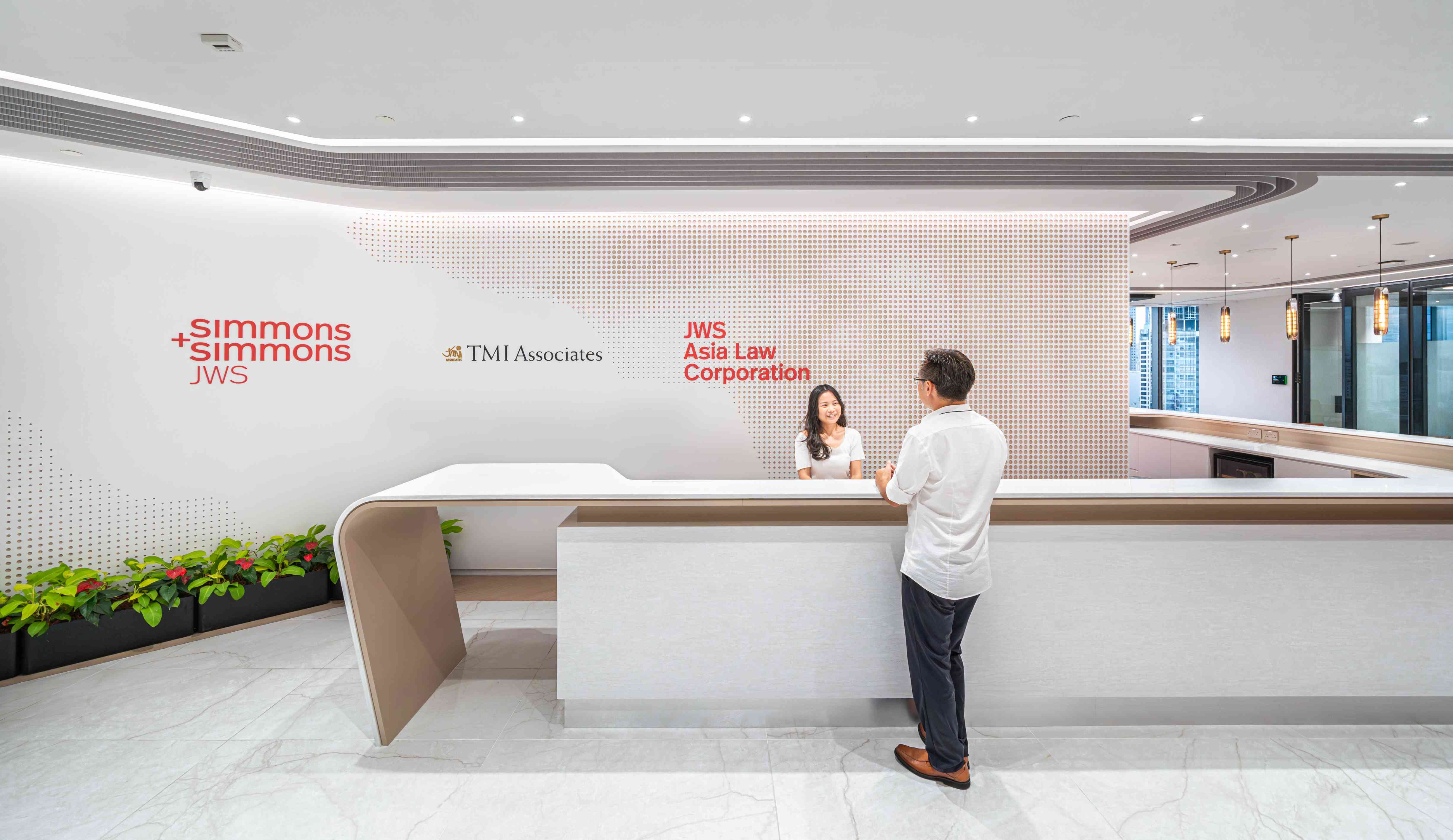
A well-designed workplace speaks to the people you want to attract. Purpose-built environments are playing an increasingly important role in employer branding, especially as talent seeks meaning alongside opportunity. When candidates walk into a space that reflects values and ambition, they get an immediate sense of what it feels like to work there. That first impression carries weight, and brand-driven workplace design turns the office into a powerful recruitment tool rather than a neutral backdrop.
The impact extends beyond employees. Clients and partners experience the brand the moment they step through the door, long before a presentation begins. A workplace that reflects purpose and intent builds credibility and trust without saying a word. Consistency across touchpoints creates experiences that linger. This is where employee experience design quietly supports external perception, aligning what the organisation promises with what visitors actually see and feel.
Over time, these moments add up. A workplace that consistently reflects the brand becomes a living ambassador, reinforcing loyalty through everyday experience rather than marketing messages. Employees feel proud to invite clients into the space, and clients leave with a clearer understanding of the organisation's identity. When design supports design for employee belonging, that sense of connection extends outward, strengthening relationships and setting the organisation apart in ways competitors find hard to replicate.
Designing Workplaces That Reflect Who You Are
Workplaces say a lot about an organisation, whether intentionally or not. When design aligns with brand purpose, the office shifts from being a cost or convenience into a strategic asset. Purpose-built environments give people clarity on how they belong and how they contribute, while quietly reinforcing culture through everyday experience. The result is stronger engagement and more consistent performance, because space supports the brand rather than diluting it.
As organisations rethink the role of the workplace, the question is no longer whether design matters, but what it should stand for. A workplace that reflects who you are creates alignment from the inside out and leaves a lasting impression on everyone who walks through it. If your organisation is ready to build a workplace that truly reflects its brand and purpose, we can help design spaces that bring your identity to life.
Let's design a workplace that reflects who you are.
We use cookies to enhance your experience on our website, provide personalized content, and analyze site traffic.
By clicking "Accept All", you consent to our use of cookies. You can also choose "Preferred Cookies"
to select specific types of cookies that align with your preferences.
Essential cookies are always enabled to ensure website functionality.
You can choose to have only Essential cookies if you prefer minimal tracking.
Your choice regarding cookies on this site
Please choose whether this site may use Functional and/or Personalization cookies, as described below.
By selecting Required cookies only, you are requesting us not to sell or share your personal information.