Modern Workplace Design for Manufacturing Industry: A Strategic Business Advantage
Manufacturing has undergone a fundamental transformation. Production today is driven not just by machines and manpower, but by data, digital engineering, automation, and real-time decision-making across complex, multi-disciplinary teams.
Engineers, data scientists, R&D specialists, and operations leaders now work side by side - often solving high-stakes problems in the time it once took to schedule a meeting.
Yet most manufacturing workplaces haven't kept pace. Offices remain disconnected from shopfloors. Labs are siloed from strategy rooms. Support spaces are designed for an older model of work that no longer reflects how value is actually created. This gap has real consequences - for speed, for innovation, and increasingly, for an organisation's ability to attract and retain the engineering talent it needs to compete.
Closing that gap is where modern workplace design becomes a genuine strategic lever, not just a facilities decision.
Why Modern Workplace Design Matters More Than Ever in Manufacturing Industry
In manufacturing, competitive advantage is built on the speed and quality of decisions made across the organisation. But decisions don't happen in a vacuum - they depend on how easily people can access information, see what's happening on the ground, and work fluidly across functions.
When engineers, operations teams, and leadership operate from disconnected spaces, delays compound quietly. Issues bounce between departments. Insights take longer to travel from the shopfloor to the people with authority to act on them. The physical workplace is rarely blamed, but it is almost always part of the problem.
Poorly designed environments actively reinforce the silos that manufacturing leaders are trying to break. Well-designed ones do the opposite. They bring the right people into proximity, make collaboration feel natural rather than effortful, and give teams the visibility and spatial flexibility to respond to change without friction.
This is not a soft benefit. Organisations that invest in behaviour-led modern workplace design see measurable improvements in decision velocity, cross-functional alignment, and operational efficiency - outcomes that directly affect competitive performance.
Designing for the Modern Manufacturing Workforce
The manufacturing workforce has changed significantly. Today's facilities house engineers, embedded software specialists, data analysts, digital twin operators, and process designers alongside traditional production and operations teams. These roles have different cognitive demands, different collaboration rhythms, and very different expectations of what a good workplace looks and feels like.
Attracting and retaining this talent - particularly in competitive technology and engineering hubs - requires workplaces that signal investment in people, not just in machinery.
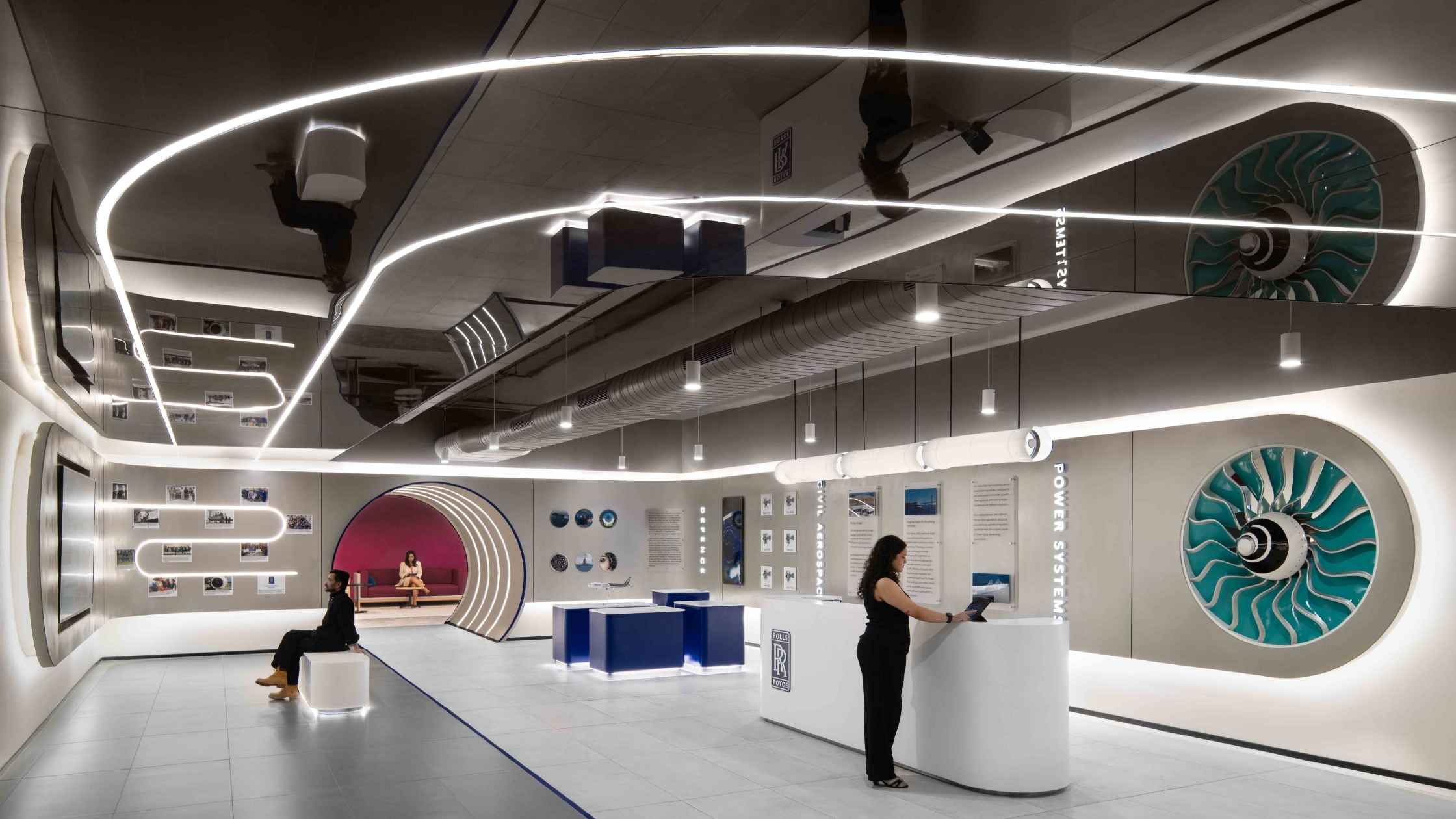
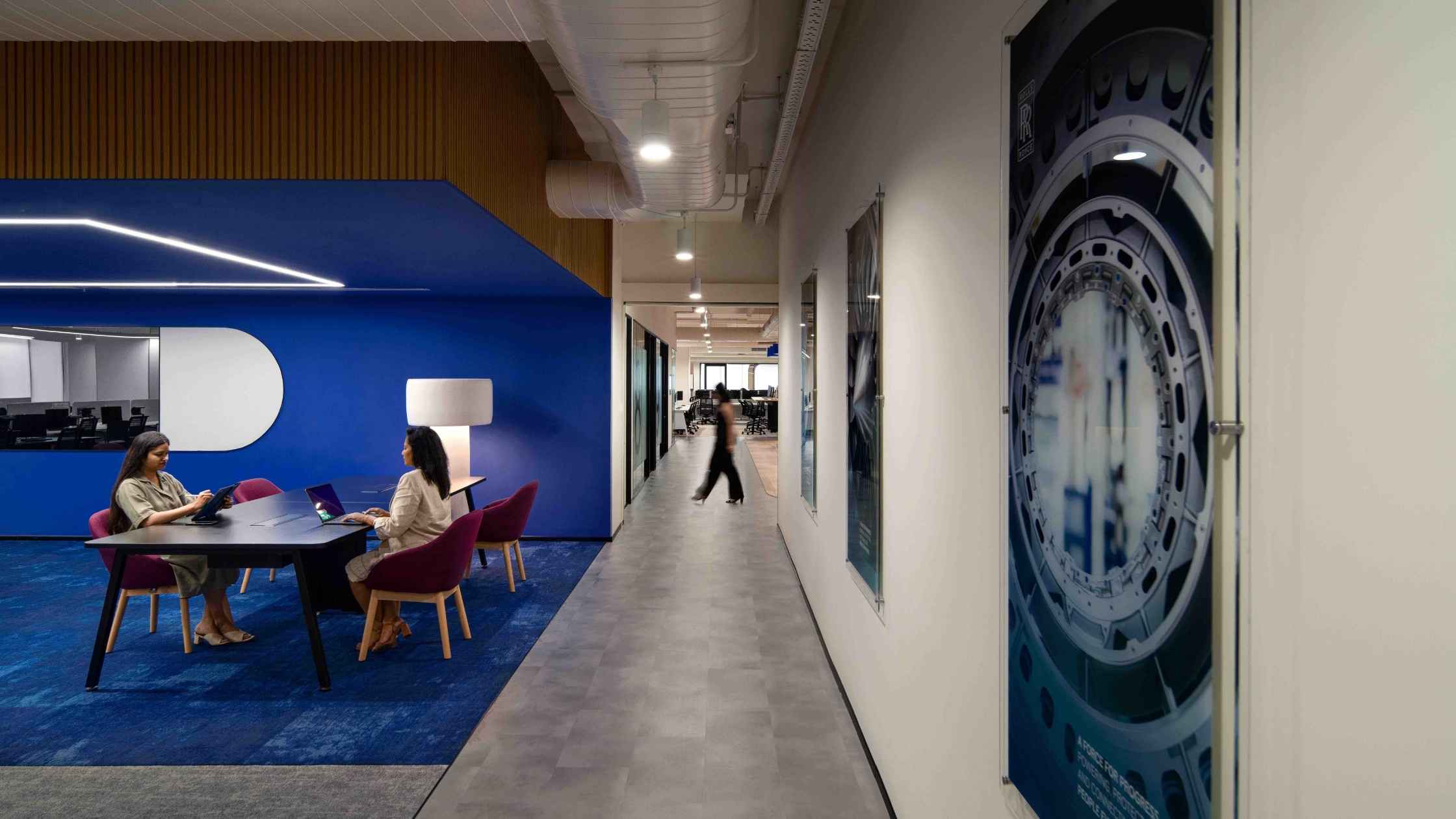
Rolls-Royce's Global Capability and Innovation Centre in Bangalore, designed and built by Space Matrix, illustrates exactly what this looks like at scale. As Rolls-Royce expanded its largest engineering hub globally into a 700-seat, 91,454 sq ft facility supporting digital engineering, defence technology, and enterprise services, the challenge extended far beyond capacity planning. The space needed to unify diverse business units, attract top engineering talent in a fiercely competitive market, and position Bangalore as a genuine strategic innovation hub - not just a delivery centre.
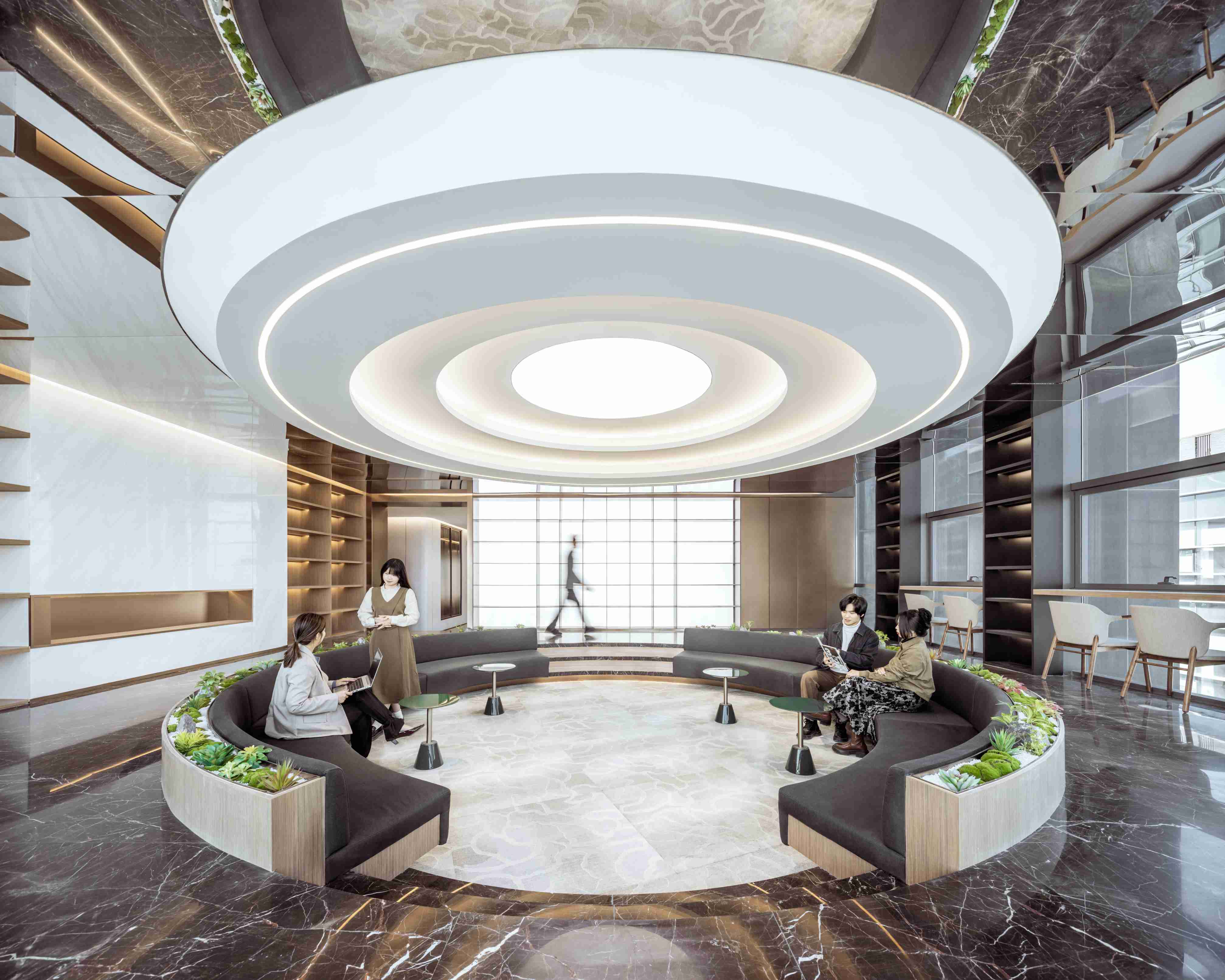
Space Matrix designed the facility around behaviour and identity. The arrival experience was crafted to make a powerful first impression on both talent and stakeholders, communicating Rolls-Royce's global stature while creating genuine warmth. Transition zones act as psychological thresholds, shifting employees cognitively from arrival into focused work. Colour-coded neighbourhoods - mapped to digital engineering, defence, and power systems - reduce cognitive fatigue and strengthen team identity across a large floor plate, while keeping visibility and interaction across functions high. The result is a workplace that functions as a strategic asset: one that attracts engineering talent, enables cross-disciplinary collaboration, and communicates brand credibility to every partner and stakeholder who walks through the door.
The Technical Workplace: Solving the Focus-Collaboration Tension
One of the most persistent modern workplace design challenges in manufacturing and engineering environments is the tension between deep, focused work and the kind of rapid, cross-functional collaboration that drives innovation. Most workplaces either sacrifice one for the other - or ignore the tension entirely.
Renesas Electronics, the global semiconductor leader, faced exactly this challenge when establishing its largest R&D facility globally in Bangalore - a 120,000 sq ft hub integrating three organisations (Renesas, Altium, and Part Analytics) into a single environment that needed to serve both as an internal innovation engine and an external customer experience centre.
Space Matrix's solution was a dual-purpose spatial operating system designed to protect what matters most: uninterrupted deep work in the lab zones, and fluid collaboration everywhere else.
A strategic dual-entry system separates the customer experience centre from direct lab access - physically protecting the 4-to-6-hour uninterrupted focus blocks that semiconductor R&D demands, while enabling seamless customer engagement and talent attraction without disrupting research. The upper half of the facility is dedicated to high-performance labs with acoustic, thermal, and electromagnetic controls. The lower half mirrors this precision through a performance-and-wellness split - not as an afterthought, but as a structural feature of the workflow, because Renesas understood that sustained breakthrough thinking requires structured cognitive recovery.
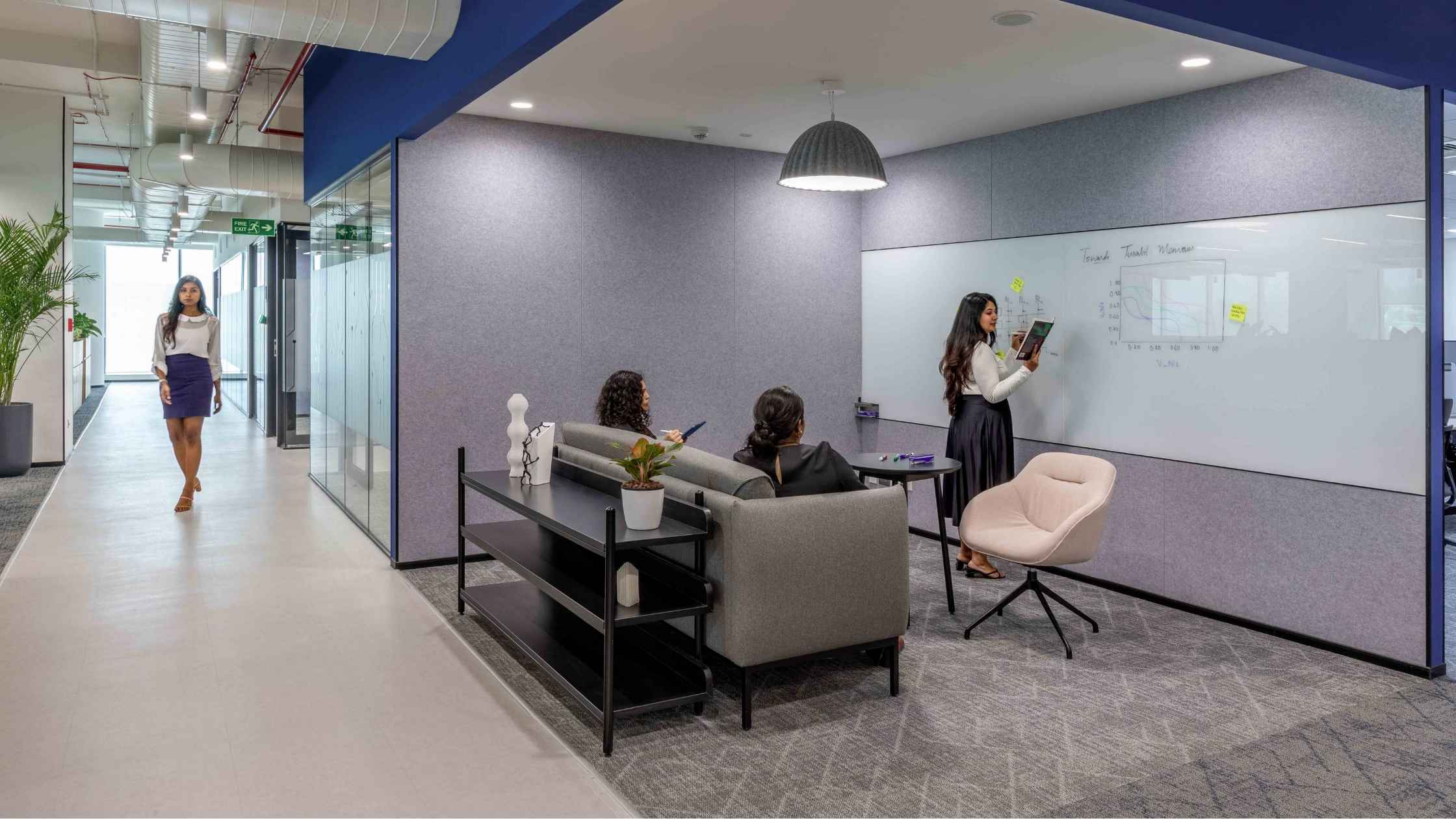
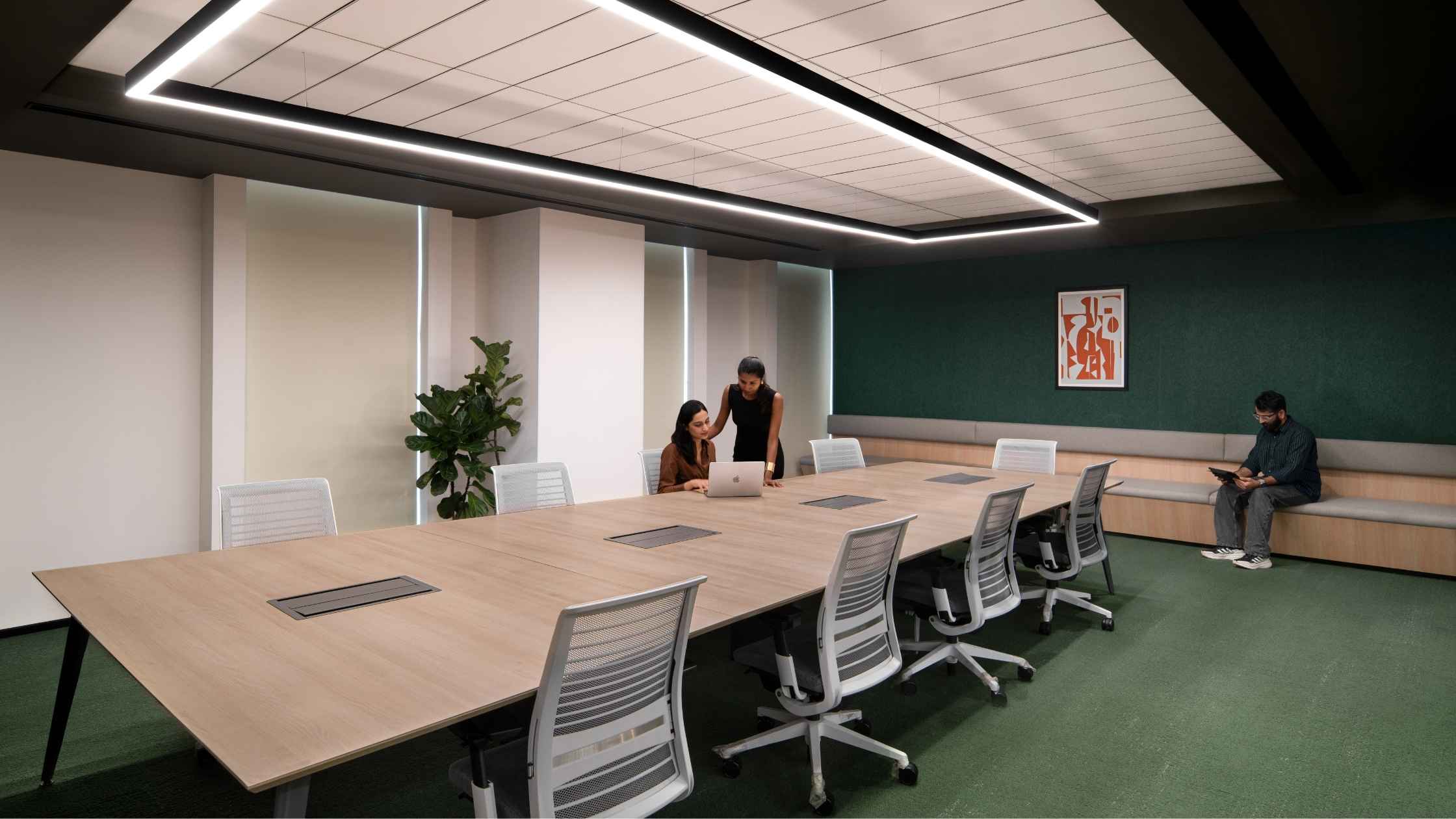
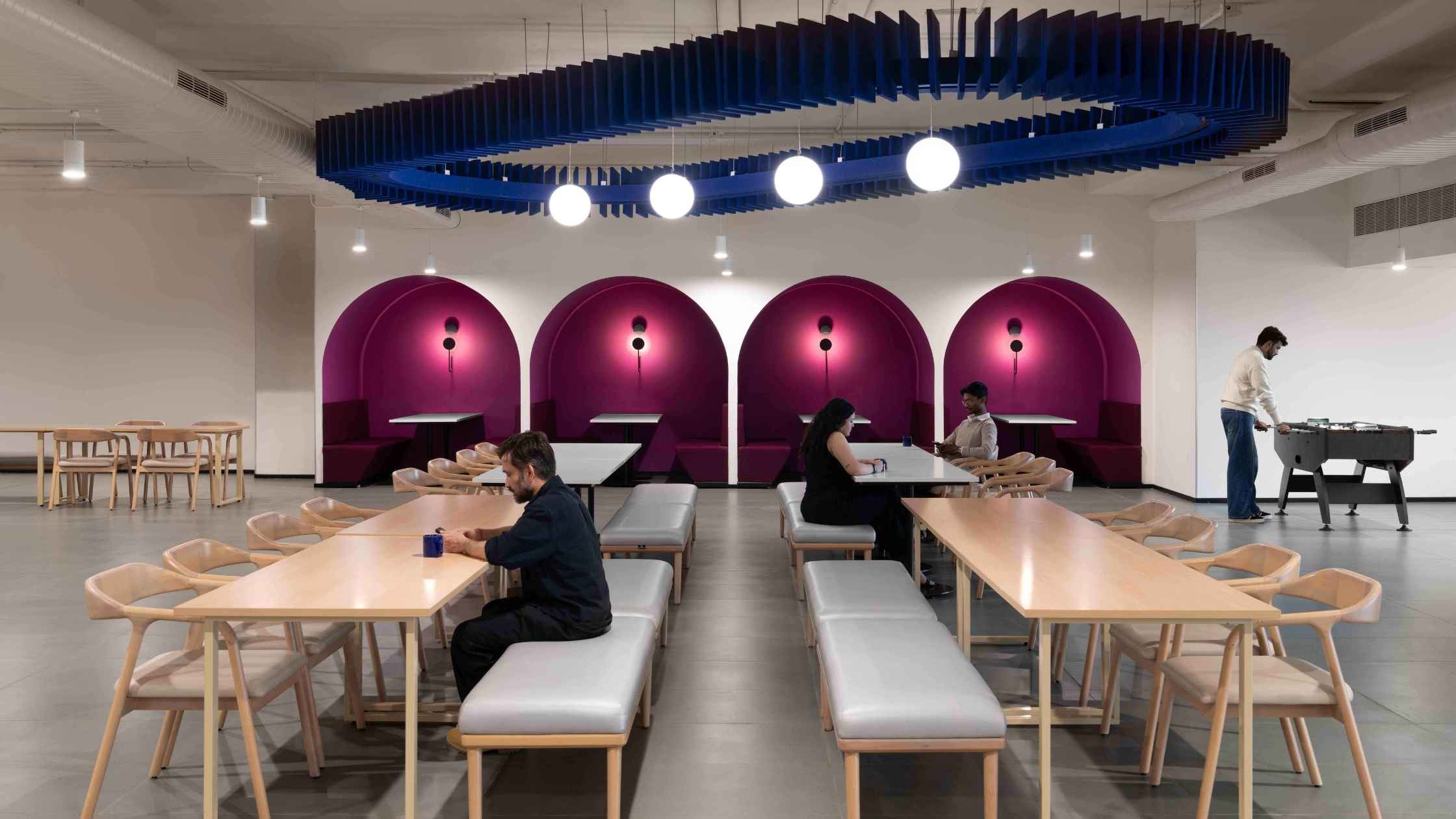
Circulation patterns were deliberately engineered to maximise spontaneous cross-functional encounters between teams that had previously operated as separate entities. A 110-capacity cafeteria sits at the organisational heartbeat of the space - large enough to ensure daily overlap across all shifts and disciplines. Distributed meeting rooms, colour-coded by meeting type and scale, compress the journey from early-stage ideation to strategic decision-making.
Critically, Renesas' own IoT sensor technology is embedded throughout the office - 77% occupancy and daylight sensor coverage feeding into a Building Management System that optimises HVAC and lighting automatically. The workplace doesn't just house the organisation; it demonstrates the organisation's capability to every customer who visits. The result is a facility that functions simultaneously as an R&D engine, a talent magnet, and a living proof-of-concept for the smart building solutions Renesas develops and sells.
Safety and Wellbeing in Modern Manufacturing Workplace Design
In manufacturing environments, safety and wellbeing are not optional design considerations - they are operational necessities. But the most effective workplaces treat them not as a compliance checklist, but as drivers of performance.
Thoughtful zoning keeps production areas clearly separated from labs and offices while maintaining the visibility and movement patterns that allow leadership to stay connected to operations. Ergonomic planning, acoustic management, and access to natural light all reduce fatigue across long shifts - particularly important in facilities that run multiple shifts and demand sustained technical precision.
Equally important is the relationship between office and shopfloor cultures. When offices feel remote from operations, collaboration between frontline teams and corporate functions becomes forced and infrequent. When layouts are designed to encourage natural movement between these groups, conversations happen organically, decisions reach the right people faster, and frontline teams feel genuinely included in decisions that affect them.
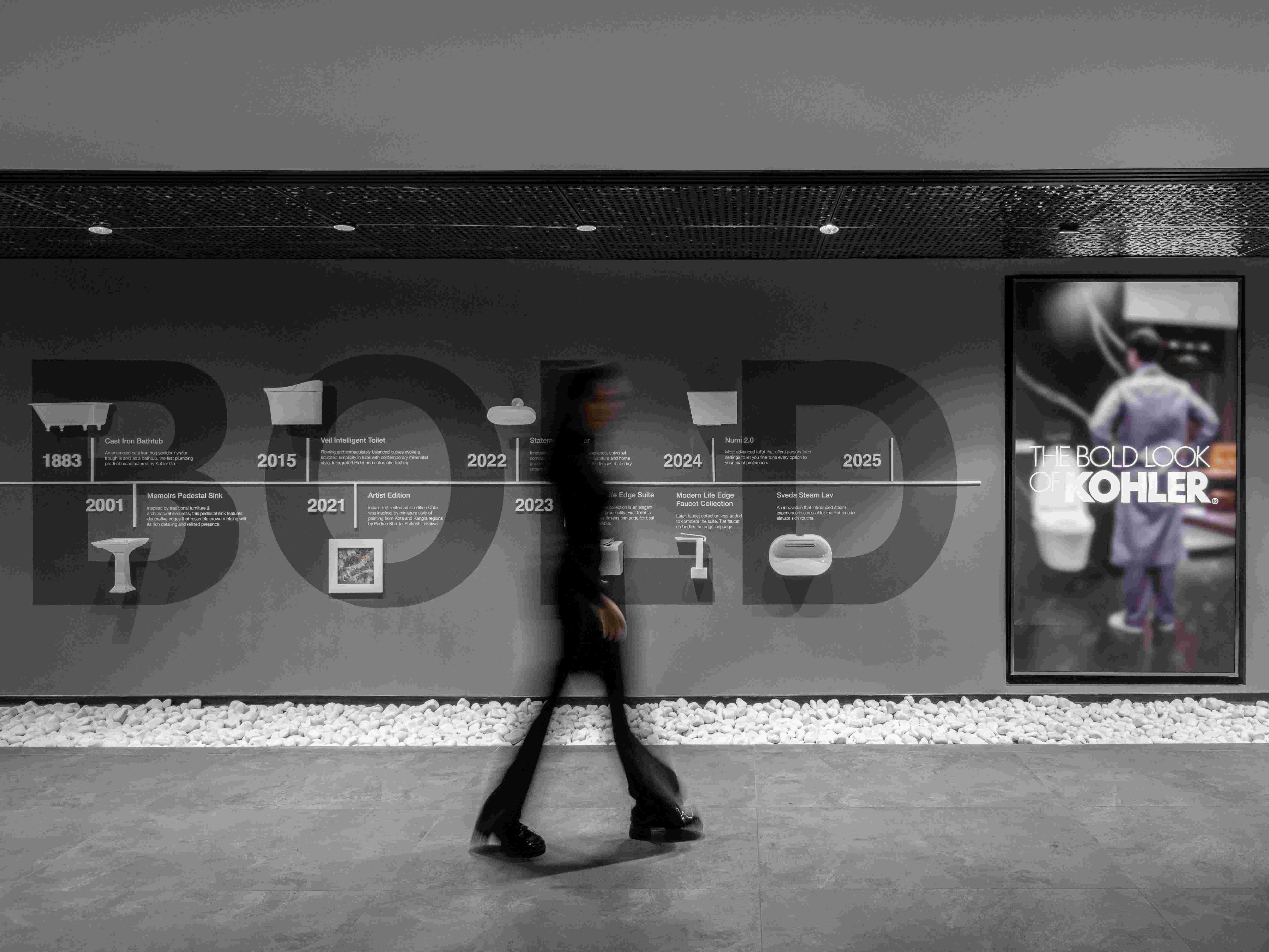
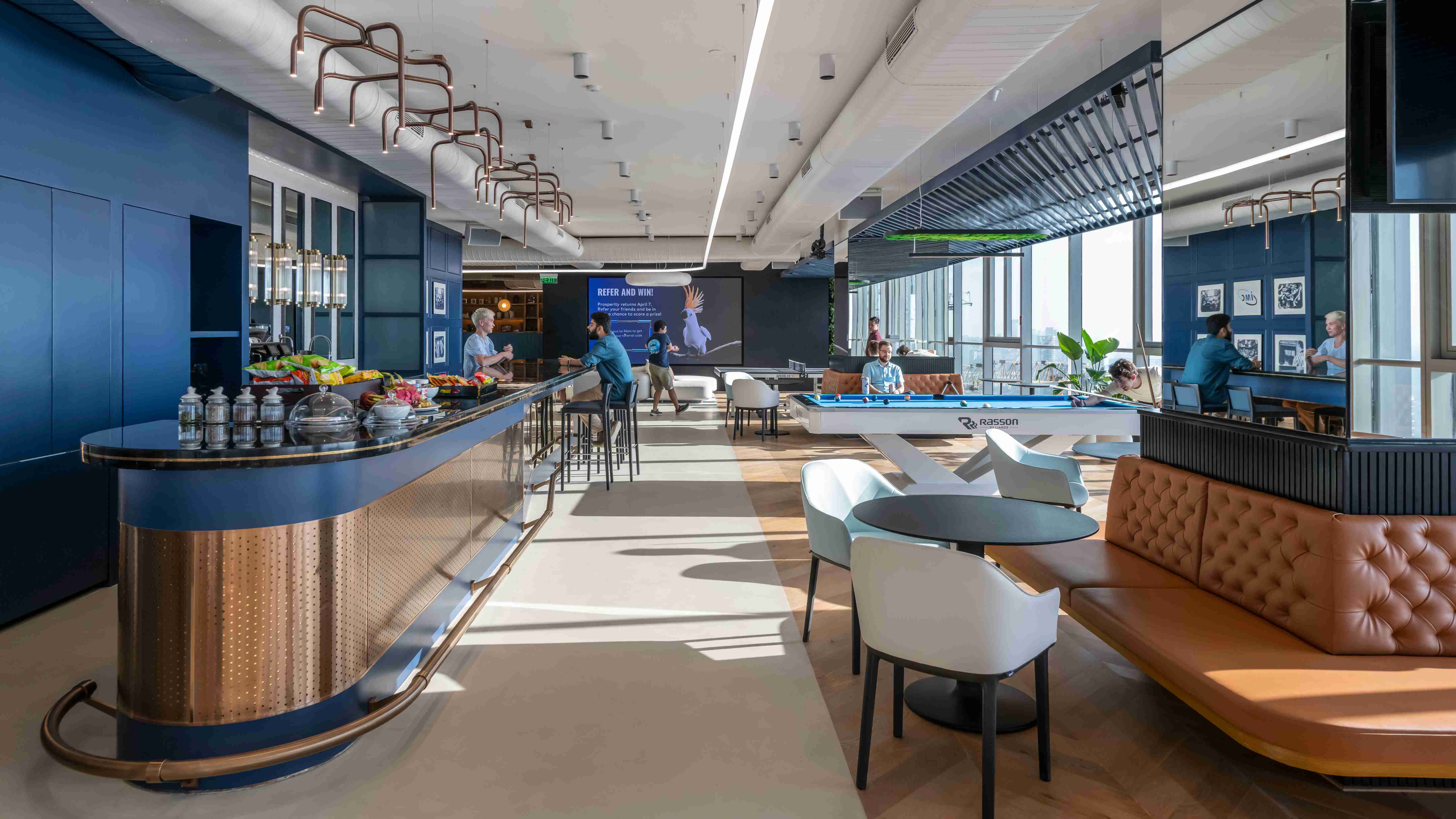
Kohler India's headquarters reflects how this balance can be achieved at the highest level of design ambition. The space is designed not merely as a functional workplace, but as an experience that reflects Kohler's legacy and its future-facing vision. Natural light, fluid layouts, and biophilic elements create an inclusive, energising environment, while storytelling through materials and spatial form deepens employees' emotional connection to the brand. Collaboration flows through shared spaces like the Work Café, while quieter zones support focused work and analysis. Sustainability is embedded as a core design principle - reinforcing that the decisions made in this building are aligned with the values the organisation stands for.
Designing Modern Manufacturing Workplaces for Performance
High-performing manufacturing workplaces don't start with finishes or furniture. They start with a rigorous understanding of how people actually work.
At Space Matrix, every design decision is grounded in behavioural analysis and operational flow. The team studies how engineers, operators, and leaders move through a typical day - where they need to collaborate, where they need to focus, where decisions get made and where they get delayed - and then shapes spaces that support those patterns precisely.
This behaviour-led approach yields environments where people spend less time navigating the space and more time getting work done. It also produces workplaces that are genuinely technology-ready: environments where smart manufacturing tools, IoT infrastructure, and data visualisation systems can be adopted and adapted without constant physical rework.
Modular layouts that scale with evolving production needs are a core feature of this approach. Manufacturing organisations rarely stay static - headcount grows, teams restructure, new product lines emerge, acquisitions bring new groups into the fold. Workplaces designed for flexibility absorb this change without the disruption and cost of a full redesign.
The measure of success is not square footage occupied or design awards won. It shows up in outcomes: faster decision-making, stronger team cohesion, lower attrition, and environments that stay relevant as the organisation continues to evolve.
Workplaces as Innovation Infrastructure
Innovation in manufacturing rarely emerges from isolation. It grows from environments where ideas move quickly from concept to testable prototype - where cross-functional teams can collaborate closely, access the tools they need, and iterate without disrupting core operations.
When workplaces include dedicated innovation labs, pilot zones, and experience centres designed for rapid experimentation, they become competitive infrastructure. Teams can test new processes and technologies, gather insights from real trials, and scale what works - all without pulling resources away from core production. Over time, these spaces evolve into organisational learning hubs: places where continuous improvement is not a programme but a rhythm built into how the environment operates.
Space Matrix brings this perspective to every manufacturing engagement - combining deep expertise in behaviour-led design with end-to-end design-and-build execution. The result is workplaces that are not just well-designed, but strategically aligned with where the organisation is heading.
Over time, these environments evolve into learning hubs rather than static offices. People come together to exchange insights, review outcomes, and build on what worked or didn’t. That rhythm of continuous improvement thrives in spaces designed to adapt and grow. And when leaders pause to ask, “Can sustainable modern workplace design fuel innovation?” The answer lies in creating environments that support reuse, flexibility, and long-term relevance, so transformation doesn’t feel like a one-time effort, but an ongoing way of working.
Choosing the Right D&B Partner for Modern Workplace Design in Manufacturing
For manufacturing organisations evaluating a workplace transformation, the choice of design-and-build partner is as consequential as any other strategic decision. The right partner needs to understand not just interior design, but engineering environments, operational complexity, safety requirements, technology integration, and talent strategy.
Space Matrix brings all of this to the table - with a proven track record across global engineering, industrial, and manufacturing clients including Rolls-Royce, Renesas, Caterpillar, and Kohler. From 91,000 sq ft GCCs to 120,000 sq ft R&D hubs, Space Matrix has designed and delivered facilities that function as genuine strategic assets: environments that attract talent, enable innovation, and support operational excellence at scale.
The approach is consistent across every engagement: start with how people work, design for behaviour and outcomes, and build with the precision that complex manufacturing environments demand.
We use cookies to enhance your experience on our website, provide personalized content, and analyze site traffic.
By clicking "Accept All", you consent to our use of cookies. You can also choose "Preferred Cookies"
to select specific types of cookies that align with your preferences.
Essential cookies are always enabled to ensure website functionality.
You can choose to have only Essential cookies if you prefer minimal tracking.
Your choice regarding cookies on this site
Please choose whether this site may use Functional and/or Personalization cookies, as described below.
By selecting Required cookies only, you are requesting us not to sell or share your personal information.