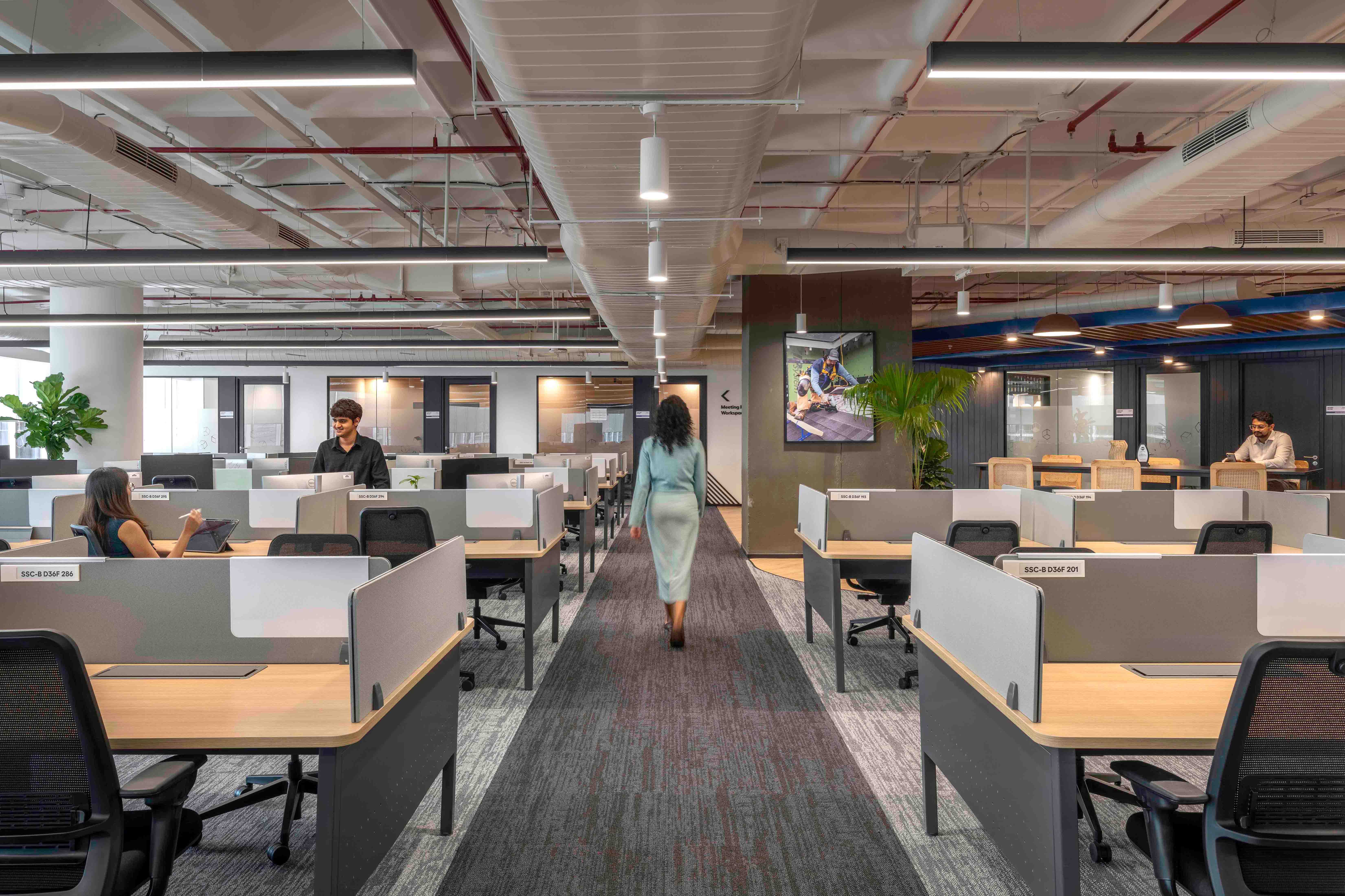
The Best Office Interior Design in Mumbai Is Built Around One Question: How Do People Actually Work?
A POV by Charoo Mehta, Client Solutions, India at Space Matrix
India's commercial capital is undergoing a structural shift in how ambition occupies space. For leaders charting growth in or into India, the decisions you make about where - and how - your organisation plants its flag have never carried more strategic weight. The evidence is already built into Mumbai's finest offices. You just have to read it.
There is a particular kind of silence in a half-empty floor of a glass tower. The workstations are there. The infrastructure is there. What is absent is harder to name - purpose, perhaps, or the confidence that this was the right call to begin with.
Mumbai is not retreating from ambition. It is recalibrating it. And the organisations reading this moment correctly - understanding where and how to anchor their India presence - carry a decisive advantage into the next decade. The proof is not theoretical. It is already built, occupied, and performing across Mumbai's micro-markets, in offices shaped by the best office interior design thinking available: spaces that started with a strategic question rather than a square footage number.
The Corner Office Has Not Died. It Has Been Outgrown.
270K+ sq ft of Mumbai office space recently reimagined - across five landmark projects
For decades, a premium address in Mumbai signalled arrival - for organisations as much as for individuals. A full floor in BKC, a tower in Lower Parel, a flagship in Nariman Point: these were statements. Status. Seriousness of intent.
That language has not disappeared. It has grown more sophisticated. Today's leadership understands the address still matters - but what happens inside it, and how fluidly it evolves, matters equally. The static, prestige-only lease is giving way to something more intelligent: office interior design in Mumbai as a living expression of organisational strategy.
"The question is no longer how much space your organisation needs. It is what your space is being asked to do - and whether it is equipped to do it."
The most compelling evidence for this shift is not found in market reports. It is found in five offices - across Mumbai and Navi Mumbai - built by organisations who refused to let convention answer a strategic question.
Five Decisions. Five Lessons for Leadership.
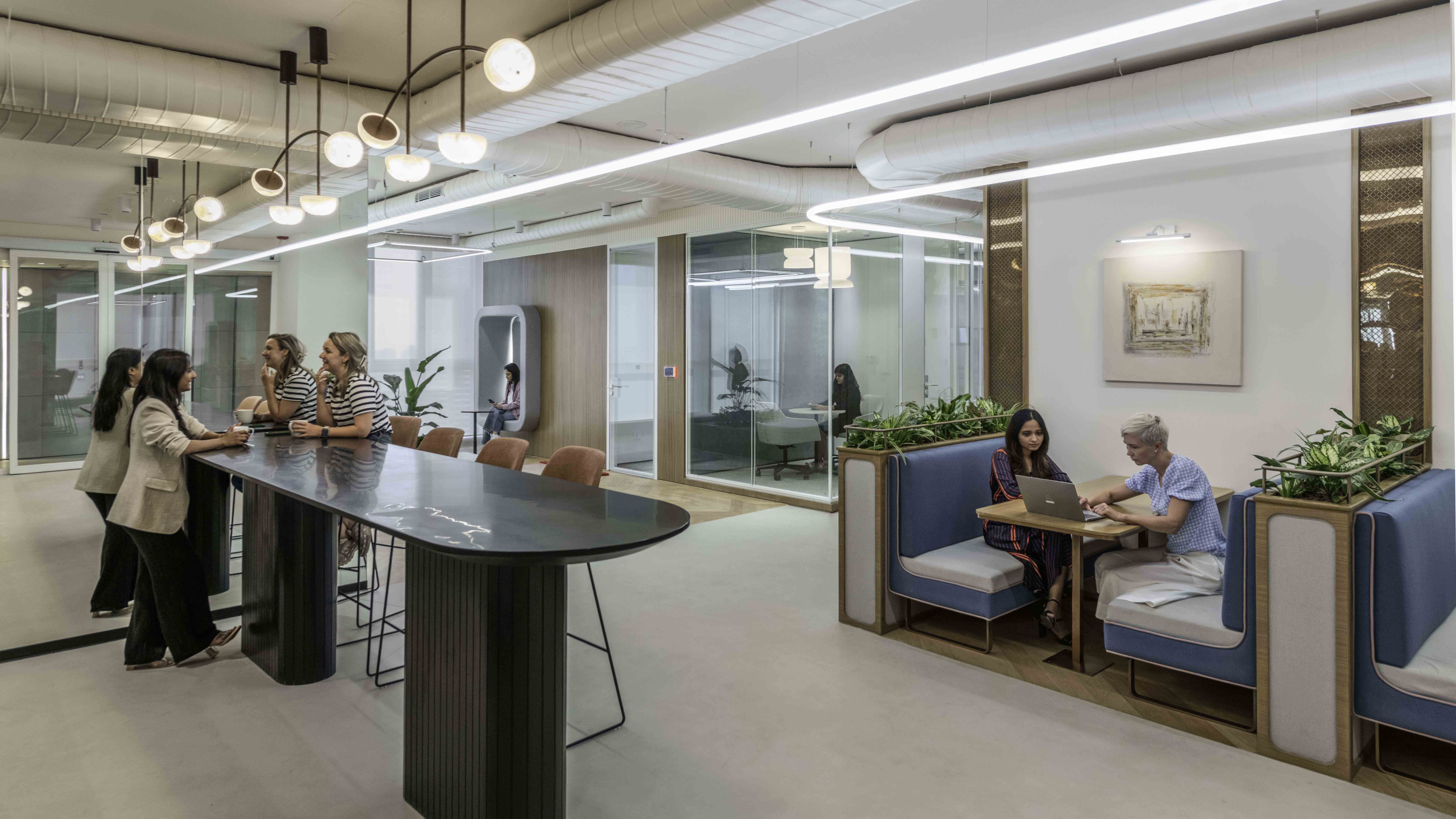
IMC Trading, Mumbai · 28,000 SF · Design & Build · Best Office Interior Design Mumbai
When IMC Trading - a proprietary trading firm headquartered in Amsterdam - entered the Indian market in 2021, it grew faster than anticipated. The space constraint that followed was not a real estate problem. It was a strategic signal: how do you create a workplace that amplifies a global culture and reflects APAC ambitions, across cross-cultural teams, in a new market?
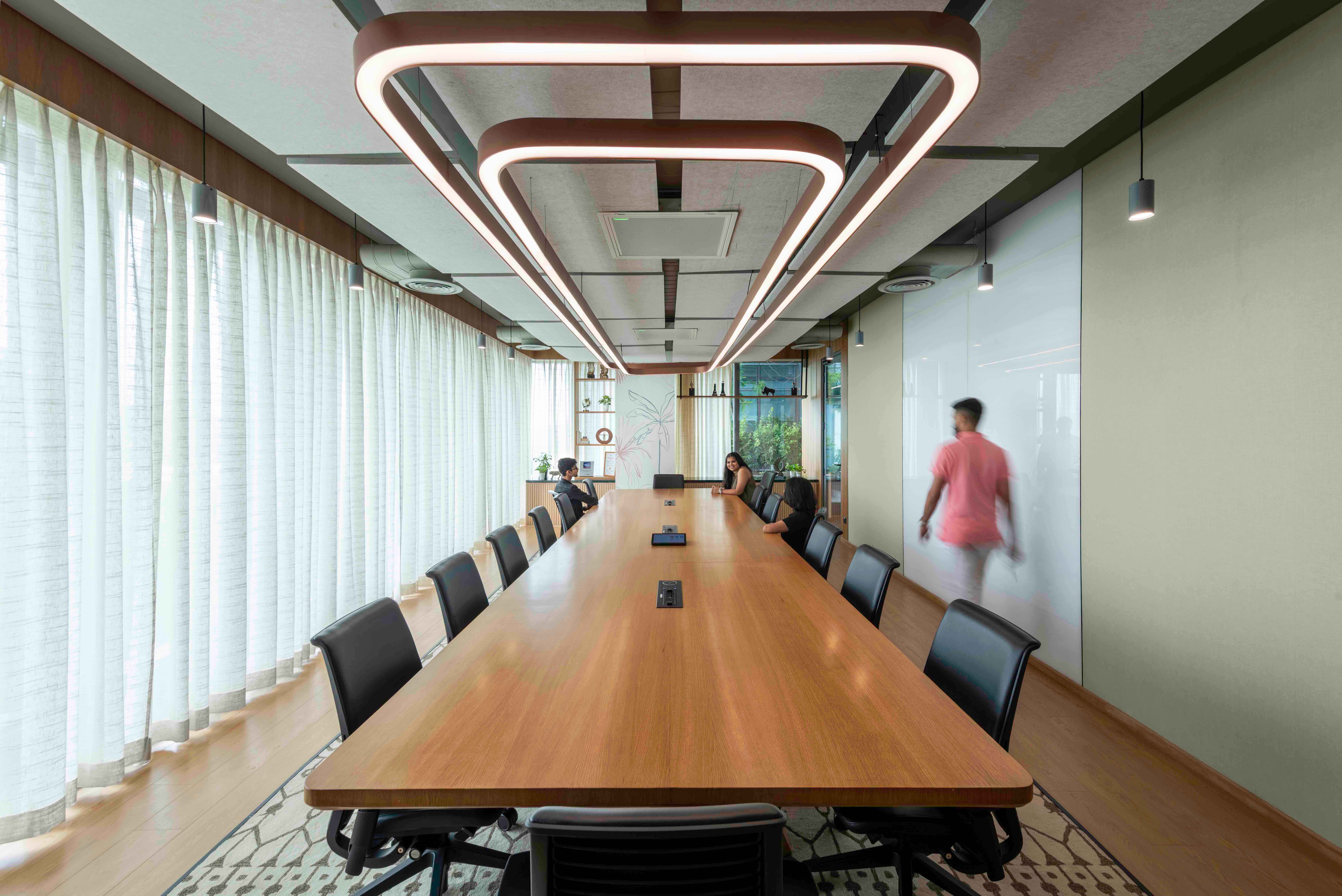
The resulting 28,000 SF office - anchored by an ombre-blue arrival with a sculptural logo grille abstracted from a trading algorithm, a social hub designed for town halls and informal collaboration, and a boardroom seating 16 with full acoustic and tech capability - answered that question spatially. Every zone was a deliberate expression of what IMC stands for: excellence, energy, community, clarity.
The lesson for global leadership: India entry is not a space acquisition. It is a culture deployment. Your office interior design in Mumbai is your first - and most visible - statement to the talent you are recruiting.
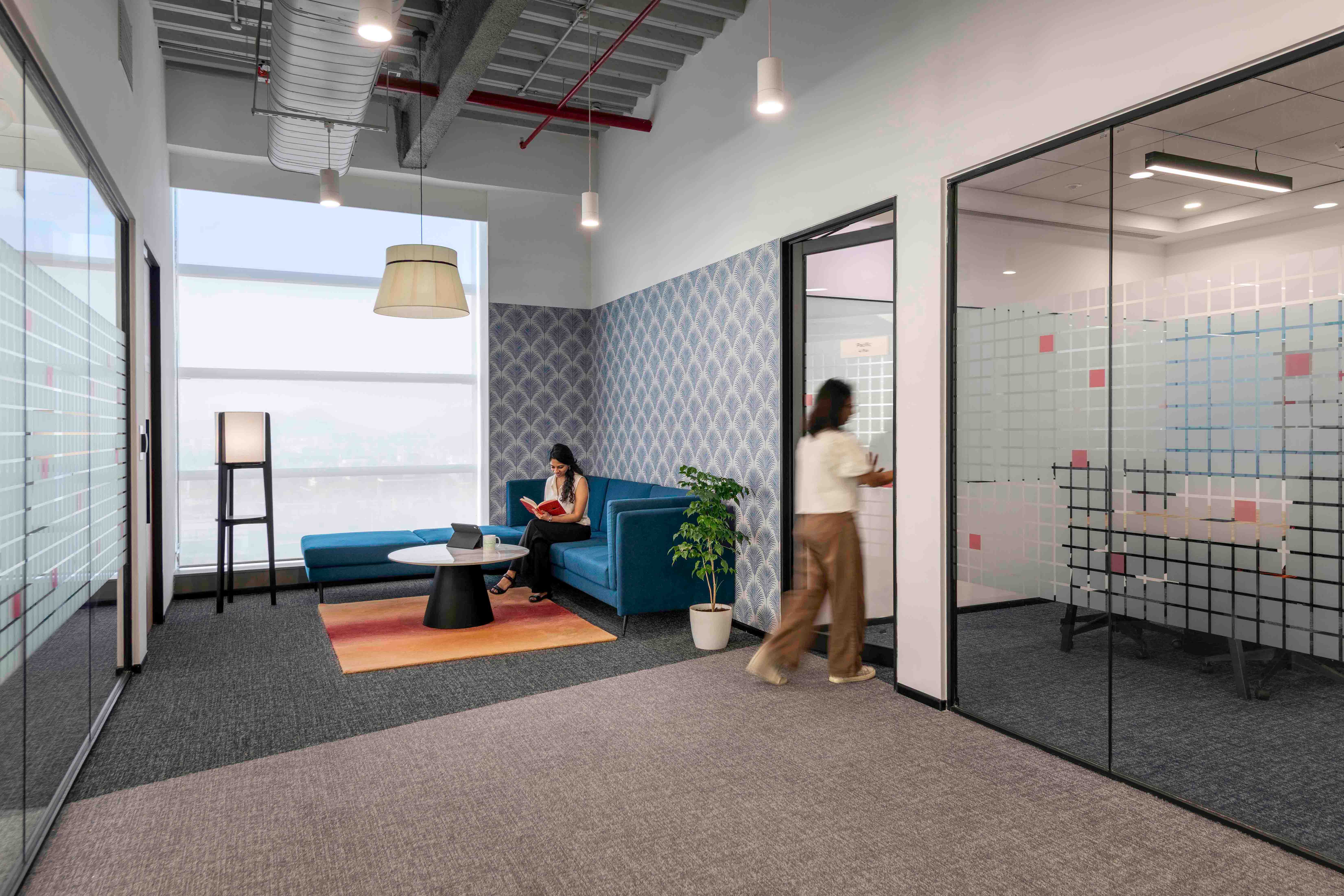
Under fresh leadership, Birlasoft faced a challenge that many post-COVID organisations recognise: an office rarely fully occupied, teams disconnected, cultural cohesion diluted, and valuable real estate underperforming. The strategic response was bold - consolidate into a single expansive floorplate, not to save cost, but to create the conditions for belonging.
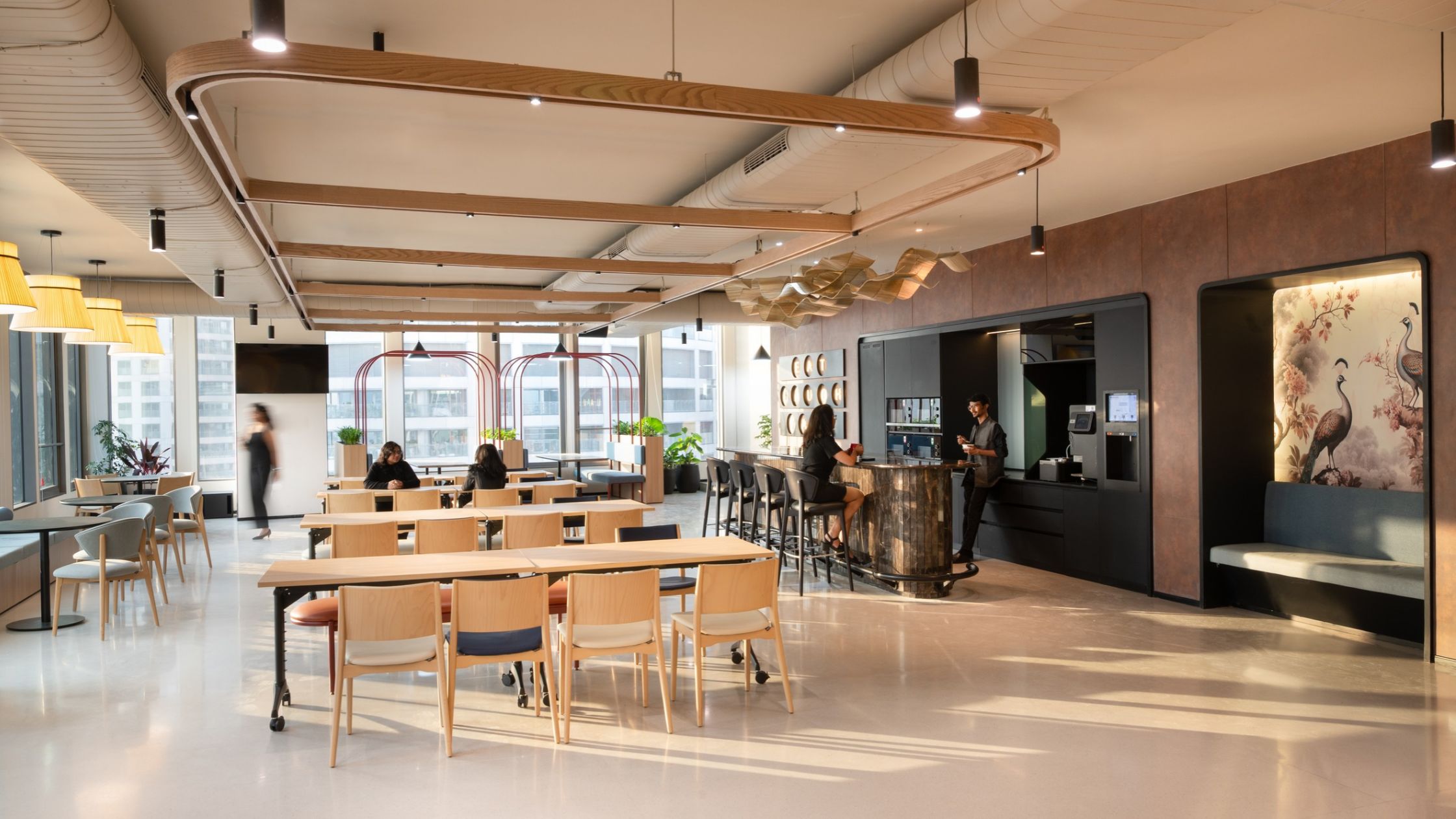
The design drew from the site's own geography: a natural "hill side" to "bay side" trail that organically guides movement across collaboration zones, converging at a central social pivot called The Confluence. Dual outdoor terrace cafés, stepped seating, and panoramic views turned the act of coming to work into something employees chose rather than endured.
The lesson for leadership: The answer to low occupancy is rarely a smaller office. It is a better one. Space that earns presence is a more durable investment than space that mandates it.
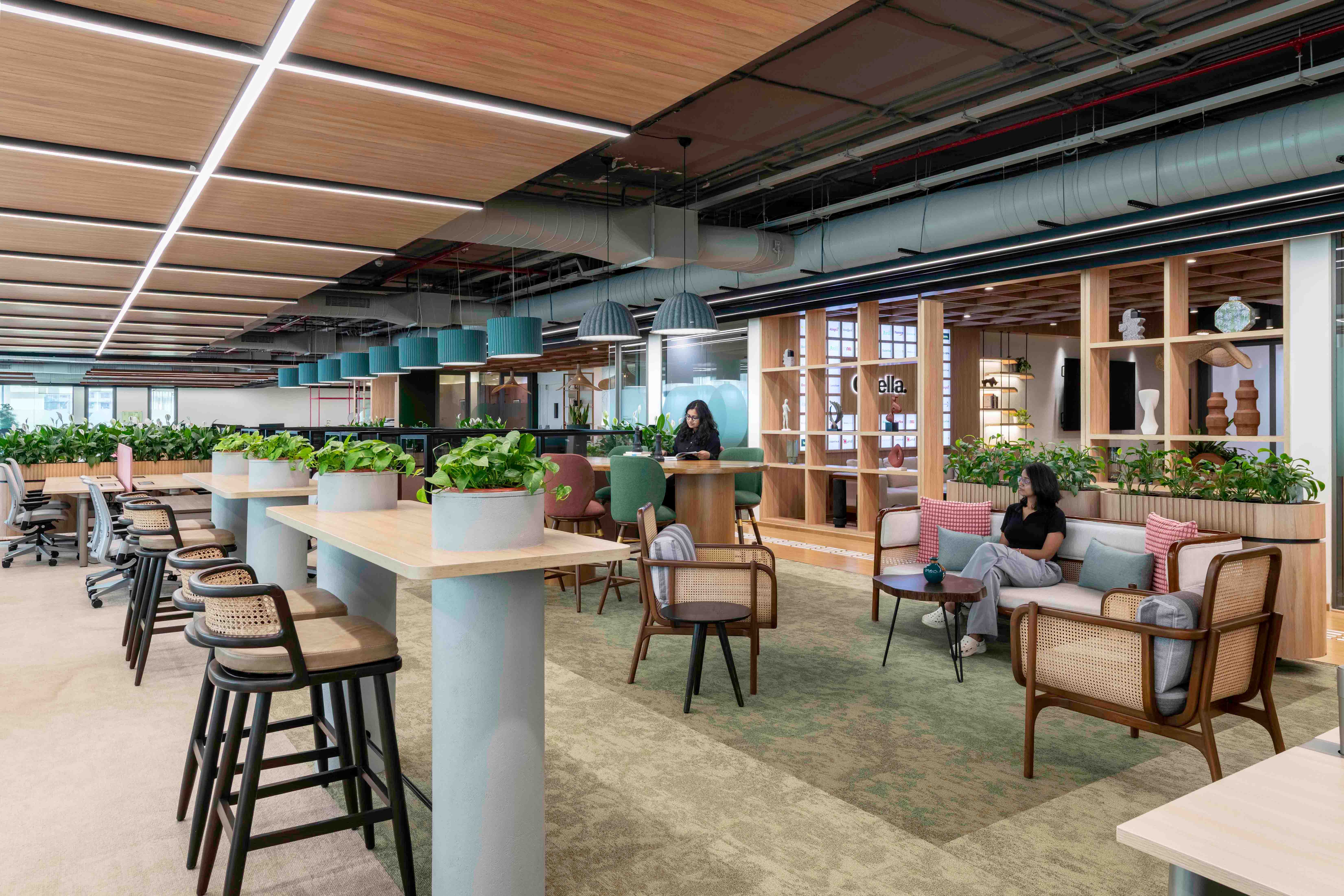
In April 2025, Opella emerged from Sanofi's consumer healthcare division as an independent global leader. The challenge was precise: how does a newly independent brand - one that explicitly rejects pharmaceutical coldness in favour of warmth and human-centred values - make that identity visible the moment someone walks through the door?
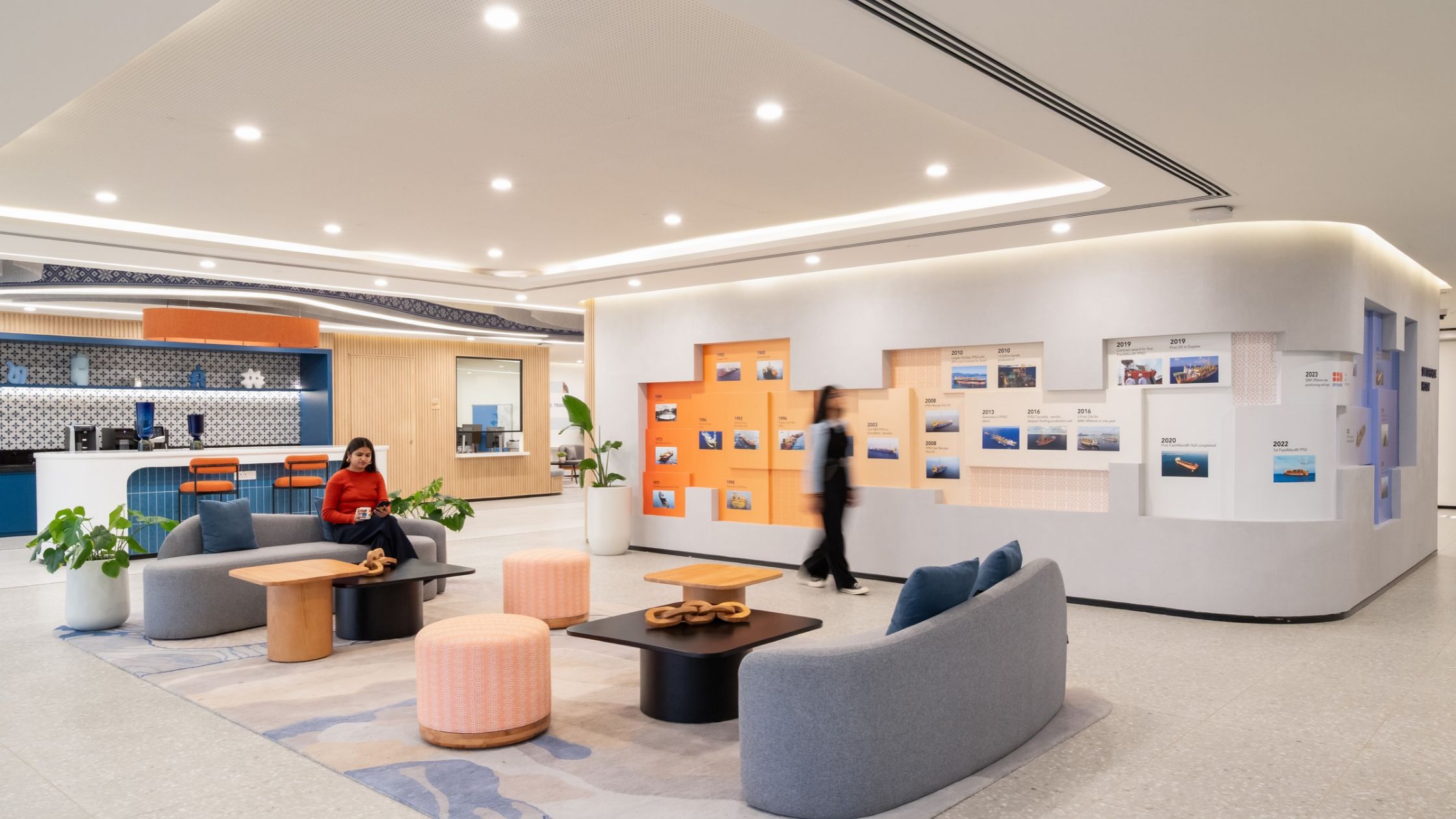
The answer lay in what designers called The Tree of Life: a conceptual framework shaping every decision, from a transparent arrival experience with clear sightlines into the workspace, to a Workcafé placed at the geographic centre of the floorplate to engineer cross-functional collision, to meeting rooms themed around Opella's own product brands. Open workspaces on the perimeter maximised daylight access for every employee - not as a design flourish, but as tangible proof of commitment to wellbeing.
The lesson for transforming organisations: The moment of strategic reinvention is also the moment your physical space either confirms or contradicts your new story. Conventional office interior design is a missed opportunity.
Russell Investments, Mumbai · 43,000 SF · Design & Build · Workplace Design India
Russell Investments, a Seattle-headquartered investment firm, came to Mumbai not to offshore, but to future-proof its global operations - embedding innovation at the core of its delivery model. The challenge is one many global firms face: how do you infuse strategic purpose into a location that risks being perceived as "just operations"?
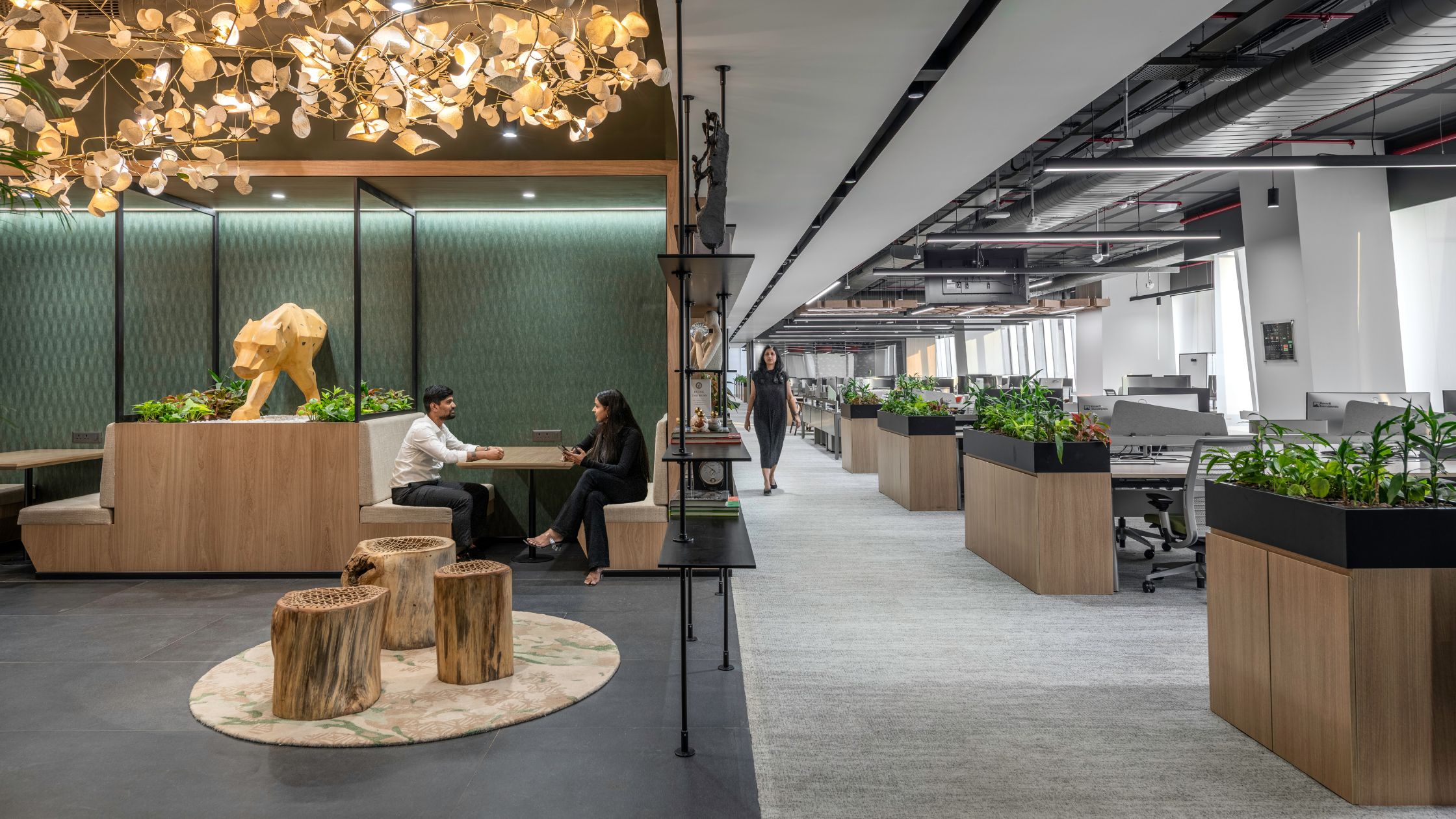
Early workspace decisions had defaulted to convention - conservative layouts, muted branding, siloed seating. The transformation was a shift in mindset: designing for capability, not compliance. Located near Aarey forest, the space draws from local cultural narratives - earthy terracotta tiles, hand-woven textures, step seating referencing ancient Indian ghats - while layering in Russell Investments' global brand language through purposeful colour psychology. The result: locally anchored, globally coherent, and in a competitive Mumbai talent market, a key differentiator in recruitment and retention.
The lesson for global organisations expanding to India: Your India office must earn its own identity. A generic "operations centre" aesthetic signals to local talent exactly how much they are valued. The best office designers in India understand this distinction instinctively.
Piramal Group, Mumbai · 146,000 SF · Interior Design · Best Office Designers in India
When one of India's largest diversified conglomerates decided to bring five existing offices under a single roof - unifying seven departments with distinct cultural identities - the question was not just logistical. It was existential: how do you create one culture without erasing five?
The design response drew from the architecture of traditional Indian neighbourhoods - self-sustaining communities organised around a shared courtyard. Each of Piramal's "neighbourhoods" within the 146,000 SF space represented one of the company's core values (knowledge, care, action, impact), differentiated by colour and material without physical barriers. Strategy workshops with individual business units preceded any layout decision, ensuring genuine employee buy-in. The result: a 90:10 open-to-closed ratio that maintained hierarchy while transforming daily experience.
The lesson for large-scale consolidation: The design process is itself a change management intervention. The best office designers in India consistently achieve higher adoption and deeper cultural alignment when they invest in understanding people before they design space.
Read across these five organisations - spanning global financial services, technology, consumer healthcare, conglomerates, and proprietary trading - and the same four truths emerge from Mumbai's best office interior design work.
Space decisions are talent decisions. Every one of these projects cited talent - recruitment, retention, belonging - as a primary driver. In Mumbai's competitive landscape, the office is not where you put talent. It is how you attract and keep it.
India's micro-markets are not compromise choices. Navi Mumbai, Aarey, BKC, Lower Parel: each carries distinct advantages. Birlasoft's Navi Mumbai office and Russell Investments' forest-edge location were strategic positions, not fallbacks.
Culture cannot be carried in a lease. Opella's brand independence, Piramal's values, IMC's global ethos - all required spatial expression. Organisations that treat office interior design in Mumbai as a cultural instrument consistently outperform those that treat it as a cost line.
The best India offices have a point of view. Russell Investments drew from Indian ghats. Piramal drew from neighbourhood courtyards. Birlasoft drew from its site's geography. Generic global templates fail here. Local intelligence - the kind the best office designers in India carry - wins.
A note for global leadership teams: India is not a single market with a single workspace logic. Mumbai alone contains distinct commercial ecosystems that each carry different implications for talent access, client perception, regulatory ease, and long-term scalability. The organisations that thrive here treat the city as a layered strategic landscape - and they partner with advisors who understand both the market and the moment.
The Next Decade Belongs to Those Who Ask the Right Questions Now
Mumbai will continue to grow. India's commercial ambition is structural, not cyclical. The question for leadership is not whether to be here, but how to be here in a way that compounds advantage over time.
The organisations profiled above did not find their answers in market reports or square footage benchmarks. They found them by interrogating what their space was actually being asked to do - for culture, for talent, for operational capability, for brand - and then building with that clarity from the first decision onward. They found them by working with some of the best office designers in India.
"Mumbai's next decade will be defined not by which organisations arrived, but by which ones arrived with intention."
The corner office has not disappeared. It has simply grown up. And for those prepared to meet this moment with the sophistication it deserves, Mumbai's next chapter - shaped by the best office interior design the city has seen - is one of the most compelling strategic opportunities in the world.
Is your organisation's India workspace strategy keeping pace with your ambitions - or with the organisations already ahead of you?
We use cookies to enhance your experience on our website, provide personalized content, and analyze site traffic.
By clicking "Accept All", you consent to our use of cookies. You can also choose "Preferred Cookies"
to select specific types of cookies that align with your preferences.
Essential cookies are always enabled to ensure website functionality.
You can choose to have only Essential cookies if you prefer minimal tracking.
Your choice regarding cookies on this site
Please choose whether this site may use Functional and/or Personalization cookies, as described below.
By selecting Required cookies only, you are requesting us not to sell or share your personal information.