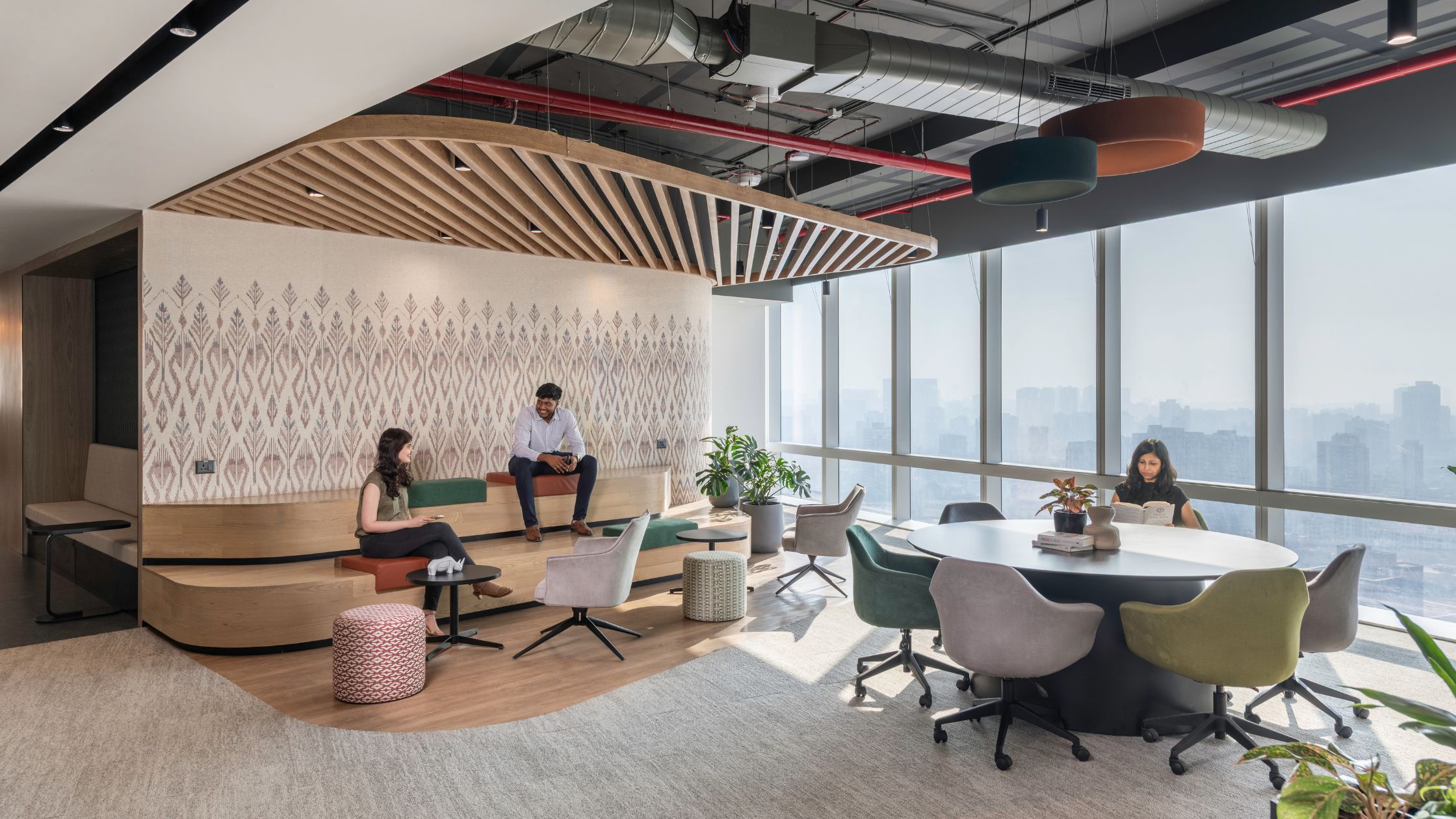
Can your GCC workplace survive the innovation disruption?
The pace of change shaping Global Capability Centres is accelerating, driven by advances in AI, economic uncertainty, and increasingly compressed innovation cycles. As these forces converge, GCCs are being challenged to rethink how work gets done and whether their workplaces can keep up with the pace their global mandates demand.
Yet many GCC offices are still designed around assumptions of stability and linear growth, leaving them vulnerable in an environment of constant change. The question is no longer whether disruption is coming. It is whether your GCC's workplace is equipped to respond when it does. To answer that, GCC leaders must first understand why many of today's seemingly future-ready workplaces may be less resilient than they appear.
The Illusion of Stability – Why Current GCC Workplaces Are Vulnerable
Many GCCs believe they are prepared for the future because they have adopted hybrid work policies and invested in digital collaboration tools. While these changes are important, they do not automatically create resilience. In many cases, the underlying workplace remains rigid, with fixed layouts, predefined workflows, and systems built around the assumption that mandates from global headquarters will remain relatively consistent. As a result, a GCC that appears modern on the surface may struggle when teams scale up, new capabilities are onboarded, or the centre's remit expands beyond its original scope.
The vulnerability becomes clear when GCC workplaces are forced to respond to rapid change. Spaces designed for a single work pattern often cannot accommodate evolving team structures or new collaborative office space designs needs without disruption. This is where office design innovation and corporate design innovation must move beyond aesthetics and focus on flexibility. GCC leaders are increasingly asking, "What will define a successful workplace 2026 strategy for our centre?" The answer lies in creating environments that can adjust as quickly as the global business itself. A workplace that performs efficiently under stable conditions may become a constraint when uncertainty becomes the norm, particularly for GCCs that are expected to take on higher-value, higher-visibility work over time.
The Nature of Disruption – Faster, Messier, Constant
Disruption in 2026 and beyond will look very different from the large, isolated events that GCCs planned for in the past. Change is becoming continuous, driven by shifting global market conditions, evolving parent-company priorities, and emerging technologies. Business priorities can change within months rather than years, forcing GCCs to abandon outdated approaches more quickly. In this environment, work is increasingly non-linear, with employees adapting to changing mandates and expanding scopes of work on an ongoing basis. The concept of workspace 2026 is therefore less about predicting the future and more about preparing GCCs for constant movement.
This growing unpredictability is changing the role of the GCC workplace itself. It can no longer operate as a fixed system designed around stable routines and long-term certainty. Instead, it must evolve alongside the global business it serves to support rapid collaboration, decision-making, and change across time zones. Leaders often ask, "Why is office design innovation becoming so important now for GCCs?" The answer is simple: when disruption is constant and mandates are expanding, workplaces must accommodate new workflows and team structures without creating friction. This is where corporate design innovation becomes a strategic advantage, enabling GCCs to respond to uncertainty with greater speed and confidence, while continuing to demonstrate their value to global stakeholders.
The Workplace Stress Test – Where Most GCC Offices Break
If most GCC workplaces were put through a disruption stress test today, many would struggle in spatial flexibility, collaboration, and employee experience. Imagine a GCC that rapidly restructures teams to take on a new global capability or function. Fixed layouts may not support the new workflows and employees may find it difficult to connect with unfamiliar colleagues across newly formed teams. These challenges emerge before operational problems become visible.
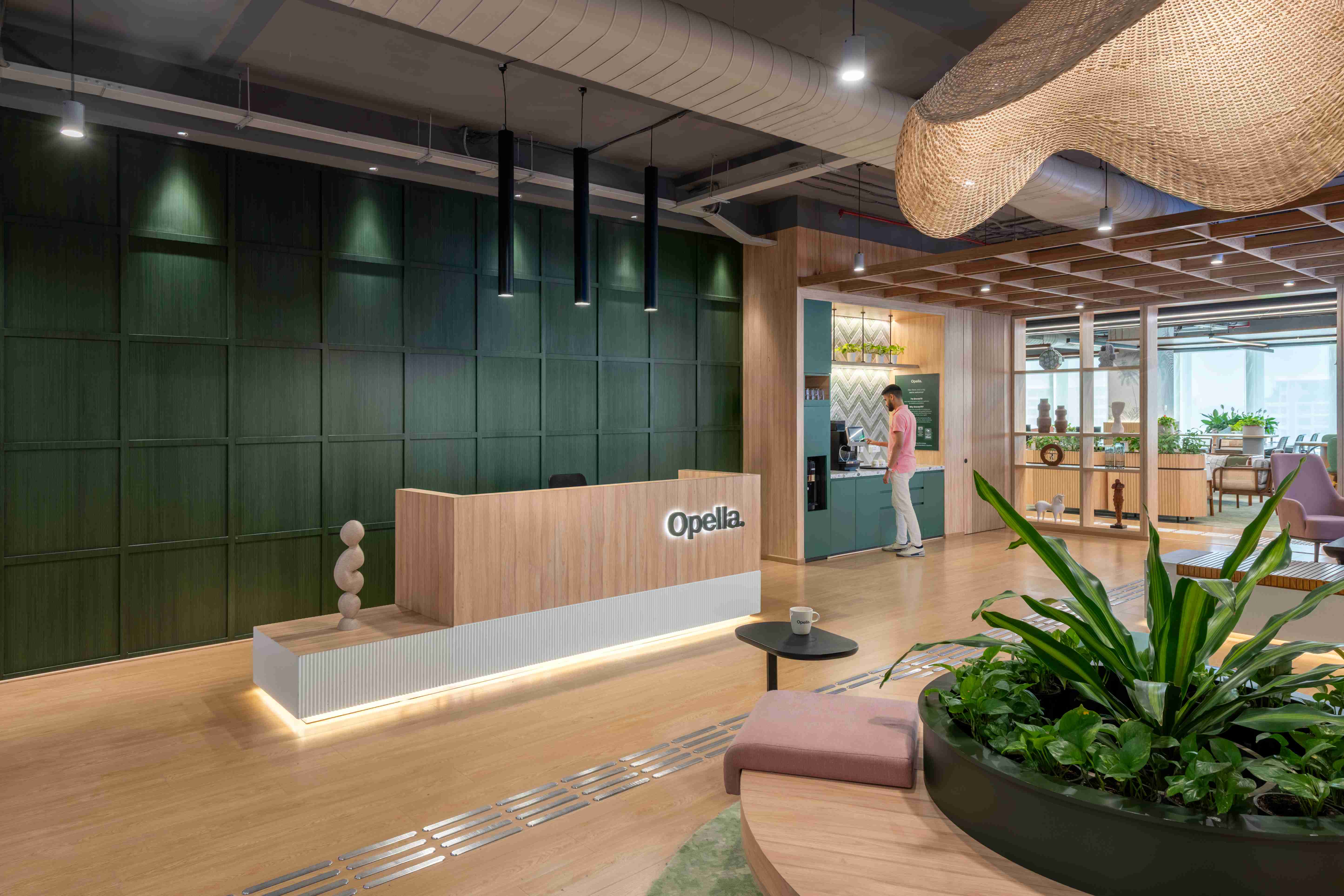
A strong example of how GCC workplaces can withstand this pressure comes from Opella's Mumbai office, established after its transition to an independent consumer healthcare company. Rather than relying on traditional layouts, the workplace is designed to encourage cross-functional interaction through a centrally positioned Workcafe, strategically planned circulation paths, and collaboration hubs that connect teams naturally throughout the day. At the same time, the space balances collaboration with privacy and supports employee wellbeing through daylight access and biophilic elements. This approach demonstrates how innovative office interior design ideas can create environments that remain effective even as a GCC's priorities and business structures evolve.
Designing for Uncertainty – The New GCC Workplace Imperative
The response to uncertainty is not to predict every possible disruption but to build GCC workplaces that can adapt to whatever comes next. This requires a shift in mindset. For years, workplace design for GCCs focused on efficiency, optimising layouts and resources for known headcount and known functions. Today, the priority is adaptability. GCCs need environments that can respond to changing team structures and new strategic mandates without requiring constant redesign. Flexibility, modularity, and scalability are fundamental requirements for workplace 2026, especially for centres expected to scale quickly as their parent organisations deepen investment in India and the wider APAC region. The most effective GCC workplaces are those that remain effective when conditions change.
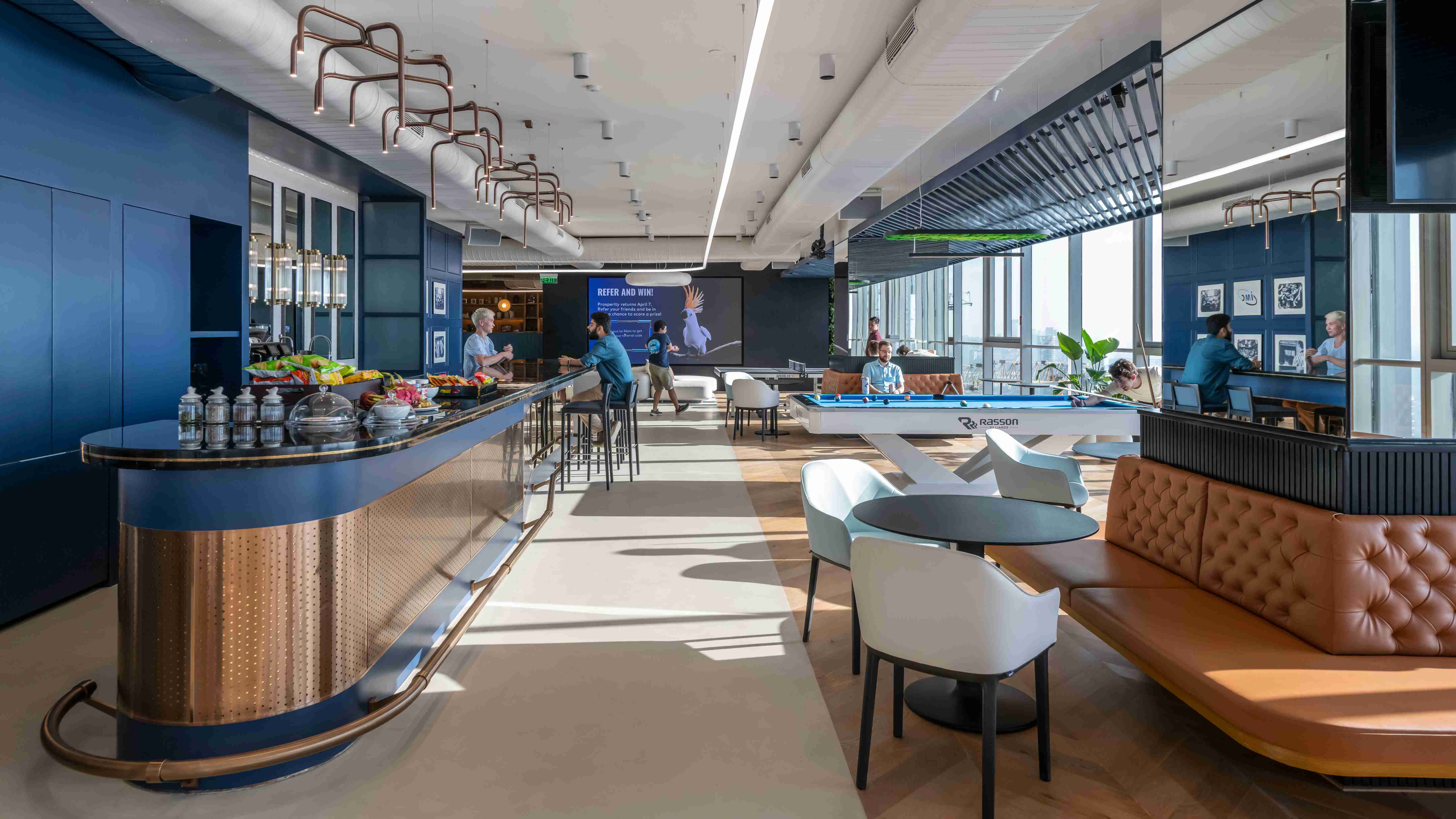
Nutanix’s Singapore office demonstrates what this approach looks like in practice. Designed to function both as a regional headquarters and a customer experience centre, the workplace moved away from static planning and embraced a dynamic, data-driven model. Flexible work settings, modular infrastructure, integrated technology, and real-time occupancy insights allow the environment to evolve alongside business needs. Rather than treating change as a disruption, the workplace is designed to accommodate it as a constant. This is where office design innovation and corporate design innovation create long-term value for GCCs, building resilience directly into the workplace so it can continue to perform as global mandates evolve.
The Behavioural Shift – Preparing GCC Talent for Constant Change
Workplace resilience is ultimately about people. While discussions around disruption often focus on technology, real estate, or organisational structures, the human impact is equally significant, and nowhere more so than in GCCs, where attracting and retaining skilled talent is a defining competitive challenge. Frequent change can create uncertainty and contribute to change fatigue if employees lack the right support systems. To thrive in workplace 2026, GCCs need environments that reduce friction during transitions and make it easier for people to collaborate across global teams. A resilient workplace helps employees navigate changes with greater confidence and reinforces why a GCC is a compelling place to build a career.
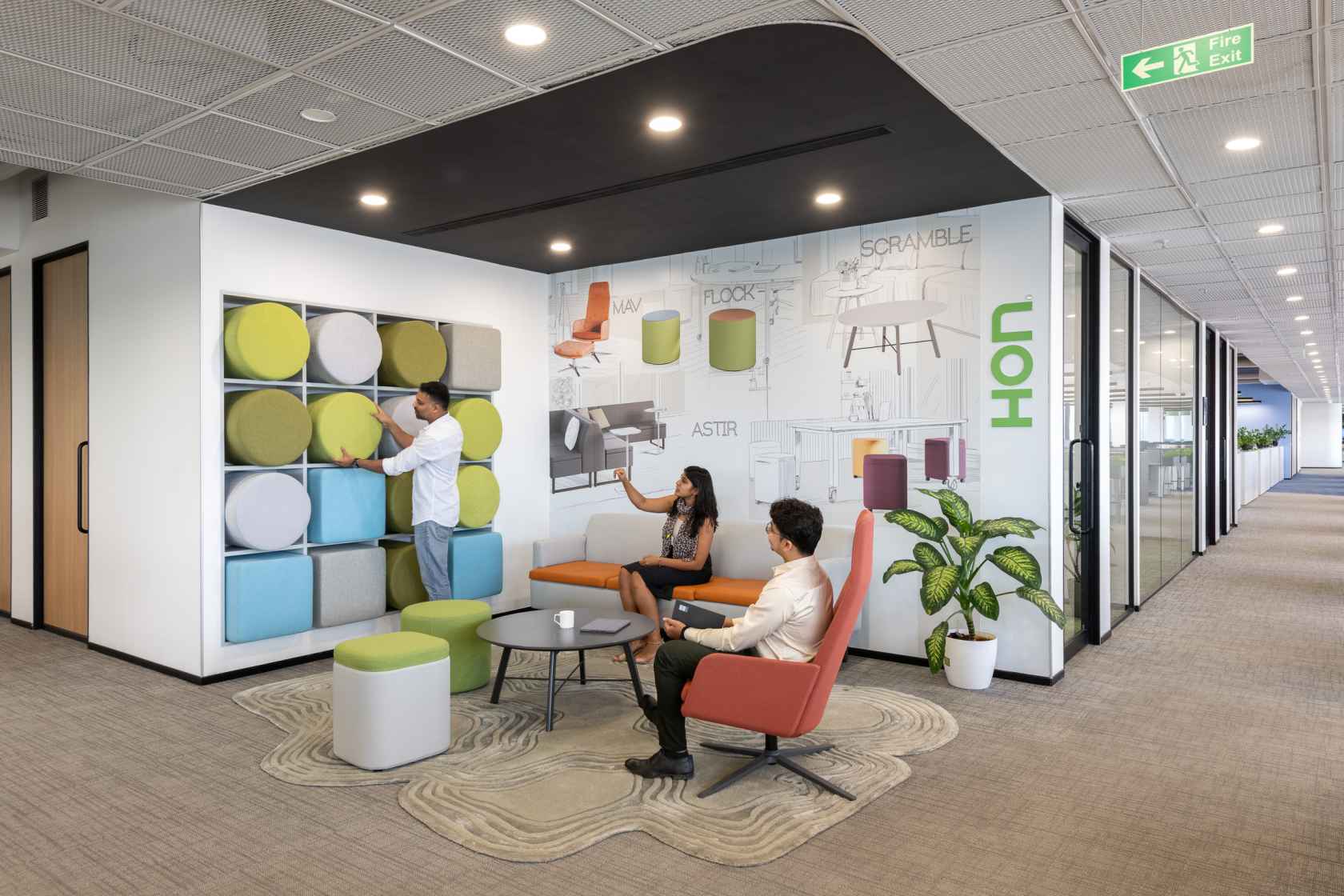
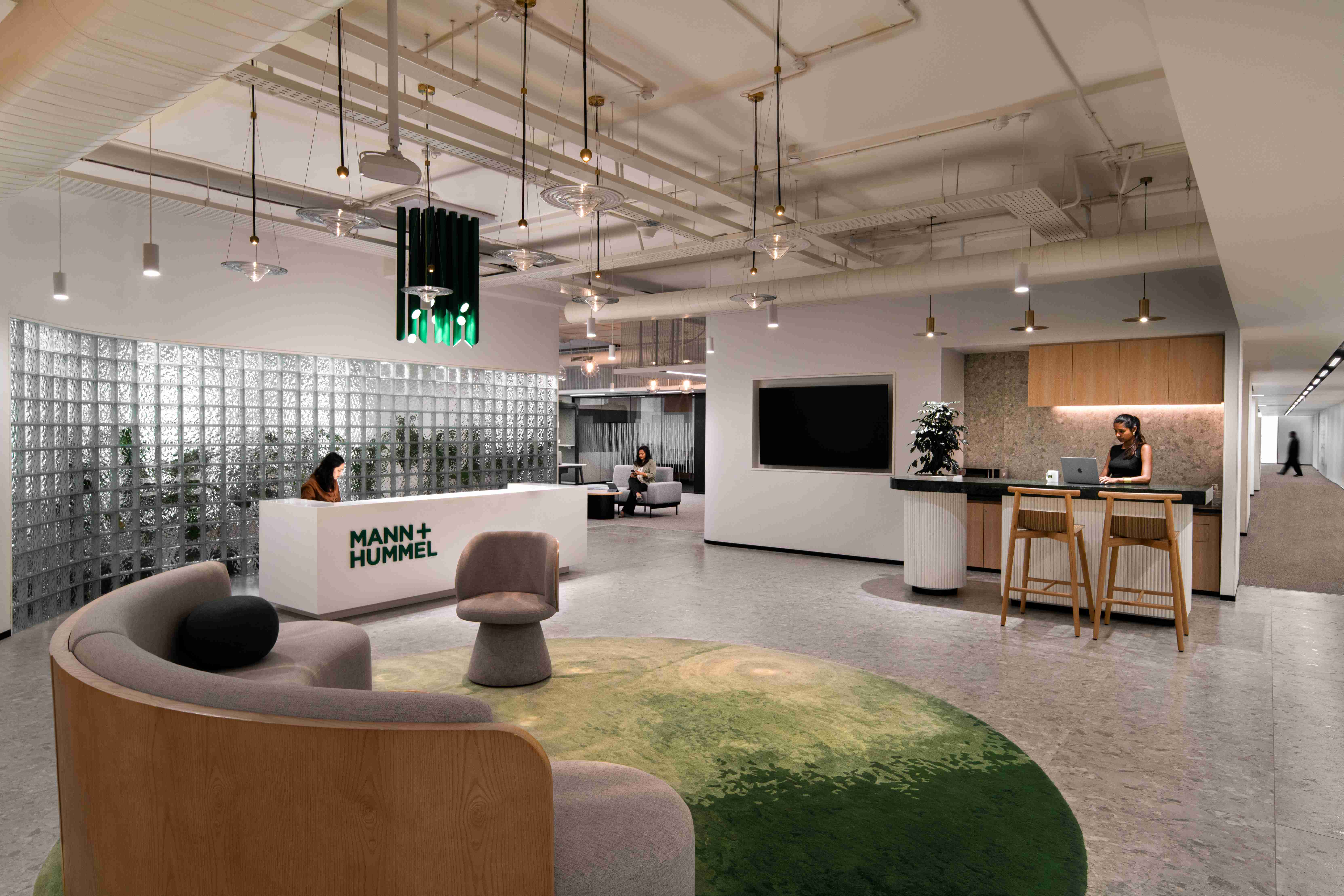
Mann+Hummel’s Bangalore office illustrates how workplace design can influence behaviour at scale. As the company prepared for significant growth, the focus was not just on accommodating more people but on creating a culture that encouraged interaction and shared purpose. Traditional cubicles were replaced with team-based neighbourhoods, while collaboration spaces and informal meeting zones were embedded into everyday workflows to support faster communication. At the same time, the workplace reinforced brand identity through thoughtful environmental design, wellness initiatives, and technology integration. This demonstrates how design innovation can shape behaviours that support adaptability, a critical capability for GCCs scaling their India and APAC operations.
The Cost of Inaction – What Happens If Your GCC Doesn't Adapt
The cost of maintaining the status quo is often invisible until business conditions change. GCC workplaces that fail to evolve can quickly become underutilised assets and consume significant real estate budgets while delivering diminishing value. As workforce expectations continue to shift, rigid environments can limit collaboration and impede innovation. Over time, this affects talent attraction and retention, as employees increasingly expect workplaces that support modern ways of working and reflect the ambition of a GCC that is taking on more strategic, higher-value work. In workplace 2026, the greatest risk for GCCs will be the inability to remain relevant, both to their people and to their global stakeholders, in a rapidly changing business environment.
The consequences extend beyond employee experience and directly impact business performance. GCCs that cannot adapt their workplaces often struggle to respond to new opportunities and expanded mandates, resulting in slower innovation cycles and weaker returns on workplace investments. Leaders frequently ask, "Why is corporate design innovation becoming a strategic priority for GCCs?" The answer is that workplace design is about enabling organisational agility. When supported by the best office interior design, the GCC workplace becomes a platform that helps the centre respond faster to change while maximising the value of its people, processes, and real estate investments, ultimately strengthening the case for further investment from global headquarters.
Beyond Forecasting: How to Build GCCs for What You Can't Predict
At Space Matrix, the focus is not on designing GCC workplaces for today's requirements alone but on creating environments that can support what comes next. Global mandates, team structures, technologies, and workforce expectations will continue to evolve, making uncertainty a permanent factor in GCC workplace planning. This is why workplace 2026 requires a different approach for GCCs, one that aligns space with long-term business strategy while embedding flexibility into the foundation of the workplace.
Rather than treating adaptability as an add-on, Space Matrix designs environments that can respond to changing demands without compromising employee experience or operational performance. This philosophy combines adaptive environments and experience-led flexibility to help GCCs remain resilient in the face of disruption. Through strategic design innovation, GCC workplaces become capable of supporting new capabilities, accommodating growth or restructuring, and enabling employees to adapt more easily to change.
If you are building a GCC that delivers stronger long-term value, responds faster to emerging challenges, and remains relevant as global business needs evolve, contact our experts today.
We use cookies to enhance your experience on our website, provide personalized content, and analyze site traffic.
By clicking "Accept All", you consent to our use of cookies. You can also choose "Preferred Cookies"
to select specific types of cookies that align with your preferences.
Essential cookies are always enabled to ensure website functionality.
You can choose to have only Essential cookies if you prefer minimal tracking.
Your choice regarding cookies on this site
Please choose whether this site may use Functional and/or Personalization cookies, as described below.
By selecting Required cookies only, you are requesting us not to sell or share your personal information.