Beyond ESG Reporting: How Workplace Design Can Be Your Most Visible Sustainability Statement
Sustainability has become a boardroom priority, with organizations investing significant effort into ESG targets and compliance benchmarks. But despite the growing sophistication of these reports, sustainability remains disconnected from the everyday workplace experience. Employees rarely see it in action, and clients seldom feel it when they enter a space.
The result is a visibility gap: sustainability appears in documents and disclosures, but not in the environments people engage with daily. For sustainability to shape culture and influence behavior, it needs to move beyond reporting and become part of the physical experience itself. Increasingly, workplace design is emerging as one of the most powerful ways to make that shift tangible.
The Shift – From Reporting Metrics to Lived Experience
Sustainability efforts have traditionally been measured through certifications and disclosures. These frameworks are important because they establish accountability and help businesses benchmark progress. However, reporting alone rarely shapes how employees or clients perceive sustainability in their daily interactions with a workplace. A company may publish detailed ESG reports and still operate in environments where sustainability feels disconnected from the employee experience.
This is why ESG in workplace design is shifting toward experience rather than documentation. People engage deeply with sustainability when they can physically interact with it through the spaces they occupy. Mobility access, healthier commuting options, and employee-centric amenities create a stronger connection to sustainability than certifications. The workplace becomes a medium through which environmental responsibility is actively lived.
A strong example of this approach can be seen in Piramal Group’s Mumbai office. While the workspace is LEED-certified, its impact extends into employee behavior and wellbeing. The office's proximity to local train and metro networks encourages the use of public transport over private vehicles. At the same time, secure bike racks support cycling as a healthier and more sustainable commuting option. Shower facilities within the office further reinforce this behavior by making alternative commuting practical and convenient for employees.
The Workplace as Proof – Where Sustainability Becomes Tangible
The workplace is one of the few environments where sustainability can become part of a person's everyday experience. Employees may never engage deeply with ESG reports, but they immediately notice how efficiently a space functions around them. When environmental responsibility becomes visible in the workplace itself, sustainability becomes tangible.
This is where ESG in workplace design gains real credibility. A thoughtfully designed office communicates intent through the environment. Intelligent lighting systems and energy-conscious infrastructure allow employees to experience sustainability in measurable ways. Instead of treating environmental performance as a hidden backend operation, the workplace becomes an active expression of the organization’s priorities and values.
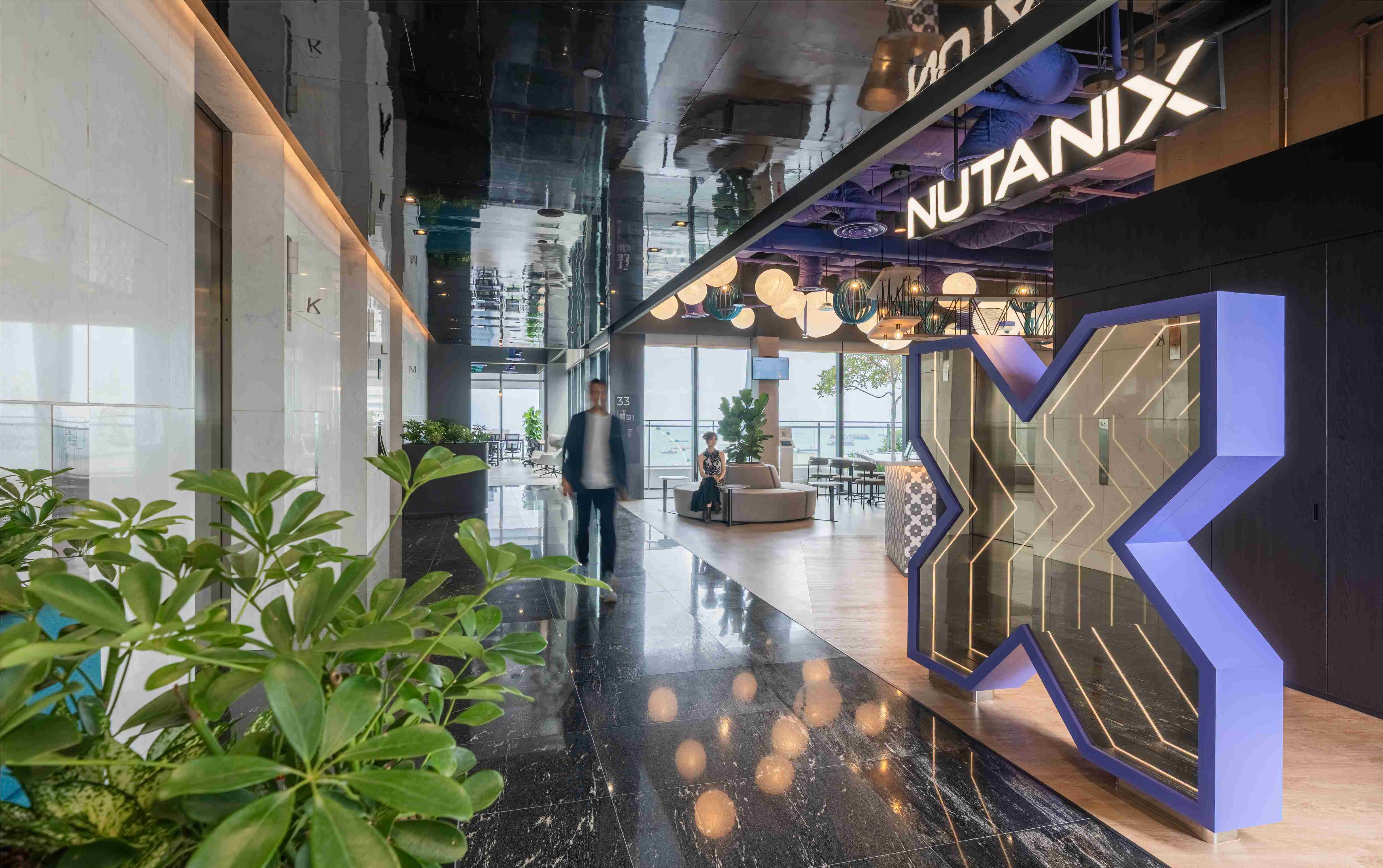
Take Nutanix’s Singapore office as an example. The workspace is designed to reduce reliance on electricity by maximizing natural light in peripheral work areas. Sensors near window-facing workstations automatically adjust indoor illuminance based on external daylight conditions, while interior rooms use LED-based lighting paired with occupancy sensors to minimize unnecessary energy usage. This office design idea also incorporates recycled materials within its interiors and low-flow water fixtures that support more responsible daily operations. Such workplace design makes environmental responsibility integrated into the employee experience.
The Behavioral Layer – Why Visibility Drives Real Impact
Many sustainability initiatives underperform because they rely too heavily on policy-driven compliance. Guidelines and internal mandates can establish direction, but they rarely change habits. Workplace behavior is shaped by the environments people move through every day. People do not actively engage with sustainability policies in the same way they respond to spaces that naturally influence how they work.
This is why ESG in workplace design must extend into behavioral impact. Spatial planning and access to natural light can encourage conscious decisions. Employees are more likely to reduce unnecessary energy use and make mindful consumption choices when the environment supports those behaviors. Design becomes a quiet but consistent behavioral guide, influencing actions in ways that formal sustainability messaging cannot.
An important question organizations should ask is: What makes sustainable workplace design effective? The answer lies in participation without enforcement. When sustainability is integrated into the daily experience, employees become active contributors to organizational goals. In contrast, corporate office interior designs where sustainable systems remain hidden fail to build engagement, even when advanced technologies are in place. Real impact emerges when people can see the connection between the space around them and the behaviors it encourages.
The Misstep – When Sustainability Stays Hidden
A common issue across many modern "green offices" is that sustainability is embedded in the infrastructure but not in the user experience. Organizations invest in certification-led upgrades, yet employees remain unaware of why these features matter. In many cases, sustainability becomes experientially invisible. As a result, technically sustainable workplaces fail to influence the people who use them every day.
This disconnect exposes a growing gap in ESG in workplace design. Advanced environmental systems are frequently overridden because employees do not understand how the space is intended to operate. When energy-saving controls are treated as inconveniences, these features fade into the background and fail to create behavioral change. When design does not clearly communicate intent, even well-executed sustainability strategies can lose effectiveness.
A truly effective sustainable workplace design cannot rely solely on hidden performance metrics or backend efficiencies. If people cannot intuitively engage with the sustainability embedded in a workplace, the broader impact remains limited. Invisible sustainability leads to weaker alignment between organizational goals and employee behavior. The most successful workplaces are environmentally efficient and make efficiency tangible enough for people to respond to in their daily routines.
ESG in Workplace Design – Turning Sustainability into Experience
Designing for visible sustainability requires a shift from treating environmental performance as a hidden operational layer to integrating it into the everyday workplace experience. The goal is to create environments where sustainable choices feel natural. When spatial planning and environmental systems are designed with clarity, people begin to understand the intent behind the workplace without needing constant intervention.
A growing question organizations are beginning to ask is: What does ESG in workplace design actually look like in practice? It means creating spaces where sustainability is integrated into the employee experience. Transparency plays an important role in building engagement. Employees are likelier to align with sustainability goals when they can recognize how the workplace supports those outcomes. Spaces that encourage movement rather than dependency, and systems that visibly reinforce efficiency, help connect organizational intent with everyday actions.
The most effective sustainable workplace design guides behavior subtly through experience. Sustainability becomes embedded in routines that feel seamless. Employees are not expected to consciously participate in sustainability at every moment because the workplace already supports better decisions by design. This creates long-term engagement, reinforcing environmental responsibility consistently through the physical environment.
The Perspective – From ESG Intent to Everyday Impact
Sustainability should be experienced through the workplace itself, not confined to certifications. The focus should be on creating collaborative office space designs where sustainable choices are integrated into the daily work rhythm. We help businesses translate ESG in workplace design into experiences that employees and visitors can actively engage with rather than read about. This creates workplaces that communicate environmental responsibility through everyday interactions.
This approach to workplace design aligns the workplace experience with broader ESG goals. More importantly, it helps organizations build credibility by making sustainability tangible within the spaces people use every day. The most credible sustainability strategy is the one people can consistently experience through the workplace.
If your organization is investing in ESG, the next step is making it real. Let's design workplaces where sustainability is experienced by the people who use them every day.
We use cookies to enhance your experience on our website, provide personalized content, and analyze site traffic.
By clicking "Accept All", you consent to our use of cookies. You can also choose "Preferred Cookies"
to select specific types of cookies that align with your preferences.
Essential cookies are always enabled to ensure website functionality.
You can choose to have only Essential cookies if you prefer minimal tracking.
Your choice regarding cookies on this site
Please choose whether this site may use Functional and/or Personalization cookies, as described below.
By selecting Required cookies only, you are requesting us not to sell or share your personal information.