The Creative Office Renaissance: Why Advertising & Media Firms Are Reimagining Collaboration
The advertising and media industry was among the first to embrace hybrid work, proving that creative teams could stay productive and connected from almost anywhere. However, as remote work became more established, many firms began to experience the limitations of a fully distributed model.
While digital tools supported communication and project execution, they struggled to recreate the spontaneous conversations and shared energy that spark breakthrough ideas. As a result, the office is making a comeback, not as a place people are required to work from, but as a hub that brings people together and fuels creativity in ways virtual environments cannot. Understanding this shift is key to reimagining the workplace's role in the future of the creative industries.
The Creative Breakdown – What Remote Work Couldn’t Replace
Remote work proved that creative teams could manage campaigns and coordinate across locations with remarkable efficiency. Video calls and project management tools made it easier to communicate and track progress. For execution-focused tasks, the model worked well. Teams could move projects forward without being in the same room. However, creative work is about more than execution. The challenge emerged when teams needed to generate new ideas rather than deliver existing ones.
Many advertising and media professionals found themselves replacing spontaneous brainstorming with scheduled meetings. What once began as a quick conversation near a whiteboard or an impromptu discussion over coffee became another calendar invitation. While ideas could still be discussed virtually, the energy often felt different. The casual exchanges that connect unrelated thoughts and spark new directions became harder to replicate. This shift highlighted why designing for collaboration requires creating opportunities for natural interaction and shared creative momentum.
The Office Renaissance – Why Creative Firms Are Coming Back
The return to the office in the advertising and media industry is not about restoring old ways of working. Creative firms have already proven that many tasks can be completed remotely. What is driving people back is the need for shared experiences that support the creative process. As a result, organisations are rethinking the purpose of the workplace. Instead of functioning primarily as a production space, the office is evolving into a destination where innovation takes shape.
This shift is changing expectations around workplace design and office interior design ideas. The focus is no longer on maximising individual workstations or attendance metrics. Instead, firms are investing in environments that encourage meaningful interactions among people. Designing for collaboration has become a strategic priority, with workplaces supporting everything from informal discussions and brainstorming sessions to cross-functional creative workshops. The office is increasingly viewed as a place that adds value to work rather than simply a place where work gets done.
The New Collaboration Model – From Meetings to Momentum
The way creative teams collaborate is changing. Traditional collaboration often revolved around scheduled meetings and designated conference rooms. While these formats remain useful for decision-making, they are not always where the most valuable ideas emerge. Creative thinking is often sparked through spontaneous interactions. Great ideas do not come from meetings alone; they also come from momentum.
As a result, collaborative office spaces are becoming more adaptable. Brainstorming is no longer confined to a meeting room. It happens across shared environments where ideas can be visualised and developed collectively. Whiteboards, writable surfaces, and digital displays allow teams to externalise their thinking and build on one another's ideas in real time.
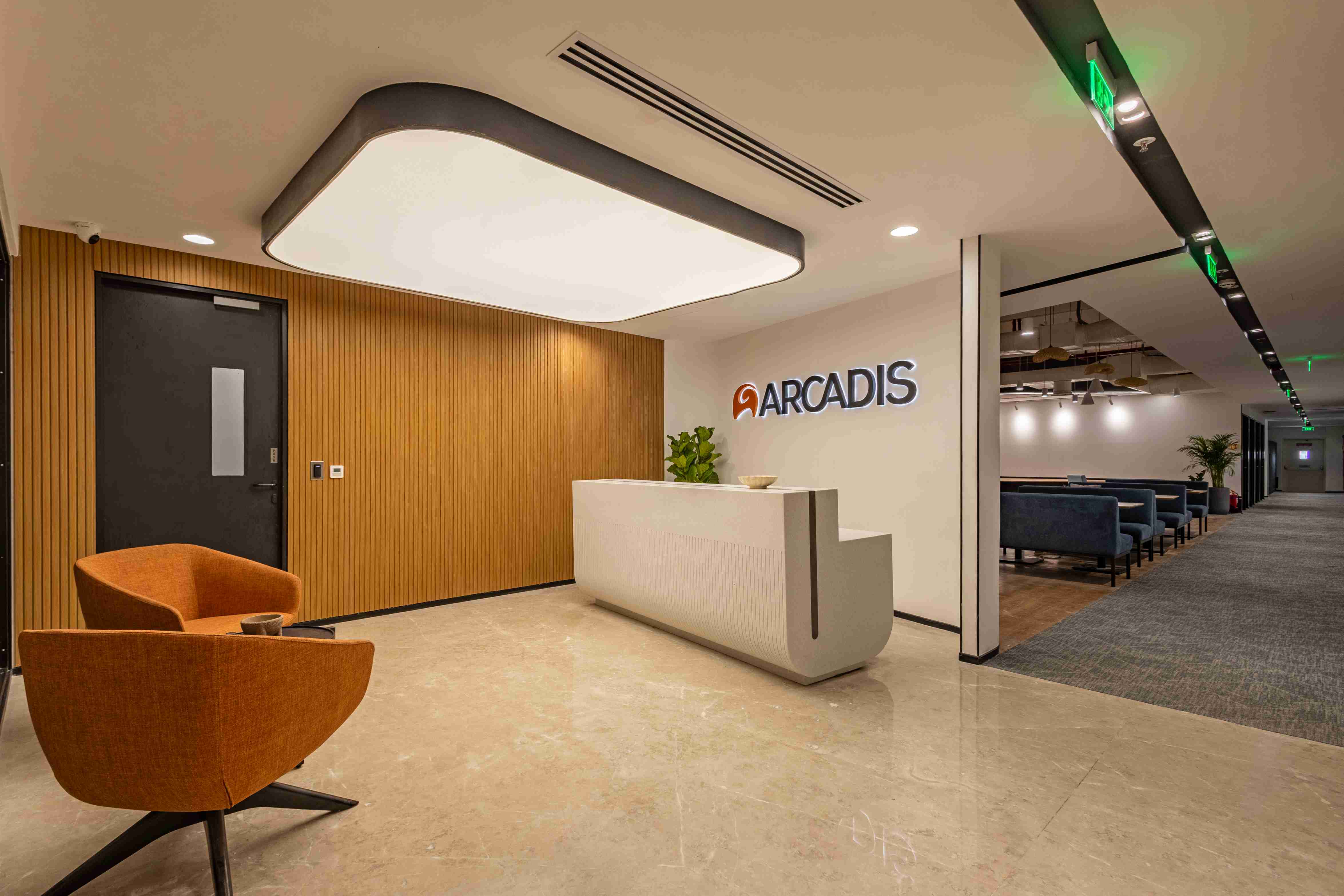
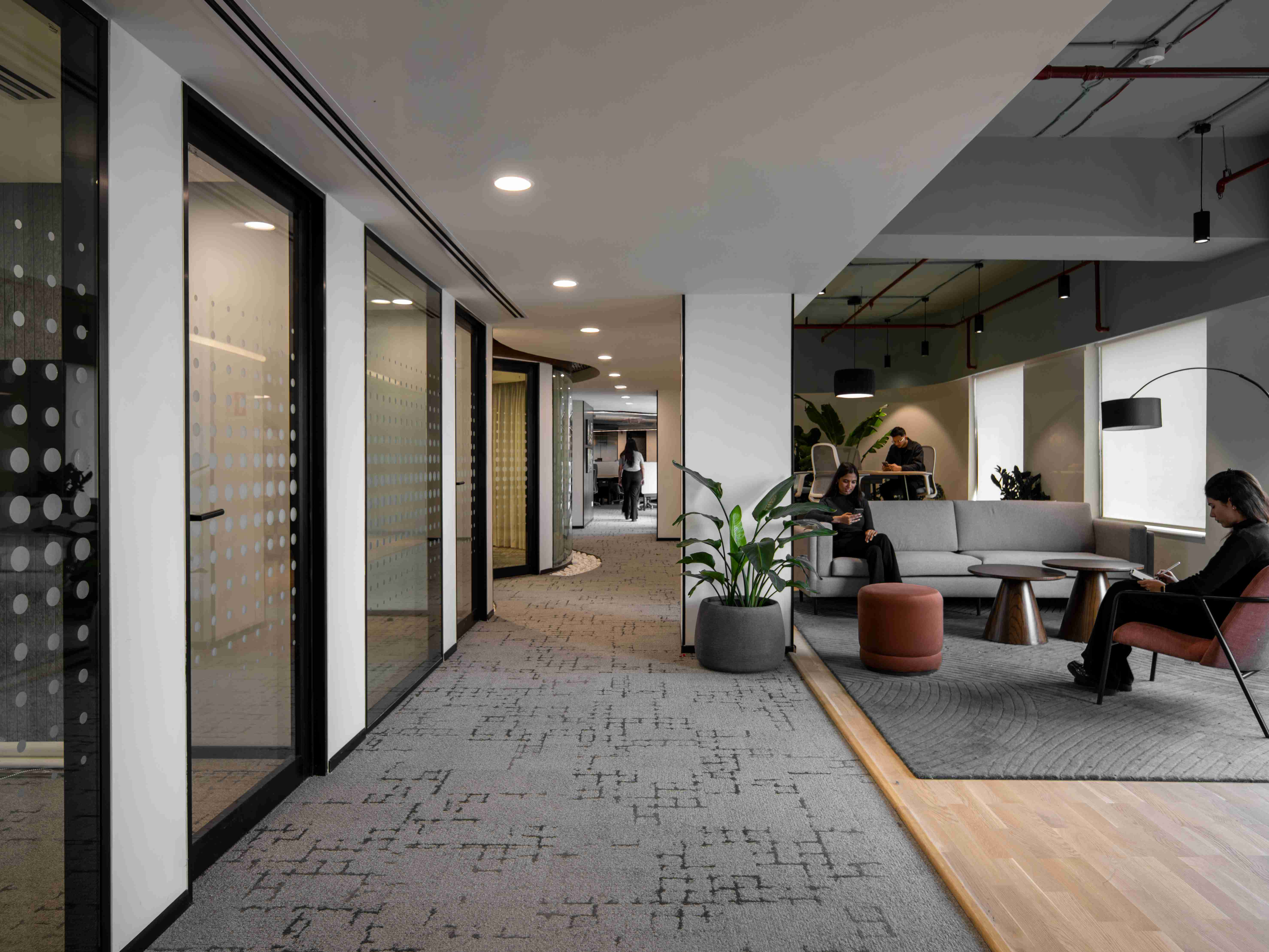
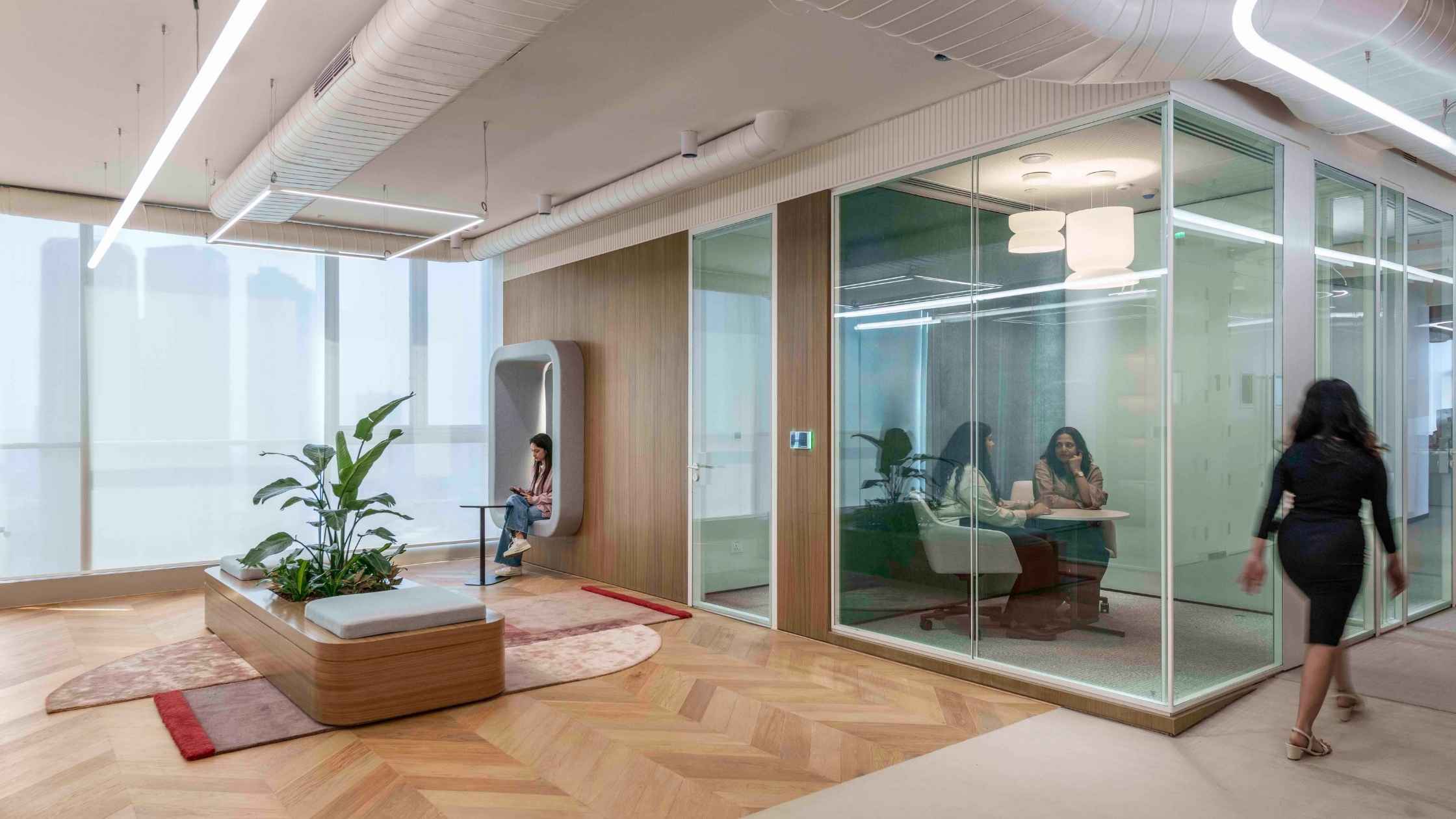
A strong example of this approach is visible in Space Matrix's workplace transformation for Arcadis in Noida. Created to embody the “One Arcadis” spirit, the office is designed around human-centric experiences. The arrival breakout zone encourages informal conversations within the natural flow of movement, while adaptable workspaces and thoughtfully planned meeting areas support different work modes. Rather than treating collaboration as a scheduled activity, the workplace with creative space branding integrates it into everyday experiences. The result is a workplace with the best office interior design where people, culture, and ideas come together seamlessly.
The Cultural Layer – Why Space Defines Creative Identity
Culture is often the factor that differentiates one organisation from another. It influences how teams collaborate and develop ideas. This is why the workplace plays a far greater role than simply housing employees. In advertising agency workplace design, the office serves as a physical expression of the organisation's identity and creative ambition. Every spatial experience, from arrival areas to collaboration zones, contributes to how employees experience the culture daily.
The relationship between space and culture has become even more important in a competitive talent market. Creative professionals increasingly seek workplaces that reflect the personality of the organisations they join. A well-executed approach to creative space branding helps translate brand values into tangible experiences. Beyond attracting talent, these spaces help reinforce a sense of belonging and shared purpose.
This raises an important question for organisations rethinking their workplaces: What role does designing for collaboration play in shaping culture? The answer lies in recognising that culture is built through interactions, not policies. A modern workplace environment that encourages conversation, knowledge sharing, and spontaneous connection helps create the conditions for culture to flourish. For creative firms, the office is where relationships are formed and the organisation's collective identity comes to life.
Designing for Collaboration & Creative Collision – What Actually Works
If creative workplaces are expected to generate ideas, then they must be designed to encourage interaction rather than accommodate work. The most effective creative office design strategies focus on creating opportunities for unplanned encounters where conversations spark new perspectives and ideas evolve unexpectedly. Designing for collaboration is achieved through a mix of informal social settings that naturally bring people together. Instead of treating collaboration as an activity that takes place only in meeting rooms, successful workplaces weave it into the everyday employee experience.
An important question many organisations ask is: What defines a modern workplace environment for creative teams? The answer lies in creating spaces that adapt to different work modes while encouraging continuous exchange of ideas. Collaborative office space designs today include project rooms where campaign teams can immerse themselves in creative development and lounges that support informal interactions. These elements allow teams to externalise their thinking and maintain creative momentum long after a formal discussion ends.
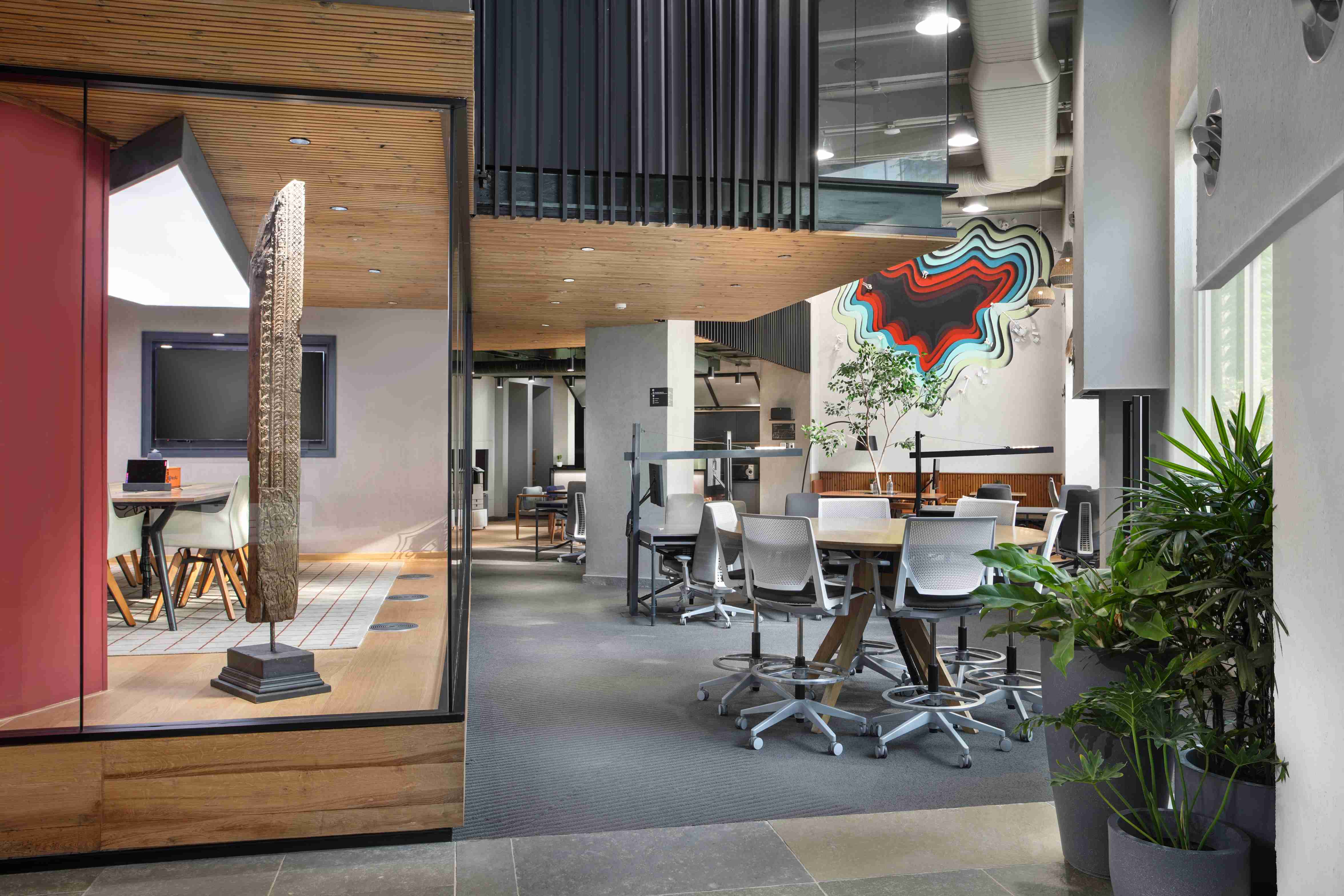
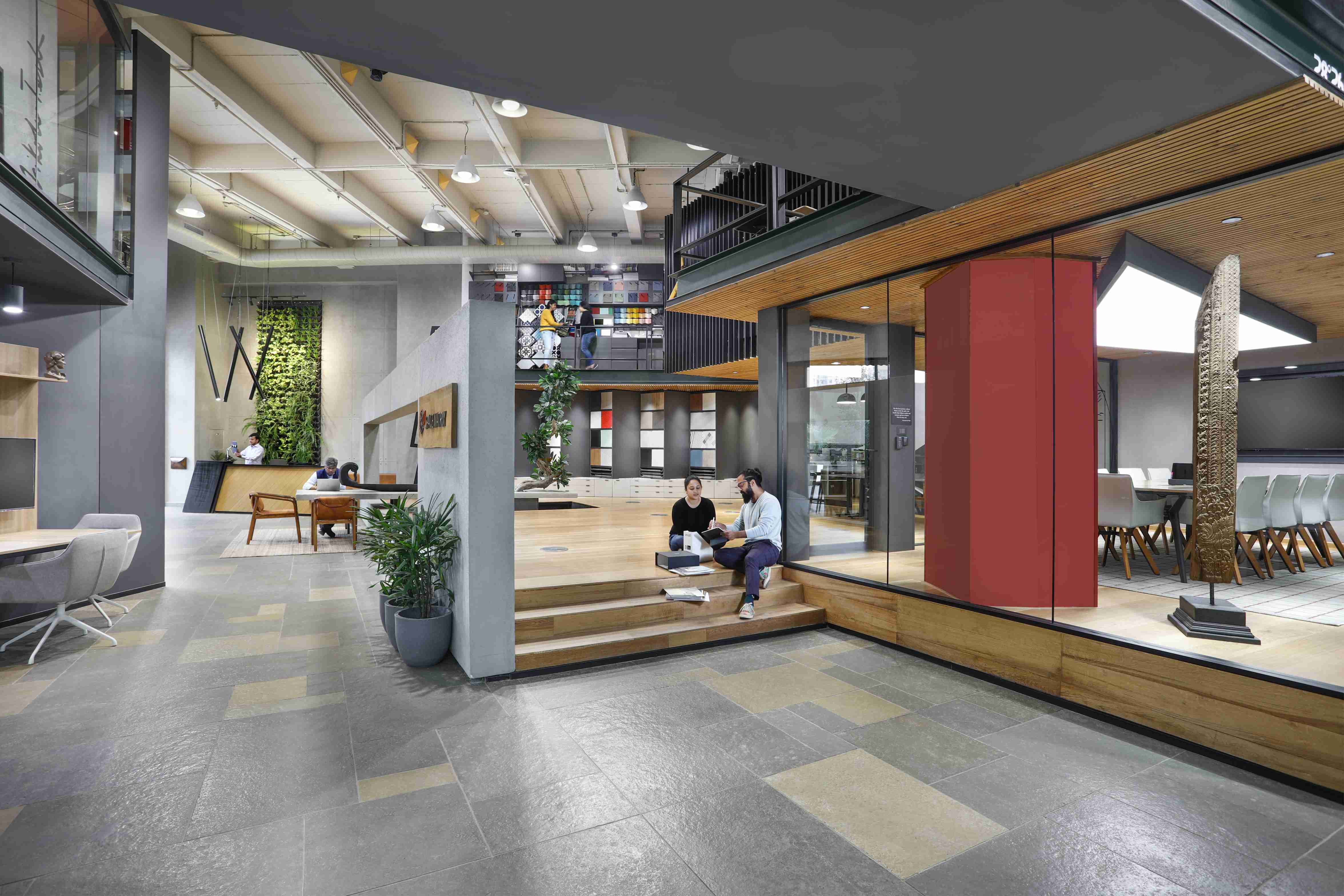
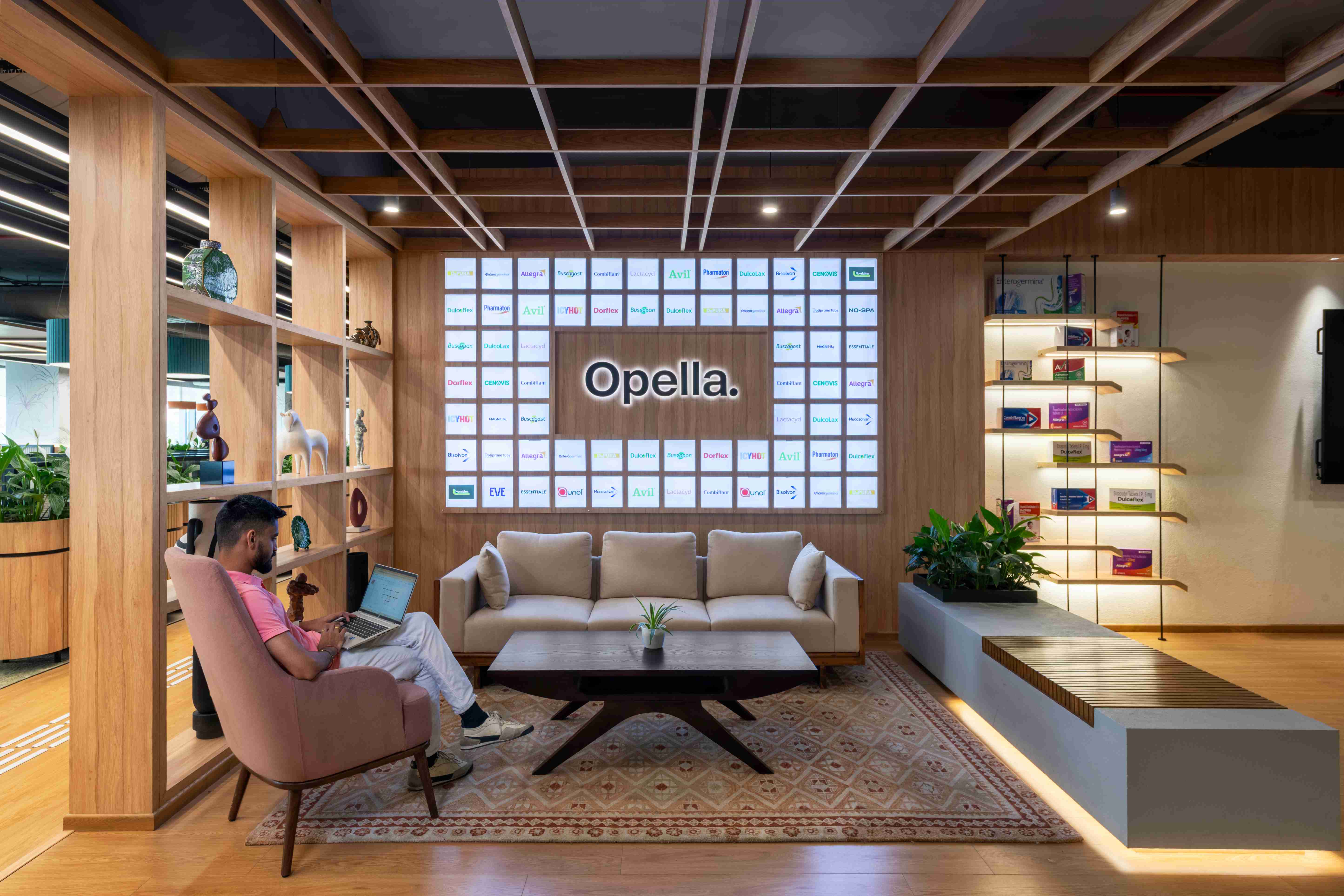
A compelling example of this approach is the Kohler India Headquarters designed by Space Matrix. Rather than creating a conventional office, the workplace was envisioned as a living expression of the Kohler brand. Every space, from the legacy wall at the entrance and themed meeting rooms to the work cafe inspired by the brand’s materials and craftsmanship, is designed to tell a story. This approach to creative space branding transformed the headquarters into an immersive environment where culture and innovation are embedded in its architecture. The result is a workplace that actively provokes curiosity and creative thinking through every interaction with the space.
The Hybrid Balance – Flexibility Without Losing Energy
The debate around remote versus office work often misses the real question: what type of work is best suited to each environment? For creative organisations, hybrid work remains valuable because it provides employees with flexibility and supports focused, individual tasks. Activities such as research, content development, editing, and project execution can often be completed effectively from anywhere. However, collaboration and culture-building benefit significantly from shared experiences.
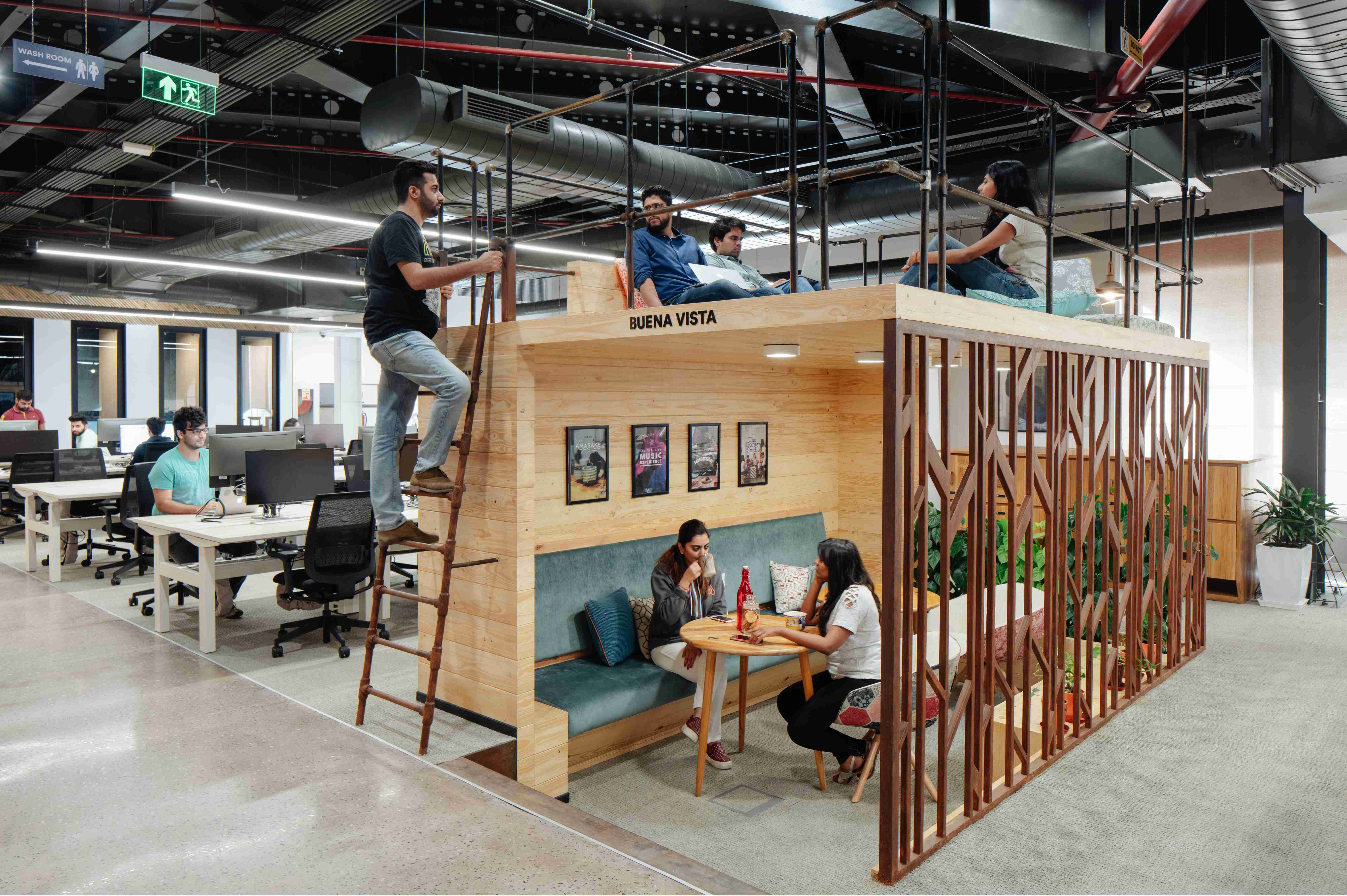
This balance is increasingly shaping workplace strategies across the hybrid work creative industry. Many organisations are moving toward schedule-based approaches in which teams coordinate office days around collaboration-intensive activities. A strong example is Airbnb’s Gurgaon office, which combines collaboration spaces, themed meeting rooms, semi-private mezzanine retreats, and focused work nooks to support different work modes. Employees can choose spaces based on the task at hand, whether they need to brainstorm with colleagues, hold discussions, or work independently. This flexibility reflects a broader shift toward designing for collaboration while still preserving individual autonomy and productivity.
As organisations refine their hybrid models, another question often emerges: What role does creative space branding play in making hybrid workplaces successful? The answer lies in creating environments that give employees a reason to come together beyond operational needs. A thoughtfully designed workplace can create memorable experiences that cannot be replicated remotely. When combined with a modern workplace environment that supports focus and interaction, the office becomes a destination for connection and creativity.
The Space Matrix Perspective: Enabling Creativity Through Design
At Space Matrix, designing for modern workplace environment design begins with a simple principle: creative performance is shaped by behaviour, not just by layout. While desks, meeting rooms, and amenities remain important, the real value of a workplace lies in how effectively it supports the way people think and create. This is particularly relevant in creative industries, where innovation often emerges through collaboration and continuous exchange of ideas. As a result, the focus shifts from designing static spaces to creating environments that actively support creative workflows and evolving team dynamics.
This approach places equal emphasis on experience, culture, and adaptability. Rather than applying a one-size-fits-all approach, Space Matrix develops workplaces that respond to each organisation's unique needs. From flexible project areas and immersive collaboration zones to social settings that encourage interaction, every element is designed to support the creative process. Designing for collaboration is not treated as a standalone objective but as part of a broader strategy that aligns people, culture, and business goals.
If you are looking to translate your identity, values, and aspirations into tangible experiences that employees engage with every day, contact our workplace experts today.
We use cookies to enhance your experience on our website, provide personalized content, and analyze site traffic.
By clicking "Accept All", you consent to our use of cookies. You can also choose "Preferred Cookies"
to select specific types of cookies that align with your preferences.
Essential cookies are always enabled to ensure website functionality.
You can choose to have only Essential cookies if you prefer minimal tracking.
Your choice regarding cookies on this site
Please choose whether this site may use Functional and/or Personalization cookies, as described below.
By selecting Required cookies only, you are requesting us not to sell or share your personal information.